Have you ever paused mid-sentence and wondered whether to write targetted or targeted? You’re not alone. This spelling confusion is common in emails, ads, schoolwork, and business writing.
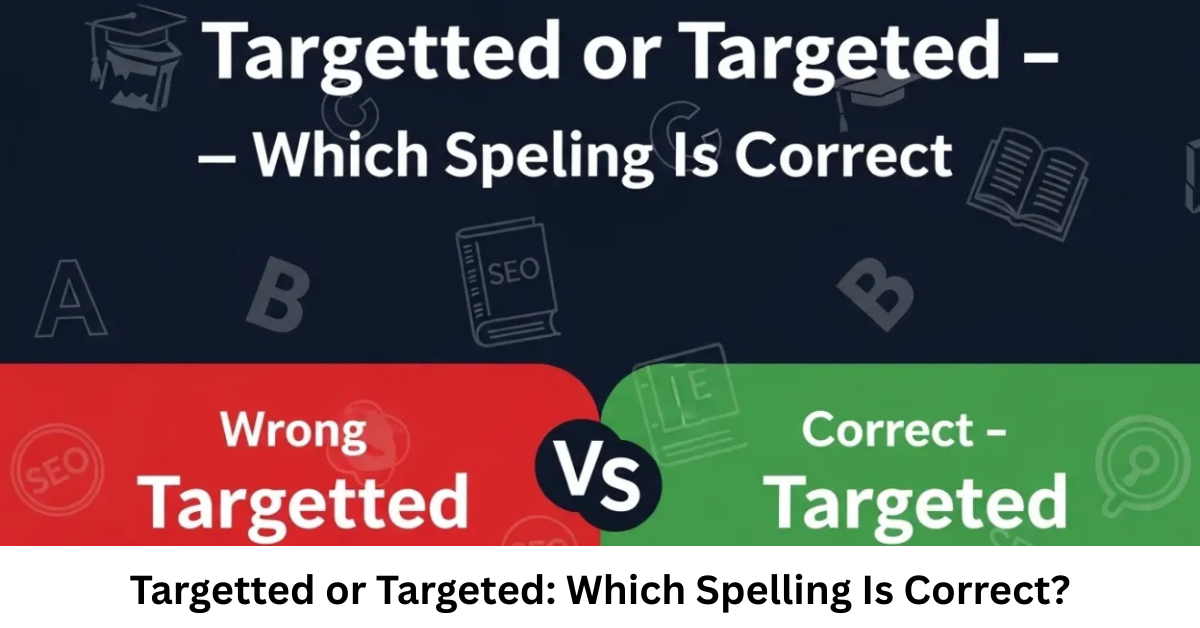
The short answer: targeted is the correct and standard spelling in modern English. While some people still write the double-“t” version, it is considered outdated or incorrect in most style guides and dictionaries. Let’s break it down clearly so you never hesitate again.
The Correct Spelling Explained
The accepted spelling today is targeted. It comes from the noun target, which becomes a verb meaning to aim at, focus on, or direct toward something.
When turning it into the past tense or past participle, we simply add -ed:
- target → targeted
- market → marketed
- benefit → benefited
This follows common English verb patterns.
Why Do People Write the Double-T Version?
Many writers assume the final consonant should double before adding -ed, similar to:
- stop → stopped
- plan → planned
- admit → admitted
However, target does not follow that pattern because the stress in the word falls on the first syllable: TAR-get, not tar-GET.
In English spelling rules, final consonants are often doubled when the stress is on the last syllable.
Compare These Examples
| Word | Correct Past Form | Reason |
|---|---|---|
| admit | admitted | Stress at end |
| prefer | preferred | Stress at end |
| target | targeted | Stress at start |
So grammatically, targeted is the correct form.
Is the Double-T Version Ever Used?
You may occasionally see the alternative spelling in older texts, informal writing, or typos. Some people use it based on instinct rather than grammar rules.
Still, in modern professional English, dictionaries and editors strongly prefer targeted.
If you’re writing for:
- School assignments
- Blogs
- Marketing campaigns
- Job applications
- Business emails
Use the standard version every time.
Examples in Real Sentences
Here are correct examples:
- The company launched a targeted advertising campaign.
- She used a targeted study plan before exams.
- The update was targeted at mobile users.
- They created targeted promotions for new customers.
These sound natural and professional.
Common Areas Where This Word Appears
You’ll often see this word in industries such as:
Marketing
Businesses use audience-focused campaigns to reach specific customers.
Education
Teachers may use specific learning strategies for students.
Healthcare
Doctors may recommend precise treatment methods for certain conditions.
Technology
Apps and websites use personalized recommendations.
Easy Trick to Remember
Think of these words:
- market → marketed
- budget → budgeted
- target → targeted
No extra final letter needed.
Grammar Rule in Simple Terms
Use one final consonant when:
- The word has more than one syllable
- Stress is not on the last syllable
- You add -ed or -ing
That’s why we write:
- targeting
- targeted
Not the doubled version.
FAQS
Is targetted a real word?
It may appear occasionally, but it is not the preferred modern spelling. Most dictionaries and editors recommend the standard version.
Which spelling should I use in professional writing?
Always use the accepted standard form for business, academic, and online content.
Is this different in British and American English?
No major difference today. Both varieties generally prefer the same modern spelling.
Why does autocorrect flag the double-T version?
Because most spell-check systems recognize the standard dictionary form.
What about targeting?
The correct present participle is targeting, not a doubled-letter version.
Conclusion
If you’ve been confused about targetted or targeted, the safest and most accurate choice is clear: targeted. It follows standard English spelling rules, appears in modern dictionaries, and is accepted worldwide.
Whenever you’re writing professionally or casually, choose the standard form with confidence. Small spelling choices make a big difference in how polished your writing looks.