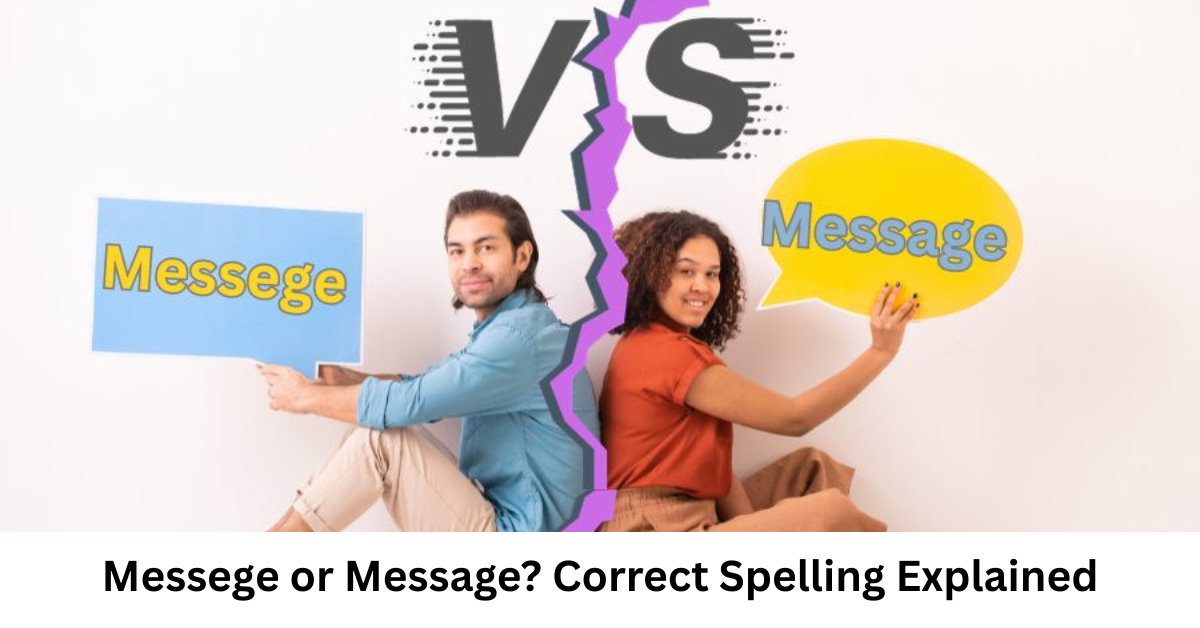
Have you ever typed a word quickly and paused to wonder whether it should be messege or message? You’re not alone. This is one of the most common spelling mistakes in English, especially in texts, emails, and social media posts.
The short answer is simple: message is the correct spelling, while messege is incorrect. In this article, you’ll learn why people confuse the two, how to remember the right version, and how to use it correctly in everyday writing.
What Does Message Mean?
A message is a piece of communication sent from one person to another. It can be spoken, written, typed, or even symbolic.
Examples:
- I received your message this morning.
- Please leave a message after the beep.
- She sent me a text message last night.
The word is widely used in both formal and casual communication.
Why Do People Write Messege?
The misspelling usually happens because English pronunciation can be tricky. When spoken quickly, some people hear the middle sound as “se” instead of “sa.” That leads them to type the wrong version.
Other common reasons include:
- Fast typing on mobile phones
- Autocorrect errors
- Lack of familiarity with the correct spelling
- Mixing it up with similar-looking words
Easy Trick to Remember the Correct Spelling
Think of the word message as:
Mess + age
Even though that doesn’t explain the meaning, it can help your brain remember the spelling pattern.
Another trick: the correct word has “a” in the middle, not “e.”
Common Uses of the Word Message
1. Texting and Chatting
Today, most people use the word when talking about digital communication.
Examples:
- I sent you a WhatsApp message.
- Did you read my last message?
2. Email and Business Communication
It is also common in workplaces.
Examples:
- Thank you for your message regarding the meeting.
- I saw your voicemail message.
3. Deeper Meaning or Symbolism
Sometimes it means an idea or lesson.
Example:
- The film carries a powerful message about kindness.
Message in Grammar and Sentences
The word can be used as both a noun and a verb.
As a Noun
- I got your message.
- Her message was clear.
As a Verb (Informal)
- Message me later.
- You can message the seller directly.
Similar Words People Misspell
English has many words like this. Here are common examples:
- Receive (not recieve)
- Separate (not seperate)
- Necessary (not neccessary)
- Message (not messege)
How to Avoid Spelling Mistakes
If you often make typing errors, try these tips:
- Slow down while typing.
- Use spell check tools.
- Read what you wrote before sending.
- Practice commonly misspelled words.
- Save correct spellings in memory through repetition.
Why Correct Spelling Matters
Correct spelling creates a better impression. Whether you’re writing a school assignment, business email, or text, proper spelling shows attention to detail. A small mistake may seem minor, but it can affect professionalism and clarity.
FAQs
Is messege a real English word?
No, it is not recognized as a standard English word. It is simply a spelling mistake.
Which spelling should I use in formal writing?
Always use message in formal and informal writing.
Why do people confuse these spellings?
Mostly because of pronunciation, typing habits, and lack of attention while writing.
Can message be used as a verb?
Yes. In modern English, people often say “message me later.”
Is message used in British and American English?
Yes, the spelling is the same in both forms of English.
Conclusion
If you’ve ever wondered about messege or message, now you know the answer clearly: message is the only correct spelling. The mistake is common, but easy to fix once you recognize it. Keep practicing correct spelling, use proofreading tools, and pay attention to frequently used words.
Want to improve your English further? Start by mastering one commonly confused word at a time.