If you’ve ever paused while typing and wondered whether it’s hassle or hastle, you’re not alone. This is one of the most common spelling confusions in everyday English writing.
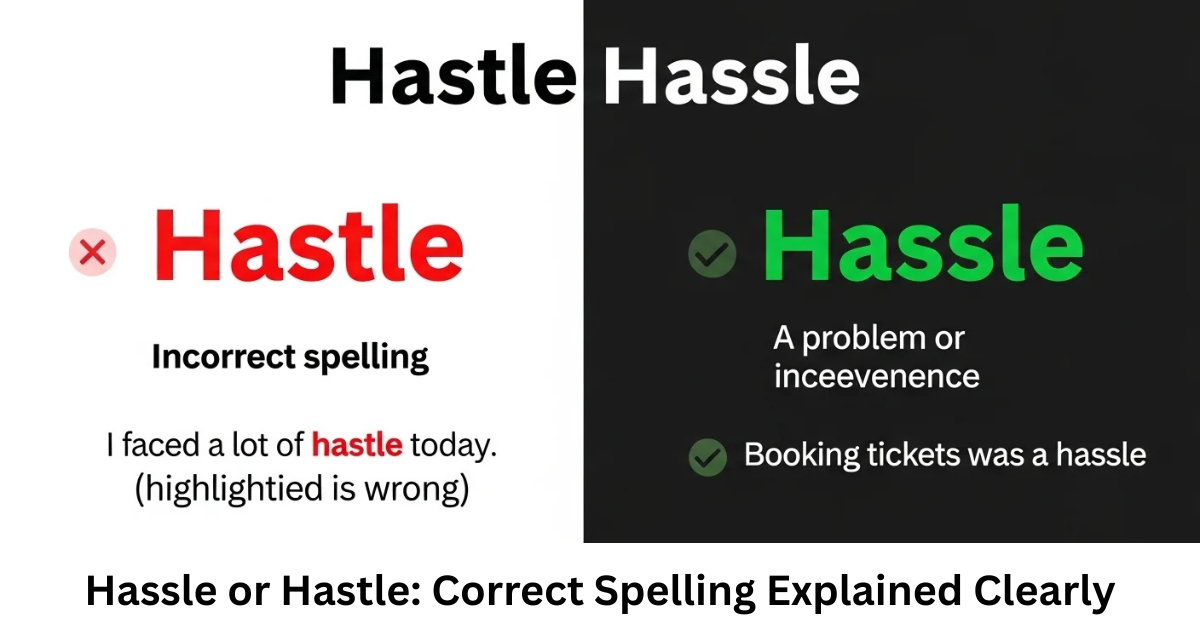
The correct spelling is actually hassle, but many people mistakenly write hastle. In this article, we’ll clear up the confusion, explain the meaning, and show you how to avoid this common mistake in your writing.
What Does “Hassle” Mean?
The word hassle refers to trouble, inconvenience, or unnecessary difficulty in a situation. It is often used in casual conversations when something feels annoying or complicated.
For example:
- Dealing with paperwork can be a real hassle.
- Traveling without a ticket online saves a lot of effort and hassle.
In simple terms, hassle means anything that makes life a bit more difficult than it needs to be.
Why People Get Confused Between Spelling
The confusion between hassle or hastle usually comes from pronunciation. When spoken quickly, the “ss” sound in hassle can sound like a “st” blend, leading people to assume the spelling is hastle.
Other reasons include:
- Lack of exposure to written English
- Typing errors on mobile keyboards
- Mishearing the word in conversations
English is full of tricky spellings, and this is one of the most common ones.
Common Mistake: “Hastle” Explained
Although many people write hastle, it is not a correct English word. It is simply a spelling mistake.
You will never find hastle in dictionaries or formal writing. If you use it in academic or professional content, it may reduce your credibility.
Instead, always remember:
- Correct: hassle
- Incorrect: hastle
How to Remember the Correct Spelling
Here are some simple tricks to avoid confusion:
1. Think of “hassle = hassle-free”
When something is easy, we often say “hassle-free.” This helps you remember the correct spelling.
2. Break it down
The word is made of:
- “has” + “sle” (not “stle”)
3. Associate it with stress
A hassle causes stress—just like double “s” in the word.
Everyday Usage Examples
Using the word correctly in sentences helps reinforce learning:
- Moving to a new house can be a huge hassle.
- I prefer online shopping to avoid the hassle of crowds.
- Fixing technical issues is always a hassle for beginners.
These examples show how naturally the word fits into daily communication.
Why Correct Spelling Matters
Using correct spelling is not just about grammar—it also affects how others perceive your writing.
Proper spelling:
- Improves clarity
- Builds trust with readers
- Enhances SEO performance for online content
- Makes communication more professional
Small mistakes like using hastle instead of the correct form can impact credibility more than you might expect.
Quick Comparison Table
| Incorrect | Correct |
|---|---|
| hastle | hassle |
Simple, but important to remember.
FAQs
1. Is “hastle” a real word?
No, hastle is not a real English word. It is a common spelling mistake.
2. What is the correct spelling: hassle or hastle?
The correct spelling is hassle.
3. Why do people write hastle instead of hassle?
It usually happens due to pronunciation confusion and typing errors.
4. What does hassle mean in simple words?
It means trouble, inconvenience, or something that causes difficulty.
5. Is it okay to use “hassle” in formal writing?
Yes, hassle is acceptable in both formal and informal writing, though it is more common in casual language.
Conclusion
Understanding the difference between hassle or hastle helps improve both your writing accuracy and communication skills. The correct spelling is hassle, and hastle is simply a common mistake.
By remembering simple tricks and practicing usage in sentences, you can easily avoid this error in the future. Strong spelling not only improves readability but also makes your writing more professional and trustworthy.
Keep practicing, and soon the correct form will become second nature.