If you’ve ever typed a message like “I am soo happy” and paused for a second, wondering if that extra “o” is right or wrong—you’re not alone. The confusion around so vs soo is super common, especially in texting, social media captions, and informal writing.
The main focus keyword here is so vs soo, and understanding it is actually easier than most people think. One of these is correct English grammar, while the other is more of an informal style choice that often gets misused.
In this article, you’ll learn the real difference, when (and if) you should use “soo,” and how to avoid common mistakes that can make your writing look unprofessional.
What Does “So” Mean in English Grammar?
The word “so” is a standard English adverb with multiple uses. It is widely accepted in both formal and informal writing.
Common uses of “so”:
- To show intensity: I am so tired.
- To show result: It was raining, so we stayed home.
- To emphasize: That’s so beautiful!
In proper grammar, “so” is always spelled with one “o.”
So vs Soo: Is “Soo” Even Correct?
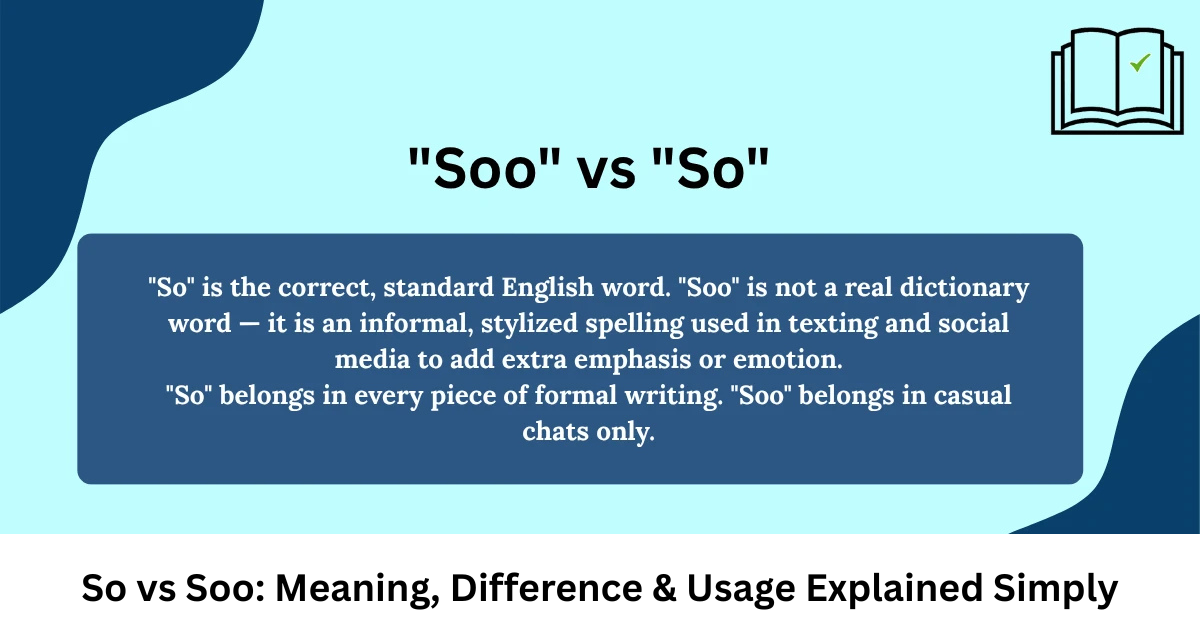
Here’s the truth: in formal English, “soo” is not a standard word.
However, language evolves, especially online. People often write “soo” to:
- Add emotional emphasis
- Show excitement or exaggeration
- Sound more expressive in casual texting
Example:
- Correct: I am so happy today.
- Informal: I am soo happy today!
So while so vs soo may seem like a grammar debate, it’s actually more about style than correctness.
Why People Use “Soo” in Texting and Social Media
Even though it’s not grammatically correct, “soo” has become popular in digital communication.
Reasons people use “soo”:
- To express stronger emotion
- To make messages feel more playful
- To mimic spoken exaggeration (like stretching a word when speaking)
Think of it like writing “heyyy” instead of “hey”—it’s not correct grammar, but it changes tone.
When You Should Avoid “Soo”
If you want your writing to look professional, you should stick with “so” in these cases:
1. Academic writing
Essays, assignments, and research papers require correct grammar.
2. Professional emails
Using “soo” in work communication can look careless.
3. Official documents
Always stick to standard English.
Example:
I am soo interested in this job.
I am so interested in this job.
So vs Soo in Everyday Conversation
In casual chats with friends, both forms may appear—but they serve different tones.
“So” = neutral and correct
- I’m so tired.
“Soo” = expressive and emotional
- I’m soo tired
In short, so vs soo depends on how formal or expressive you want to sound.
Grammar Rule You Should Remember
Here’s a simple rule:
If you’re writing for correctness → use “so”
If you’re writing for emotion → “soo” may be used informally
But remember, only “so” is grammatically correct in English.
Common Mistakes People Make
Many learners mix up spelling because of social media influence.
Mistakes include:
- Writing “soo good” in essays
- Overusing “soo” in professional messages
- Thinking “soo” is an actual dictionary word
Avoiding these mistakes will instantly improve your writing quality.
Quick Comparison: So vs Soo
- So
- Correct English word
- Used in formal and informal writing
- Found in dictionaries
- Soo
- Informal/slang usage
- Used for emphasis in texting
- Not grammatically standard
Why Understanding This Difference Matters
You might think it’s a small detail, but it actually affects how people perceive your writing.
Using correct grammar:
- Builds professionalism
- Improves academic performance
- Enhances communication clarity
So even though so vs soo seems minor, it plays a big role in how polished your English looks.
FAQs About So vs Soo
1. Is “soo” a real English word?
No, “soo” is not officially recognized in English dictionaries. It is informal internet slang.
2. Can I use “soo” in exams or assignments?
No, always use “so” in academic or formal writing.
3. Why do people write “soo” instead of “so”?
People use it to express extra emotion or emphasis in casual conversations.
4. Which one is correct: so vs soo?
Grammatically, “so” is correct. “soo” is only informal and expressive.
5. Does using “soo” affect my English skills?
Not necessarily, but overusing it in formal writing can make your language appear less professional.
Conclusion: The Simple Truth About So vs Soo
At the end of the day, the difference between so vs soo is simple: one is correct English, and the other is emotional slang used in casual digital communication.
If you want clarity, professionalism, and strong grammar, always go with “so.” But if you’re texting a friend and want to sound extra expressive, “soo” can add that emotional tone.
Understanding when to use each one will instantly improve your writing style and help you communicate more effectively in any situation.