English spelling can be tricky, especially when two words sound similar but mean completely different things. A common example is pastor or paster. Many people type one when they actually mean the other, leading to confusion in writing, emails, and online searches.
If you’ve ever wondered which spelling is right, this guide clears it up in simple terms. We’ll explain the meanings, proper usage, examples, and how to remember the difference so you never mix them up again.
What Does Pastor Mean?
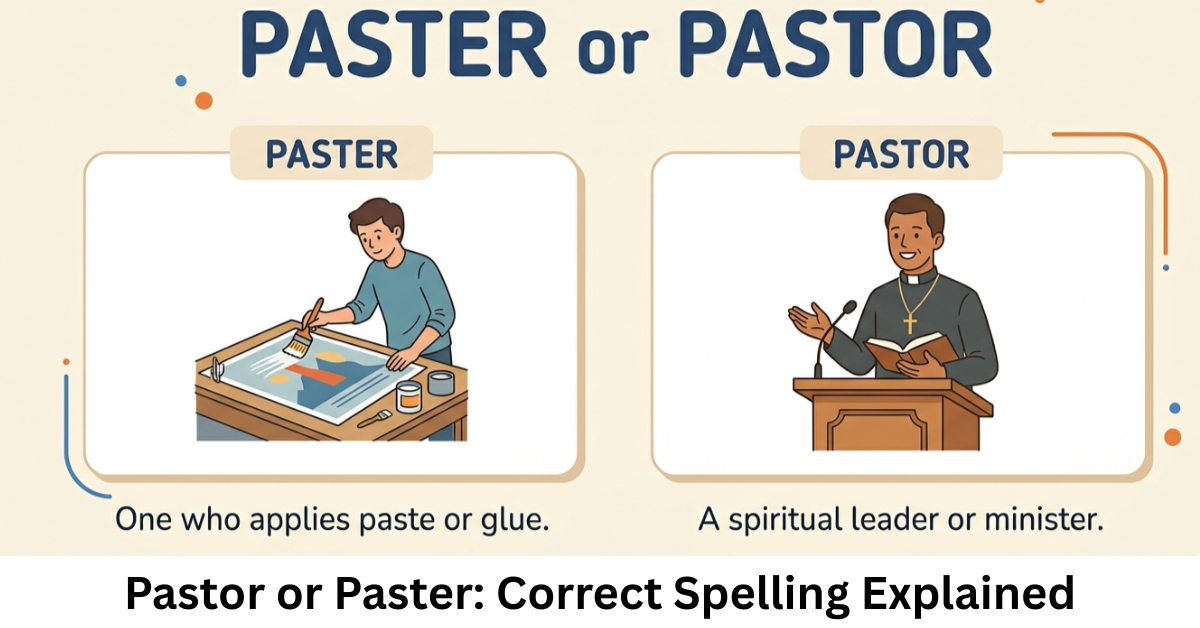
A pastor is a religious leader, usually in a Christian church. The word comes from Latin and originally meant “shepherd,” which reflects the role of guiding and caring for a congregation.
Common Uses of Pastor
- The pastor delivered a meaningful sermon.
- Our church welcomed a new pastor last Sunday.
- She met with the pastor for spiritual advice.
Related Terms
- Senior pastor
- Youth pastor
- Associate pastor
- Church leader
- Minister
If you are talking about religion, church leadership, or someone who leads a congregation, pastor is the correct word.
What Does Paster Mean?
A paster is a person or tool that pastes something. It comes from the verb “paste.”
Common Uses of Paster
- Wallpaper paster
- Label paster
- Machine paster in factories
This word is far less common in everyday conversation. Most people rarely need it unless discussing tools, manufacturing, or someone applying adhesive materials.
Pastor or Paster: The Main Difference
The easiest way to remember it is this:
- Pastor = church leader
- Paster = someone or something that applies paste
Although they sound similar, they belong in very different contexts.
| Word | Meaning | Example |
|---|---|---|
| Pastor | Religious leader | The pastor greeted everyone. |
| Paster | Applies paste | The worker used a paster machine. |
Why People Confuse These Words
There are a few reasons these words get mixed up:
1. Similar Pronunciation
In some accents, both words may sound nearly identical.
2. Fast Typing Errors
Autocorrect and quick typing often create spelling mistakes.
3. Lack of Familiarity
Most people know “pastor,” but fewer know “paster,” so confusion happens.
How to Remember the Correct Spelling
Use this quick memory trick:
Pastor Has “Tor” Like Mentor
A pastor guides people, similar to a mentor.
Paster Has “Paste”
If it involves glue, labels, or sticking materials, think of paste.
Examples in Sentences
Here are clear examples to help you remember:
Correct Use of Pastor
- The pastor spoke about kindness and faith.
- We thanked the pastor after the service.
- My uncle became a pastor last year.
Correct Use of Paster
- The factory installed a box paster machine.
- He worked as a wallpaper paster.
Common Mistakes to Avoid
Many writers accidentally use the wrong term. Watch for these:
- Incorrect: The paster gave a sermon.
- Correct: The pastor gave a sermon.
- Incorrect: The pastor machine seals cartons.
- Correct: The paster machine seals cartons.
Always check the context before choosing the word.
Is Pastor the More Common Word?
Yes, by a wide margin. In general searches, books, media, and everyday speech, pastor is much more common than paster. Unless discussing adhesives or machinery, most people mean pastor.
FAQs
Is pastor a real word?
Yes. It is a standard English word for a church leader or minister.
Is paster a real word?
Yes. It refers to someone or something that pastes materials together.
Which word should I use for church?
Use pastor when referring to a church leader.
Why does autocorrect confuse them?
Because both are valid dictionary words, spellcheck may not know your intended meaning.
How do I remember the difference quickly?
Think: pastor leads people, paster uses paste.
Conclusion
When comparing pastor or paster, the correct choice depends entirely on context. If you mean a church leader, use pastor. If you mean a person or tool that applies adhesive, use paster.
Knowing this small spelling difference can improve your writing and prevent embarrassing mistakes. Keep the memory trick in mind, and you’ll choose the right word every time.