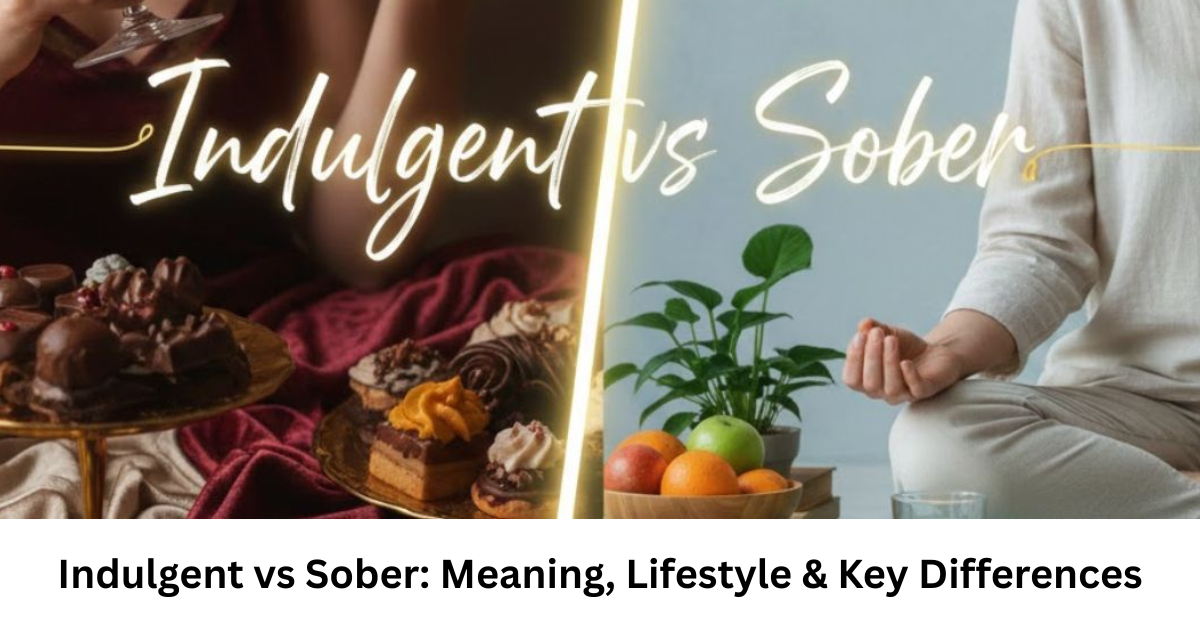
The way people live today often falls between two extremes—seeking pleasure in the moment or practicing discipline for long-term stability. This contrast is commonly discussed as indulgent vs sober living.
Instead of being just a trend phrase, it reflects how individuals make daily decisions about habits, emotions, spending, and lifestyle choices. Understanding both sides can help you build a more balanced and mindful way of living.
Meaning of Indulgent and Sober Lifestyles
To understand this concept clearly, we need to break down both approaches.
Indulgent Lifestyle Meaning
An indulgent lifestyle focuses on pleasure, comfort, and immediate satisfaction. It often includes:
- Enjoying luxury and convenience
- Spending freely without much restriction
- Frequently treating oneself with rich foods or experiences
- Prioritizing enjoyment over planning
People with this mindset usually live in the moment and value emotional satisfaction and experiences over long-term structure.
Sober Lifestyle Meaning
A sober lifestyle is centered around discipline, awareness, and moderation. It involves:
- Careful decision-making
- Controlled spending habits
- Emotional balance and reflection
- Focus on long-term goals
This lifestyle is not about removing joy—it’s about enjoying life responsibly and intentionally.
Key Differences in Lifestyle and Behavior
The contrast becomes clearer when looking at real-life habits.
1. Thinking Style
- One focuses on instant enjoyment
- The other focuses on long-term outcomes
2. Emotional Control
- Impulsive emotional reactions are more common in one
- The other emphasizes reflection before response
3. Financial Habits
- Spending is often spontaneous in one case
- The other prioritizes budgeting and planning
4. Daily Routine
- Flexibility and pleasure guide decisions
- Structure and discipline guide decisions
Psychological Perspective Behind These Choices
These lifestyle patterns are closely linked to how the brain responds to rewards and control.
Instant Gratification and Reward System
Pleasure-seeking behavior is tied to dopamine, the brain’s reward chemical. Activities like shopping, eating treats, or scrolling social media give quick emotional satisfaction.
Self-Control and Long-Term Thinking
On the other hand, disciplined behavior is connected to brain functions responsible for planning and decision-making. It helps people delay rewards in favor of future benefits.
In simple terms:
- One is driven by short-term reward
- The other is guided by long-term stability
Pros and Cons of Both Approaches
Benefits of a Pleasure-Focused Lifestyle
- Increases happiness in the moment
- Encourages spontaneity and creativity
- Helps reduce stress temporarily
Downsides
- Can lead to overspending or imbalance
- May create unhealthy habits
- Lacks long-term structure if uncontrolled
Benefits of a Disciplined Lifestyle
- Builds consistency and stability
- Improves financial and emotional control
- Supports long-term personal goals
Downsides
- Can feel restrictive
- May reduce spontaneity
- Risk of emotional rigidity if extreme
Finding a Healthy Middle Ground
The healthiest approach is not choosing one extreme but finding balance.
A well-balanced lifestyle includes:
- Enjoying life without guilt
- Practicing discipline where necessary
- Making mindful and intentional decisions
- Allowing flexibility when appropriate
Life becomes more sustainable when enjoyment and structure work together instead of opposing each other.
Real-Life Examples
Pleasure-Oriented Habits
- Frequent dining out or luxury spending
- Impulse shopping decisions
- Choosing comfort over planning
Disciplined Habits
- Home-cooked meals and budgeting
- Planned financial decisions
- Consistent daily routines
Most people naturally shift between these patterns depending on mood, situation, and responsibility.
Why This Topic Matters Today
Modern life constantly pushes people in two directions:
- Social media promotes instant gratification and luxury lifestyles
- Productivity culture promotes discipline and control
Understanding this balance helps you:
- Make smarter lifestyle choices
- Avoid emotional extremes
- Build long-term stability without losing joy
FAQs
1. What is the difference between these two lifestyles?
One focuses on pleasure and enjoyment, while the other focuses on discipline and control.
2. Can a person follow both approaches?
Yes, most people naturally switch between the two depending on circumstances.
3. Is a pleasure-driven lifestyle harmful?
Not always. It becomes harmful only when there is no balance.
4. Does disciplined living mean no fun?
No, it simply means enjoying life in moderation.
5. Which lifestyle is better?
Neither is better alone. A balanced combination of both is the healthiest approach.
Conclusion
This lifestyle contrast is not about choosing sides. It is about understanding behavior and creating balance between enjoyment and responsibility.
A meaningful life includes both moments of pleasure and discipline. When these two work together, you create a lifestyle that is not only enjoyable but also stable and sustainable.