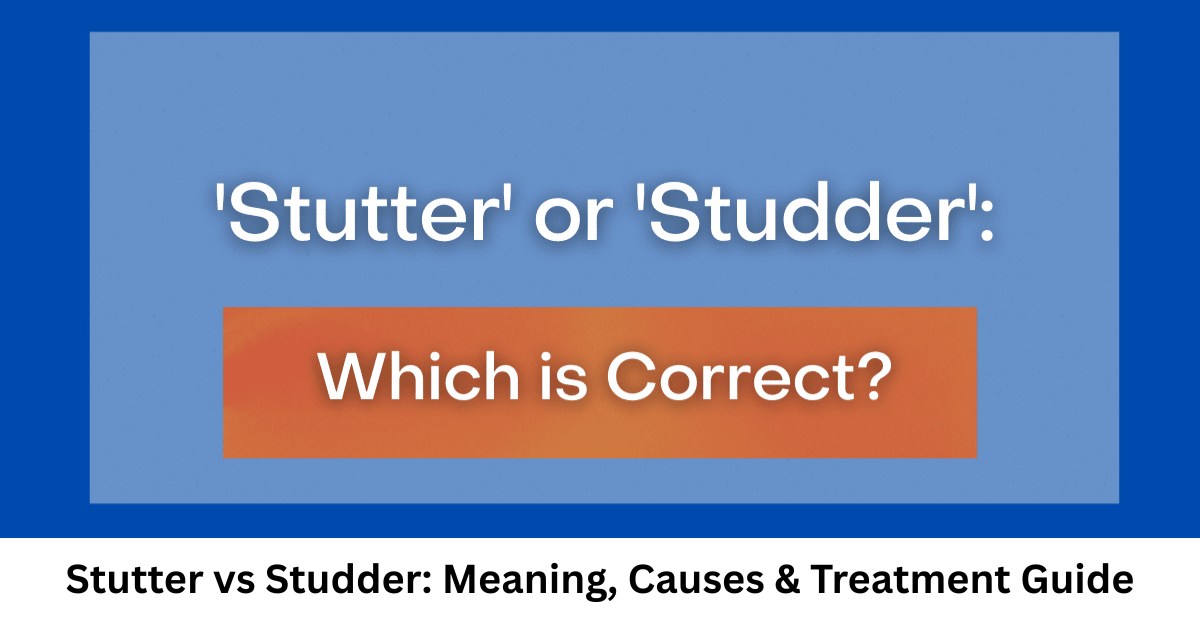
Have you ever come across the terms studder or stutter and wondered which one is correct? You’re not alone. Many people get confused between these spellings, but only one is medically recognized: stutter.
A stutter is a speech fluency disorder that affects the natural flow of speech. It can cause repetition of sounds, prolonged words, or unexpected pauses. In this article, we’ll break down the correct meaning, causes, symptoms, and treatments in a simple, human way so you fully understand it.
Let’s clear up the confusion once and for all.
What is Stutter (and Why “Studder” is Incorrect?)
The correct term is stutter, not studder. The word “studder” is a common spelling mistake, often seen online or in casual typing.
A stutter (also called stammering in some regions) is a communication disorder where a person has difficulty speaking smoothly. It can affect children and adults, and its severity can vary from mild to more noticeable disruptions in speech.
Common features of stuttering:
- Repeating sounds or syllables (e.g., “b-b-book”)
- Prolonging words (e.g., “sssschool”)
- Pausing mid-sentence
- Physical tension while speaking
Causes of Stuttering (Speech Fluency Disorder)
There is no single cause of stuttering. Instead, it is usually a combination of factors.
1. Genetics
Stuttering often runs in families, suggesting a genetic link.
2. Brain Differences
Research shows that people who stutter may process speech differently in the brain.
3. Developmental Factors
Most cases begin in early childhood when speech and language are still developing.
4. Emotional Triggers
Stress, anxiety, or pressure can make stuttering more noticeable, but they do not cause it directly.
Types of Stuttering
Understanding the types helps in better diagnosis and treatment.
Developmental Stuttering
This is the most common form and appears in young children as they learn to speak.
Neurogenic Stuttering
Caused by brain injury, stroke, or neurological conditions.
Psychogenic Stuttering
Rare and linked to emotional or psychological trauma.
Symptoms of Stuttering
People often notice these signs when someone struggles with speech fluency:
- Repetition of sounds, words, or phrases
- Difficulty starting words or sentences
- Broken words or long pauses
- Rapid eye blinking or facial tension
- Avoiding speaking situations
Treatment Options for Stuttering
The good news is that stuttering can be managed effectively. Treatment depends on age, severity, and cause.
1. Speech Therapy
A speech-language pathologist helps improve fluency through structured exercises.
2. Cognitive Behavioral Therapy (CBT)
Helps reduce anxiety and negative emotions related to speaking.
3. Fluency-Shaping Techniques
These techniques train smoother speech patterns, such as controlled breathing and slower speaking pace.
4. Support Groups
Connecting with others facing similar challenges builds confidence and reduces fear.
Living with Stuttering: Practical Tips
Managing stuttering in daily life becomes easier with consistent practice and mindset changes.
- Speak slowly and calmly
- Practice breathing techniques
- Avoid rushing sentences
- Maintain eye contact while speaking
- Join supportive communities
Remember, communication is not about perfection—it’s about expression.
Studder or Stutter: Clearing the Confusion
To repeat clearly: studder or stutter is a common spelling confusion, but only stutter is correct. Understanding this helps you search for accurate information and resources when needed.
Frequently Asked Questions (FAQs)
1. Is it studder or stutter?
The correct spelling is stutter. “Studder” is incorrect and commonly misspelled.
2. Can stuttering be cured completely?
There is no guaranteed cure, but speech therapy can significantly improve fluency.
3. Is stuttering a sign of low intelligence?
No, stuttering has nothing to do with intelligence. Many intelligent and successful people stutter.
4. At what age does stuttering usually start?
It often begins between ages 2 to 6 during early speech development.
5. Can anxiety make stuttering worse?
Yes, stress or anxiety can increase speech difficulty, but it is not the root cause.
Conclusion
Understanding stutter or studder helps clear up a common confusion while also raising awareness about a real speech fluency disorder. Stuttering is more common than many people think, and it is absolutely manageable with the right support and techniques.
If you or someone you know stutters, remember—communication is about confidence, not perfection. With speech therapy, practice, and patience, improvement is always possible.