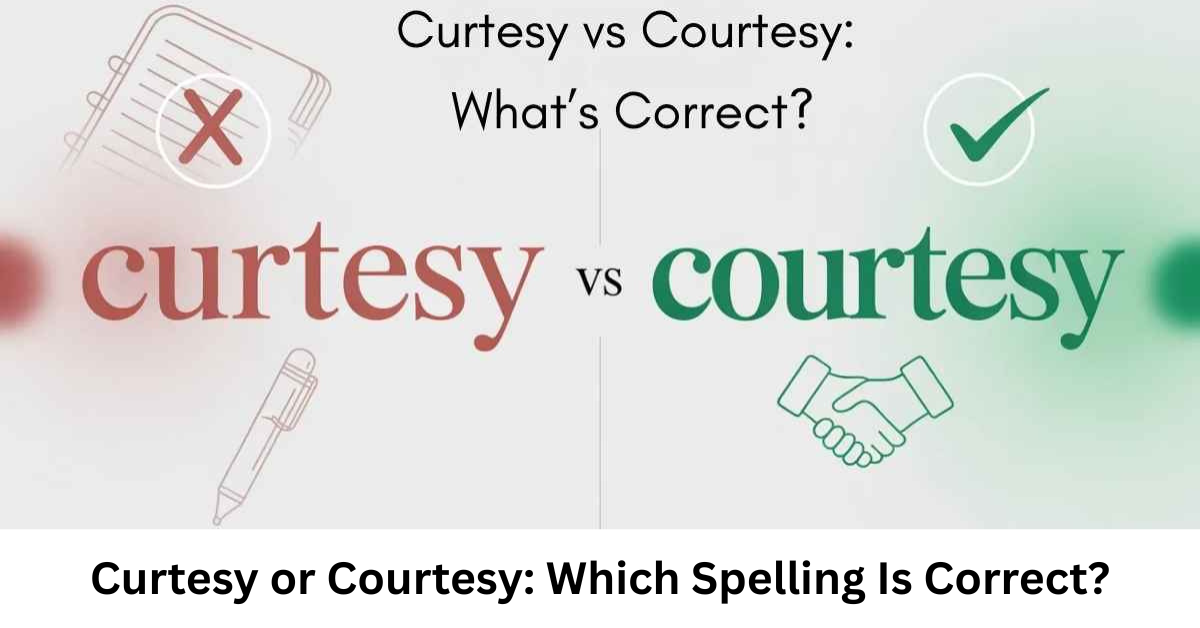
Have you ever paused while typing and wondered whether it should be curtesy or courtesy? You’re not alone. Many people mix up these two spellings because they sound similar, but only one is commonly correct in modern English.
If you want clear communication in emails, essays, or professional writing, knowing the right version matters. In this guide, we’ll break down the difference, explain why the confusion happens, and show you how to remember the correct spelling for good.
The Correct Spelling Is Courtesy
The standard and widely accepted English word is courtesy. It means polite behavior, respect, or a thoughtful gesture toward someone else.
Examples:
- Thank you for your courtesy during the meeting.
- She greeted everyone with warmth and courtesy.
- As a courtesy, they informed customers in advance.
In everyday writing, this is the form you almost always need.
What Does Curtesy Mean?
While many assume it is just a misspelling, curtesy is actually an old legal term from historical property law. It referred to a husband’s right to inherit property from his deceased wife under certain conditions.
This meaning is outdated and rarely used outside legal history or academic discussion.
So in modern conversation, business writing, schoolwork, and casual use, you should choose courtesy.
Why People Confuse the Two Words
There are a few simple reasons this mistake happens:
1. Similar Pronunciation
Both words sound close when spoken quickly, especially in different accents.
2. Typing Errors
The letters “t” and “s” placement can easily create a spelling slip.
3. Lack of Exposure
Most people never encounter the historical legal word, so they assume both are interchangeable.
How to Remember the Right Choice
Use this easy trick:
Courtesy = Courteous behavior
If you are talking about kindness, manners, respect, or politeness, the correct form is courtesy.
Think of related words:
- Courteous
- Courtly
- Polite
- Respectful
These all connect to good manners.
Courtesy in Everyday Sentences
Here are practical examples you can use:
- Please extend the same courtesy to others.
- Out of courtesy, he held the door open.
- They called ahead as a professional courtesy.
- Basic courtesy goes a long way in customer service.
Common Writing Situations Where It Appears
Emails
“Thank you for your courtesy and quick response.”
Customer Service
“We appreciate your courtesy toward our staff.”
Formal Letters
“As a courtesy, we are notifying you of schedule changes.”
Daily Conversation
“It’s just common courtesy to say thank you.”
Quick Comparison Table
| Word | Meaning | Modern Use |
|---|---|---|
| Courtesy | Politeness, respect, thoughtful gesture | Very common |
| Curtesy | Historical legal inheritance term | Rare |
Mistakes to Avoid
When writing, avoid these common errors:
- Using the old legal spelling when discussing manners
- Assuming both words mean the same thing today
- Auto-correcting without checking context
- Using uncommon spellings in professional communication
Why Correct Spelling Matters
Using accurate spelling improves:
- Professional image
- Clarity in communication
- Trust in business writing
- Grammar confidence
Small language details often create a stronger impression than people realize.
FAQs
Is curtesy wrong?
In most modern contexts, yes. If you mean politeness or respect, use courtesy. Curtesy mainly belongs to historical legal language.
Which is more common in English?
Courtesy is overwhelmingly more common in modern English.
Can I use curtesy in an email?
Not if you mean manners or kindness. Use courtesy instead.
Why does curtesy exist?
It comes from older legal terminology involving inheritance rights.
Is courtesy a noun?
Yes. It is a noun meaning politeness, respectful behavior, or a considerate act.
Conclusion
If you’re debating curtesy or courtesy, the answer is simple for modern writing: use courtesy. It is the correct spelling when referring to politeness, respect, or thoughtful behavior. The alternative spelling exists mainly in historical legal contexts and is rarely needed today.
Mastering small word choices like this makes your writing cleaner, smarter, and more professional. Keep learning these common language distinctions, and your confidence will grow with every sentence.