We’ve all been there—replying late to an email, missing a message, or responding after a long gap. In such situations, most people instinctively write “sorry for the delay” or “i am sorry for the delay” at the beginning of their message.
But have you ever wondered what it really means, or whether there are better ways to say it depending on the situation?
In this guide, we’ll explore the sorry for the delay meaning, its usage in different contexts, and smart alternatives that sound more natural, professional, and polite. Whether you’re writing emails, chatting with clients, or replying to friends, this will help you communicate more confidently.
What Does “Sorry for the Delay” Mean?
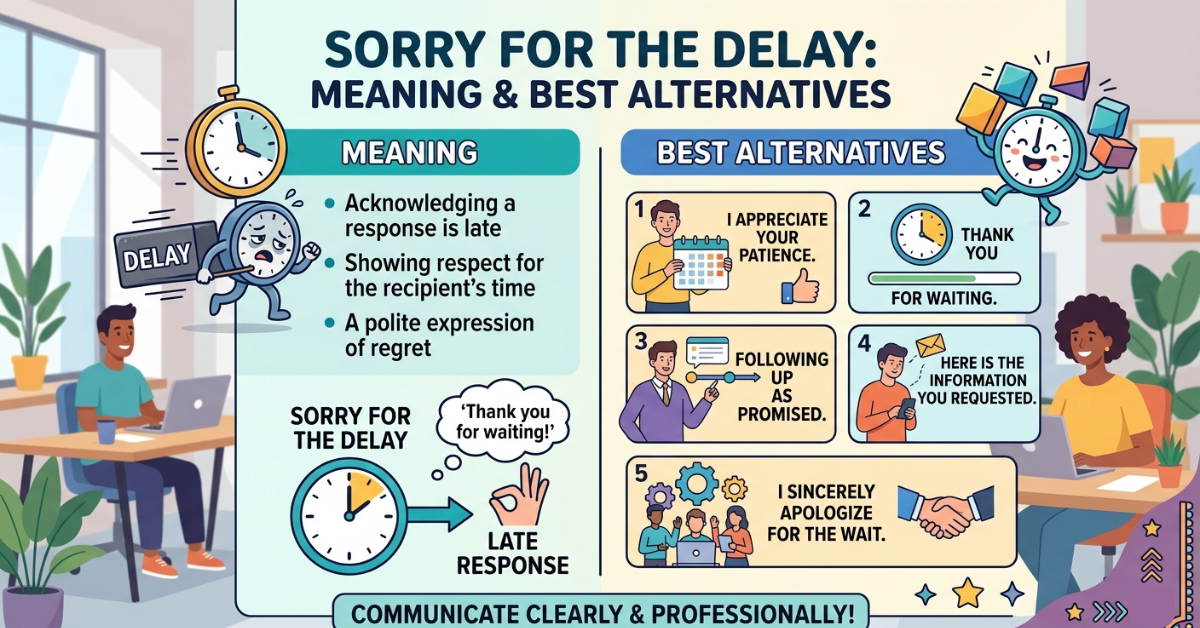
The phrase means apologizing for not responding or completing something on time. It is commonly used in emails, messages, and customer service replies.
In most cases, it refers to:
- Late replies to messages or emails
- Delayed project updates
- Missed deadlines or responses
- Slow communication in general
It’s a polite way to acknowledge that your response was not timely.
Common Usage in Daily Communication
You will often see phrases like:
- sorry for the delay in response
- sorry for the delay response
- “Apologies for the delay in getting back to you”
These are widely used in professional emails and customer service conversations. However, repeating the same phrase too often can sound robotic or overused.
Sorry for the Delay in Spanish
If you’re communicating with Spanish speakers, you might use:
- “Lo siento por el retraso” (general translation)
- “Disculpa la demora” (more casual)
- “Perdón por la tardanza” (informal tone)
These variations help you sound natural depending on the level of formality.
Instead of Saying Sorry for the Delay
If you want to sound more natural and less repetitive, here are better alternatives. Many professionals prefer these because they feel smoother and more confident.
Professional Alternatives
- Thank you for your patience
- I appreciate your understanding
- Apologies for the late response
- Thank you for bearing with me
- I appreciate your wait
Casual Alternatives
- Thanks for waiting
- Appreciate your patience on this
- Just getting back to you now
- Thanks for hanging in there
These phrases often replace in modern communication.
Another Way to Say Sorry for the Delay
Here are some polished alternatives depending on tone:
Formal tone
- Please accept my apologies for the delayed response
- I regret the delay in replying
- Apologies for the delayed communication
Neutral tone
- Thanks for your patience while I got back to you
- I appreciate your understanding during the wait
Friendly tone
- Thanks for waiting on me
- Appreciate you hanging tight
Using variety helps avoid sounding repetitive when you frequently need another way to apologize in emails.
What to Say Instead of Sorry for the Delay
Sometimes, you don’t even need to apologize directly. Instead, you can shift the focus to appreciation or action:
- Start with gratitude: “Thank you for your patience…”
- Move directly to the answer: “Here’s the update you needed…”
- Acknowledge briefly: “Apologies for the delay, here’s the update…”
This approach makes communication more confident and less apologetic.
Tips for Writing Better Apology Messages
Here are some quick communication tips:
- Keep it short and genuine
- Avoid repeating apologies multiple times
- Focus on providing the solution or update
- Match tone with the situation (formal or casual)
- Don’t overuse sorry for the delay response in every message
When Should You Use “Sorry for the Delay”?
Use it when:
- You genuinely missed a deadline or reply
- You are responding after a noticeable gap
- You want to maintain professionalism
Avoid overusing it in every message, especially in fast-paced chats or informal communication.
FAQs
1. What does sorry for the delay mean?
It is a polite apology used when someone responds or completes something later than expected.
2. Is it professional to say sorry for the delay in emails?
Yes, it is acceptable, but using alternatives can make your writing sound more natural.
3. What to say instead of sorry for the delay?
You can say “thank you for your patience” or “apologies for the late response.”
4. How do you say sorry for the delay in Spanish?
Common phrases include “Lo siento por el retraso” and “Disculpa la demora.”
5. Is it okay to always say I am sorry for the delay?
It’s fine occasionally, but repeating it too often can sound repetitive or less impactful.
Conclusion
Understanding how to use sorry for the delay effectively can improve your communication in both professional and casual settings. While phrases like i am sorry for the delay or sorry for the delay in response are widely used, exploring alternatives helps you sound more natural and confident.
The key is balance—acknowledge the situation briefly, then focus on clarity and solutions. By using varied expressions and understanding context, your communication becomes smoother and more impactful.
If you want better engagement in emails or messages, start practicing these alternatives today and notice the difference in how people respond.