When we lose someone, words often feel too small to express our emotions. One of the most commonly used phrases in moments of grief is “Rest in Peace”, but many people search for another word for rest in peace to make their condolences more personal, meaningful, or culturally appropriate.
Finding another word for rest in peace helps us express sympathy in a way that feels heartfelt and respectful. Whether you’re writing a condolence message, a tribute, or a social media post, choosing the right phrase matters deeply. In this article, we’ll explore meaningful alternatives, their origins, and when to use them appropriately.
What Does “Rest in Peace” Really Mean?
Before exploring another word, it’s important to understand the phrase itself.
“Rest in Peace” (often abbreviated as RIP) is a traditional expression used to wish eternal peace and rest for someone who has passed away. It carries spiritual and emotional weight, suggesting that the deceased is free from suffering.
Common usage contexts include:
- Obituaries
- Funeral messages
- Condolence cards
- Social media tributes
Another Word for Rest in Peace: Meaningful Alternatives
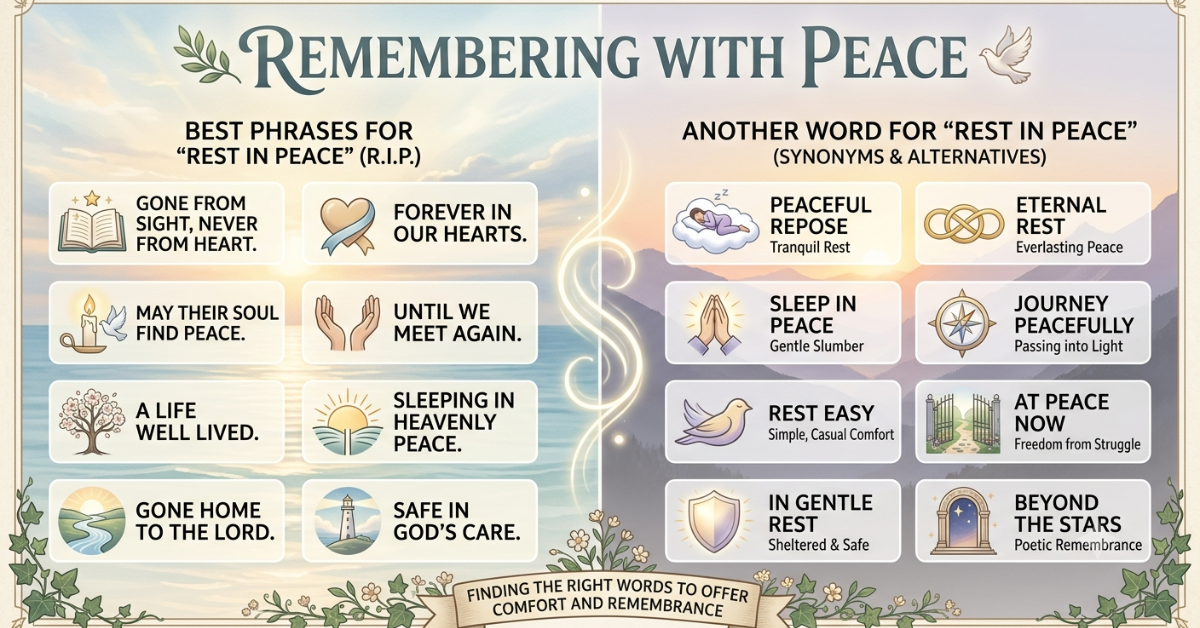
If you’re looking for another word for rest in peace, there are many respectful phrases you can use depending on tone, culture, or belief system.
1. Sleep in Peace
A softer, poetic alternative often used in emotional messages.
2. Eternal Rest
Common in religious and formal contexts, especially in Christian traditions.
3. May Their Soul Rest
A gentle phrase that emphasizes spiritual peace.
4. Gone but Not Forgotten
Focuses on memory rather than spiritual rest.
5. In Loving Memory
Often used in memorials and gravestones.
6. Forever at Peace
A modern, comforting expression.
7. May They Rest Eternally
A formal and respectful variation.
Each of these can serve as another word for rest in peace depending on the emotional tone you want to express.
When to Use Alternatives to Rest in Peace
Choosing another word for rest in peace depends on context. Here’s how to decide:
Personal Messages
Use softer phrases like:
- “Sleep in Peace”
- “Forever at Peace”
Formal Condolences
Better options include:
- “Eternal Rest”
- “May Their Soul Rest”
Social Media Tributes
Short and meaningful phrases work best:
- “Gone but Not Forgotten”
- “In Loving Memory”
Cultural and Emotional Sensitivity
Not every phrase fits every situation. When choosing another word for rest in peace, consider:
- Religion: Some phrases are tied to specific beliefs
- Tone: Formal vs emotional vs poetic
- Relationship: Close friend, colleague, or public figure
- Audience: Family members or public posts
Respect is always the priority when expressing sympathy.
Common Variations Used Worldwide
Across cultures, another word may differ slightly but carries the same intention:
- Latin: “Requiescat in Pace”
- Islamic expression: “May Allah grant them Jannah”
- General modern usage: “Rest Easy”
These variations show how universal the need for comforting language is during loss.
FAQs About Another Word for Rest in Peace
1. What is another word for rest in peace in simple terms?
Some simple alternatives include “Sleep in Peace,” “Forever at Peace,” and “Gone but Not Forgotten.”
2. Is it okay to use RIP instead of full phrases?
Yes, RIP is widely accepted, but using another word for rest in peace can feel more personal and meaningful.
3. What is the most respectful alternative?
“Eternal Rest” is often considered one of the most respectful and formal options.
4. Can I use these phrases in social media posts?
Absolutely. Many people use another word for rest in peace in captions, tributes, and remembrance posts.
5. Are religious phrases better than modern ones?
It depends on the context and the beliefs of the deceased and their family.
Conclusion
Finding another word for rest in peace is about more than just language—it’s about expressing empathy, respect, and emotional connection during one of life’s hardest moments. Whether you choose “Eternal Rest,” “Sleep in Peace,” or “Gone but Not Forgotten,” the intention behind your words matters most.
In the end, the right phrase helps keep memories alive while offering comfort to those who are grieving. If you’re writing a tribute or condolence message, take a moment to choose words that truly reflect your feelings and honor the person’s memory with care.