Have you ever paused while writing and wondered whether it’s relieving or reliving? You’re not alone. These two words sound similar, but they carry completely different meanings—and mixing them up can change the entire sense of your sentence.
In simple terms, relieving or reliving is a common confusion in English grammar where one word expresses comfort and the other expresses memory or experience. Understanding the difference helps you communicate more clearly, whether you’re writing formally or casually.
Let’s break it down in a simple, human way so you never mix them up again.
Relieving or Reliving: What Do They Mean?
To clear the confusion, we first need to understand both words separately.
Relieving
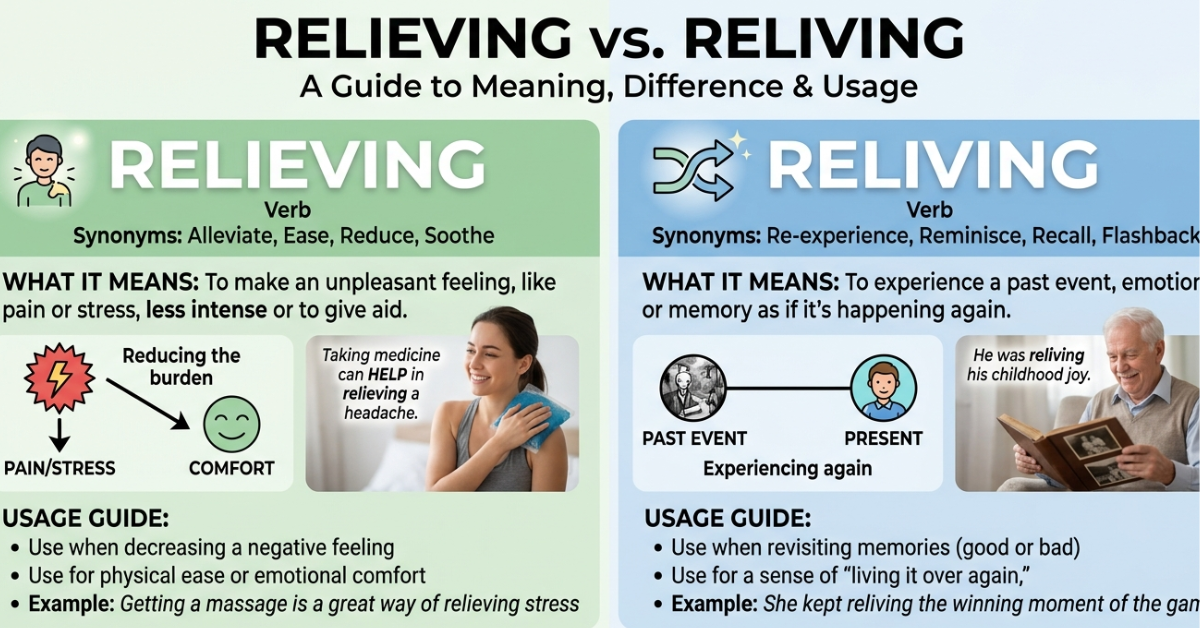
“Relieving” comes from the verb relieve, which means to reduce pain, stress, or pressure.
Examples:
- Taking medicine is relieving my headache.
- That news was relieving after a stressful day.
In short, relieving is about easing discomfort or making something better.
Reliving
“Reliving” comes from relive, which means to experience something again in your memory or imagination.
Examples:
- I am reliving my childhood memories through photos.
- She kept reliving the moment she won the award.
So, reliving is about going back to an experience mentally.
Why People Confuse Relieving or Reliving
The confusion happens because both words:
- Sound almost identical when spoken
- Look similar in spelling
- Are often used in emotional contexts
But the meaning is completely different:
- One is about comfort (relieving)
- The other is about memory (reliving)
A simple way to remember:
- If it reduces stress → relieving
- If it replays memory → reliving
Real-Life Usage Examples
Let’s make it even clearer with everyday situations:
Emotional Context
- Listening to music is relieving my stress.
- Watching old videos is like reliving the past.
Daily Life
- A good massage feels relieving after work.
- He enjoys reliving his school days with friends.
Writing Tip
When you’re unsure, think:
Is something being “eased” or “experienced again”? That will guide your choice instantly.
Common Mistakes People Make
Many learners accidentally mix up relieving or reliving in writing. Here are the most common errors:
- I am relieving my memories (wrong)
- I am reliving my memories (correct)
- This movie is reliving my stress (wrong)
- This movie is relieving my stress (correct)
A small spelling difference, but a huge meaning shift.
Quick Grammar Trick to Remember
Here’s a simple trick that works:
- Relieving = Relief (comfort, ease, stress-free)
- Reliving = Live again (memory replay)
If you connect the words to their root meanings, you’ll never get confused again.
FAQs About Relieving or Reliving
1. What is the main difference between relieving and reliving?
The main difference is that relieving reduces stress or pain, while reliving means experiencing something again in memory.
2. Can relieving or reliving be used in emotional writing?
Yes, both are commonly used in emotional contexts, but they express different feelings—comfort vs memory.
3. Is it correct to say “reliving stress”?
No, that is incorrect. Stress is something you feel relief from, so relieving stress is correct.
4. Why do people mix up relieving or reliving so often?
Because they sound similar and are used in emotional situations, making them easy to confuse.
5. How can I avoid mistakes in using these words?
Focus on meaning: if it’s about easing something, use relieving; if it’s about replaying a memory, use reliving.
Conclusion
Understanding the difference between relieving or reliving makes your English clearer, more accurate, and more confident. One word helps express comfort and relief, while the other brings memories back to life. Once you get used to their meanings, you’ll never mix them up again.
Next time you write, just pause for a second and ask yourself: Am I talking about easing something or experiencing it again? That simple question will guide you every time.