English can be confusing, especially when two words sound similar but carry different meanings. One common grammar mistake people make is using “worse case” instead of “worst case.” If you have ever wondered, “is it worse case or worst case,” you are definitely not alone.
The short answer is simple: “worst case” is the correct phrase in most situations. “Worse case” is usually grammatically incorrect unless it appears in a very specific comparison.
In this guide, you will learn the difference between these expressions, why people mix them up, and how to use the correct form naturally in everyday writing and conversation.
What Does “Worst Case” Mean?
“Worst case” refers to the most negative, difficult, or harmful possible outcome in a situation.
It is commonly used in conversations about:
- Risk
- Planning
- Emergencies
- Business decisions
- Health concerns
- Everyday problem-solving
Examples of Correct Usage
- The worst case is that we lose a little money.
- Doctors explained the worst case before surgery.
- We should prepare for the worst case scenario.
In all these examples, “worst” describes the extreme end of something bad.
Why “Worse Case” Sounds Wrong
To understand the mistake, it helps to know the difference between worse and worst.
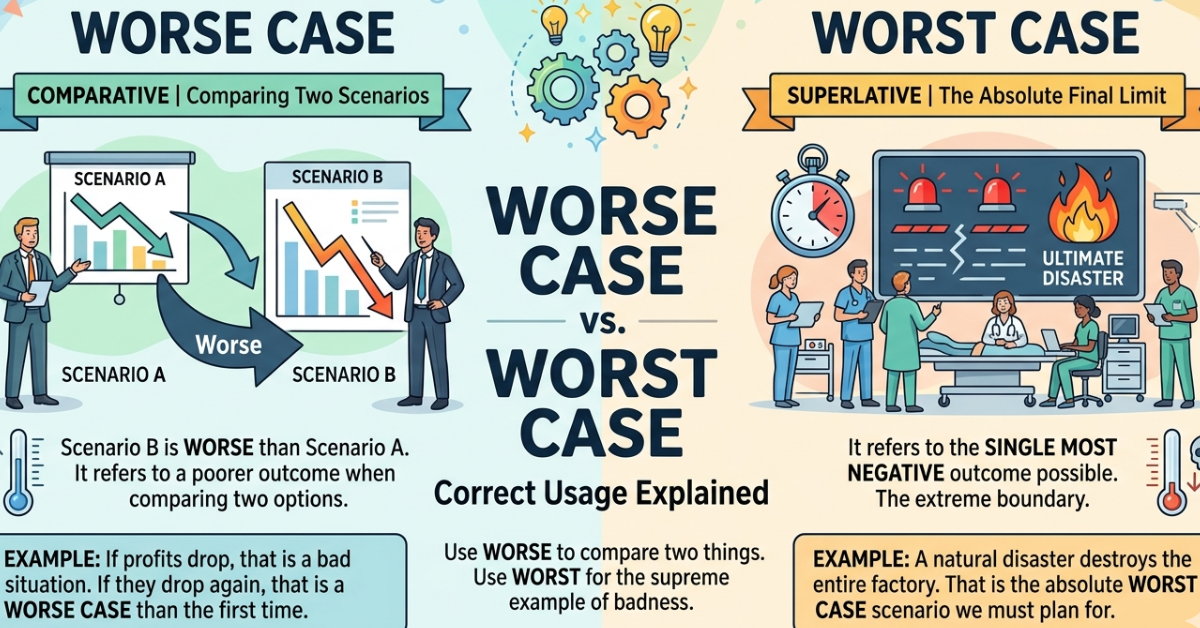
Worse
“Worse” is a comparative adjective. It compares two things.
Example:
- Today’s weather is worse than yesterday’s.
Worst
“Worst” is a superlative adjective. It refers to the most extreme level.
Example:
- This is the worst storm of the year.
Because a “case” usually refers to the most extreme possibility, the superlative form is needed. That is why “worst case” works correctly.
Is It Worse Case or Worst Case?
If you are asking which phrase is grammatically correct, the answer is almost always worst case.
People often type the wrong version because:
- The words sound similar
- Autocorrect may not catch it
- Fast typing causes mistakes
- English comparative forms can be confusing
However, in standard English writing, “worst case” is the accepted phrase.
Understanding “Worst Case Scenario”
The phrase “worst case scenario” is extremely common in business, medicine, education, and everyday conversation.
It means the most difficult or harmful thing that could happen in a situation.
Examples
- Let’s discuss the worst case scenario before making a decision.
- In the worst case scenario, the flight gets canceled.
- Engineers always test for the worst case scenario.
This phrase is widely accepted in both formal and informal English.
Can “Worse Case” Ever Be Correct?
Technically, yes — but only in rare sentence structures.
For example:
- This case is worse than the previous one.
Here, “worse” compares one case with another. The word is not directly attached as a fixed phrase.
But writing:
- “a worse case scenario”
usually sounds awkward and unnatural to native English speakers.
Common Grammar Mistakes Related to This Phrase
Many learners confuse comparative and superlative adjectives. Here are some similar examples:
| Incorrect | Correct |
| more worst | worst |
| more better | better |
| badder | worse |
| worse situation possible | worst possible situation |
Understanding adjective forms can help you avoid these errors naturally.
Easy Trick to Remember the Correct Phrase
A simple memory trick can help.
Think of Extremes
- Worse = comparing two bad things
- Worst = the final and most extreme outcome
Since a “case scenario” usually describes the most extreme possibility, “worst” is the right fit.
Examples in Everyday Conversation
Here are some natural examples you may hear often:
Workplace
- We need a backup plan for the worst case.
School
- The worst case is failing the exam and repeating the class.
Travel
- In the worst case scenario, we stay overnight at the airport.
Health
- Doctors sometimes explain the worst case to patients before treatment.
These examples show how common and practical the phrase is in real life.
Why This Grammar Mistake Happens So Often
English learners often struggle with:
- Comparative vs. superlative adjectives
- Similar-sounding words
- Fixed expressions
- Spoken English habits
Because people hear phrases quickly in conversation, they sometimes repeat them incorrectly in writing.
Social media and informal texting also increase grammar mix-ups because users focus more on speed than accuracy.
Tips to Avoid the Mistake
Here are a few simple ways to remember the correct wording:
- Use “worst” for the most extreme outcome.
- Read your sentence aloud.
- Replace the phrase with “best case.”
If “best case” sounds right, then “worst case” usually will too. - Practice common expressions regularly.
Worst Case in Professional Writing
The phrase is frequently used in:
- Legal writing
- Project management
- Medical communication
- Risk analysis
- Business reports
Professionals use it to prepare for potential problems before they happen.
For example:
- Companies create worst-case planning strategies during economic uncertainty.
Using the correct expression makes your writing sound more polished and credible.
FAQs
What is correct: worse case or worst case?
“Worst case” is the correct phrase in standard English.
Why do people say “worse case”?
People often confuse comparative and superlative adjectives because the words sound similar.
What does “worst case scenario” mean?
It means the most negative or difficult outcome that could happen.
Is “worse case scenario” grammatically wrong?
In most contexts, yes. Native English usage strongly prefers “worst case scenario.”
Can “worse” ever describe a case?
Yes, but only when comparing one case with another directly.
Example:
- This case is worse than the first one.
Conclusion
Understanding the difference between comparative and superlative adjectives makes this grammar rule much easier. While many people search for “worse case or worst case,” the correct phrase in almost every situation is “worst case.”
Whether you are writing an email, preparing a report, or speaking casually, using the correct form helps your communication sound clearer and more professional. The next time you discuss risks, planning, or possible outcomes, you will know exactly which phrase to use confidently.