Everyone makes mistakes—but life also gives room for growth, learning, and improvement. That’s where the idea of a second chance synonym becomes useful. Whether you’re writing, speaking, or simply trying to express forgiveness or renewal, knowing the right alternative words can make your message clearer and more powerful.
In this guide, we’ll explore different ways to say “second chance,” their meanings, and how to use them naturally in everyday language.
What Does “Second Chance” Mean?
A second chance refers to an opportunity to try again after failure, mistake, or setback. It often carries emotional weight—like forgiveness, hope, or personal growth.
Common contexts include:
- Relationships and forgiveness
- Education or exams
- Job opportunities
- Personal growth and self-improvement
When people search for a second chance synonym, they usually want words that express renewal, hope, or retrying something in a better way.
Best Second Chance Synonym Words & Phrases
There are many ways to express the idea of a second chance. Here are some commonly used and meaningful alternatives:
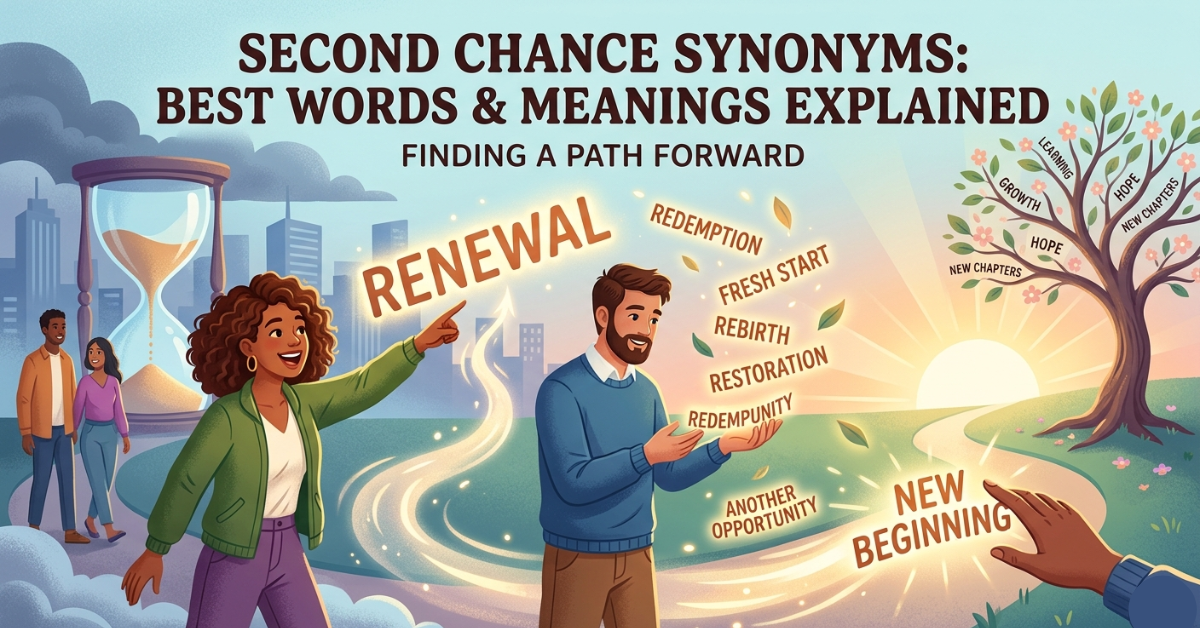
1. Fresh Start
A “fresh start” means beginning again without the burden of past mistakes.
2. New Beginning
This phrase emphasizes a complete reset in life or a situation.
3. Another Chance
A simple and direct way to say someone is being given an additional opportunity.
4. Do-Over
Informal and commonly used, especially when someone wants to repeat something correctly.
5. Redemption
This implies making up for past mistakes and improving oneself.
6. Retry / Reattempt
Often used in technical or academic contexts.
7. Renewal
Suggests restoring something to a better or improved state.
8. Reprieve
A temporary relief or delay, often giving time to improve or correct mistakes.
9. Clean Slate
Means starting over with no past issues affecting the present.
10. Another Shot
Casual phrase meaning another opportunity to try again.
How to Use Second Chance Synonyms in Sentences
Using the right phrase depends on tone and context. Here are some examples:
- After failing the interview, she was grateful for a fresh start in a new company.
- He was given a do-over on his presentation after technical issues.
- The teacher offered students a retry on the final exam.
- Their relationship needed a clean slate to move forward.
These alternatives help you avoid repetition and make your writing more expressive.
Why Learning Second Chance Synonyms Matters
Understanding a second chance synonym is useful for several reasons:
- Improves writing quality and vocabulary
- Helps in professional communication
- Makes emotional expression more precise
- Enhances storytelling and content creation
Whether you’re writing essays, emails, or creative stories, these words help you sound more natural and engaging.
Common Contexts Where These Synonyms Are Used
Second chance expressions are widely used in:
- Education: exam retakes, assignments
- Career: job interviews, promotions
- Personal life: relationships, self-growth
- Legal/official settings: parole, probation, pardons
Each context may require a different synonym depending on tone and formality.
FAQs About Second Chance Synonym
1. What is the most common second chance synonym?
The most common alternatives are “fresh start,” “new beginning,” and “another chance.”
2. Is “do-over” formal or informal?
“Do-over” is informal and usually used in casual conversation or friendly settings.
3. What is a professional synonym for second chance?
In professional writing, terms like “renewal,” “reinstatement,” or “new opportunity” are more suitable.
4. Can “redemption” mean second chance?
Yes, but it specifically refers to improving after mistakes and making things right.
5. How do I choose the right synonym?
It depends on context, tone, and audience. Formal situations need more professional words, while casual talk allows simpler phrases.
Conclusion
Understanding a second chance synonym helps you express ideas of renewal, forgiveness, and opportunity in a more powerful and flexible way. From “fresh start” to “redemption,” each phrase carries its own emotional and contextual meaning.
If you want to improve your writing or communication, start using these alternatives naturally in your daily language. The right words can turn a simple message into something meaningful and impactful.