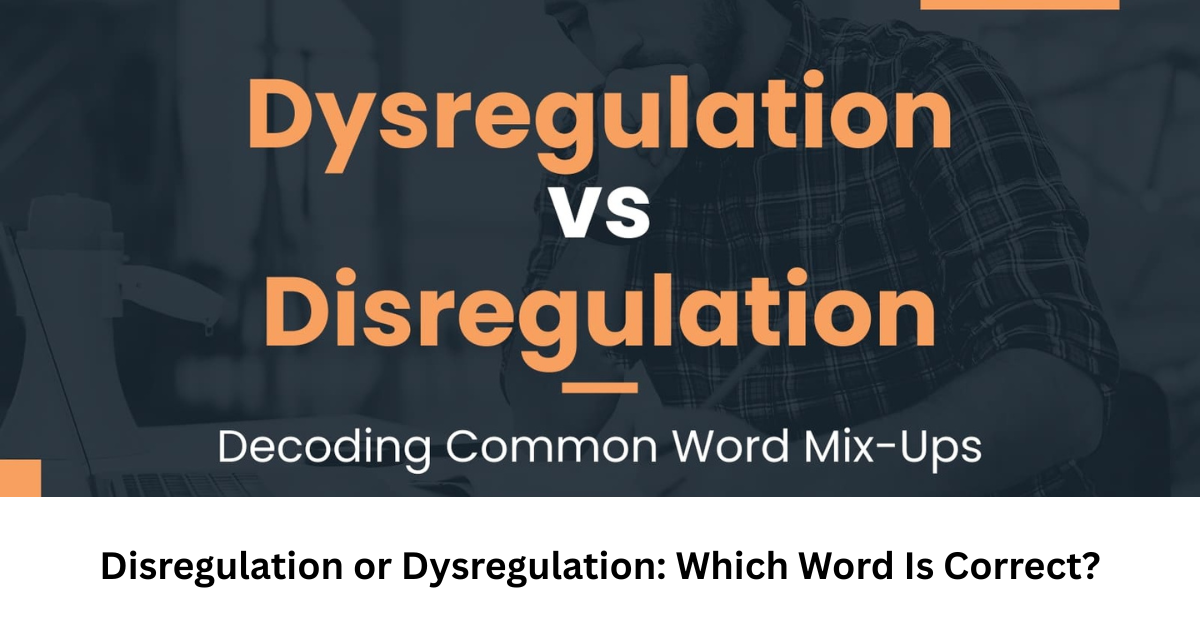
Have you ever paused while writing and wondered whether disregulation or dysregulation is the correct term? You’re not alone. These two words look similar, sound close enough, and often create confusion—especially in psychology, medicine, and everyday writing.
The short answer: dysregulation is the standard and correct word in most contexts. Disregulation is far less common and is often considered a mistaken spelling or rare alternative. Understanding the difference can help you write more accurately and professionally.
In this guide, we’ll break down the meanings, correct usage, examples, and why this spelling mix-up happens so often.
What Does Dysregulation Mean?
Dysregulation refers to an inability to properly regulate or control a system, emotion, process, or bodily function. The prefix dys- comes from Greek and means impaired, abnormal, or difficult.
This term is widely used in healthcare, psychology, and biology.
Common Examples of Dysregulation
- Emotional dysregulation – difficulty managing emotions
- Hormonal dysregulation – imbalance in hormone systems
- Nervous system dysregulation – improper nervous system responses
- Immune dysregulation – immune system malfunction
For example:
Stress can contribute to emotional dysregulation in some individuals.
Is Disregulation a Real Word?
Disregulation is not commonly accepted in standard English dictionaries. In many cases, it appears because people confuse the prefix dis- with dys-.
The prefix dis- usually means:
- opposite of
- lack of
- removal of
- reversal
So while the structure may look possible, it does not carry the medically accepted meaning that dysregulation does.
In professional writing, using disregulation may be seen as incorrect.
Why People Confuse Disregulation and Dysregulation
This mix-up happens for a few simple reasons:
1. Similar Spelling
Both words begin with “d” and end with “regulation,” making them visually close.
2. Common Prefix Familiarity
Many people know words like:
- disconnect
- disorder
- disapprove
So they naturally assume disregulation fits the same pattern.
3. Autocorrect and Typing Errors
Sometimes software misses the error or suggests the wrong form.
Dysregulation in Psychology and Mental Health
One of the most searched uses of this term relates to mental health. Emotional and behavioral control are often discussed using dysregulation.
Emotional Dysregulation Can Include:
- Intense mood swings
- Trouble calming down
- Overreacting to stress
- Difficulty coping with frustration
- Impulsive behavior
This term may appear in discussions about trauma, anxiety, ADHD, PTSD, or borderline personality disorder.
Dysregulation in the Body
The word is also common in medicine because the body depends on balanced systems. When systems stop functioning properly, dysregulation can occur.
Examples Include:
- Blood sugar dysregulation – problems managing glucose
- Sleep dysregulation – disrupted sleep cycles
- Temperature dysregulation – body heat imbalance
- Stress response dysregulation – chronic fight-or-flight activation
Which Word Should You Use in Writing?
If you’re writing for school, business, blogging, or healthcare topics, choose dysregulation. It is the recognized and accurate term.
Use it when referring to:
- emotions
- hormones
- nervous system function
- mental health
- biological imbalance
Avoid the other spelling unless quoting a source or discussing the confusion itself.
Quick Comparison Table
| Term | Correct Usage | Meaning | Common Context |
|---|---|---|---|
| Dysregulation | Yes | Impaired regulation | Psychology, medicine |
| Disregulation | Rare/Usually incorrect | Nonstandard or mistaken form | Typing errors |
How to Remember the Difference
A simple trick:
- Dys- = Dysfunction
- Dis- = Disconnect
If you mean something functioning poorly or out of balance, the right choice is usually dysregulation.
Common Sentences Using Dysregulation
- Chronic stress may lead to nervous system dysregulation.
- Emotional dysregulation can affect relationships.
- Hormonal dysregulation may cause fatigue and mood changes.
- Therapy can help manage patterns of emotional dysregulation.
FAQs
Is disregulation a typo?
Often, yes. In most cases, people mean dysregulation but accidentally write the other form.
Is dysregulation a medical term?
Yes. It is widely used in psychology, psychiatry, neuroscience, and medicine.
What is emotional dysregulation?
It means difficulty managing emotional reactions in a balanced way.
Can dysregulation be treated?
Depending on the cause, support may include therapy, lifestyle changes, medication, or stress management.
Why does dysregulation happen?
It can result from trauma, chronic stress, genetics, illness, neurological factors, or environmental triggers.
Conclusion
If you’ve been wondering about disregulation or dysregulation, the correct and trusted term in nearly all cases is dysregulation. It describes systems, emotions, or bodily processes that are not functioning in a balanced way.
Using the right spelling improves clarity, credibility, and professionalism—especially in health or psychology topics. If you often write about wellness, behavior, or medicine, keeping this distinction in mind will save you from a common mistake.