Have you ever paused while writing and wondered whether it should be gnaw or knaw? You’re not alone. English spelling can be tricky, especially when silent letters and unusual word origins come into play. Many people hear the word and assume it starts with a “K,” but that’s where confusion begins.
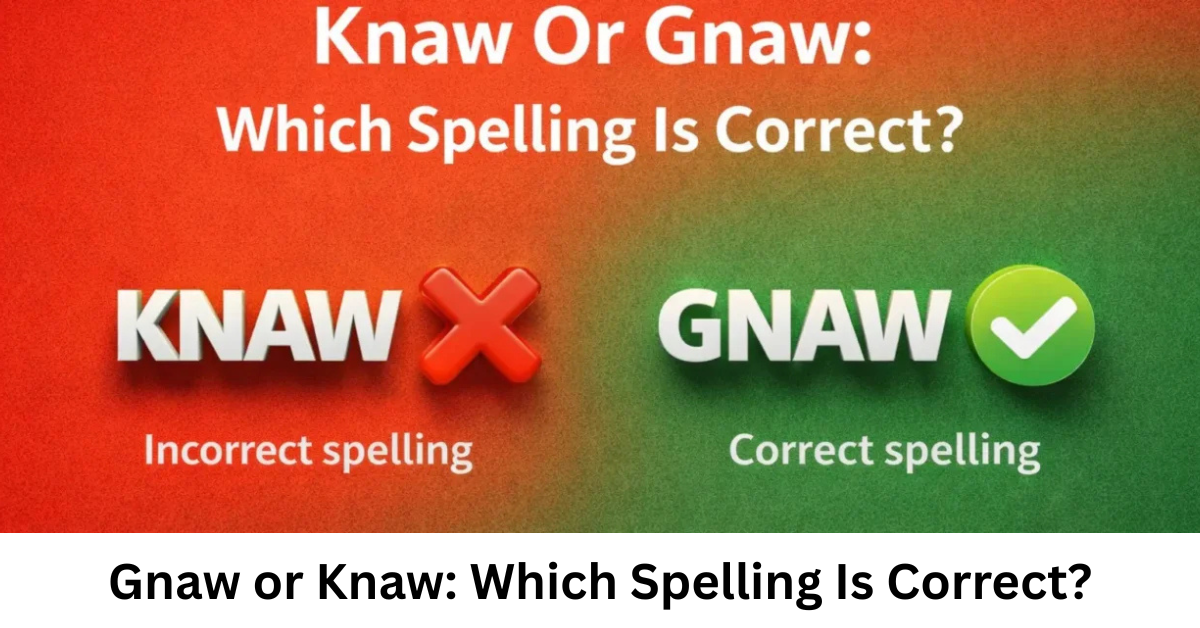
The short answer is simple: gnaw is the correct spelling, while knaw is incorrect in standard English. In this article, we’ll explain why, where the word comes from, how to use it properly, and how to remember it forever.
What Does Gnaw Mean?
The word gnaw means to bite or chew something repeatedly, often with the teeth. It can also be used figuratively to describe something that causes ongoing worry or discomfort.
Common Definitions of Gnaw
- To chew persistently
- To wear away by biting
- To trouble the mind constantly
Examples in Sentences
- The dog began to gnaw on the bone.
- Rats can gnaw through wood and plastic.
- Anxiety continued to gnaw at him all night.
Gnaw or Knaw: Why Is Gnaw Correct?
The correct spelling is gnaw because it comes from Old English and Germanic language roots. Over time, English kept the unusual “gn” combination even though the “g” became silent in pronunciation.
That’s why we say it like “naw,” but write it as gnaw.
Why People Write “Knaw”
Many English words begin with silent “k,” such as:
- Knife
- Knee
- Knock
- Know
Because of these examples, some writers mistakenly think this word should follow the same pattern. However, knaw is not recognized as a standard dictionary word.
How to Pronounce Gnaw
Although spelled with “gn,” the word is pronounced:
/nɔː/ or naw
The “g” is silent. This silent-letter pattern also appears in words like:
- Gnome
- Gnash
- Sign (different pattern, but silent letter concept)
Easy Trick to Remember the Correct Spelling
If you confuse gnaw or knaw, use this memory tip:
Animals gnaw.
The word starts with “g,” and many animals like dogs, mice, and beavers are famous for chewing. Linking the action to animals can help fix the spelling in your mind.
Figurative Meaning of Gnaw
The word is not only about biting objects. It often describes emotions or thoughts that slowly bother someone.
Examples
- Guilt began to gnaw at her conscience.
- Doubt can gnaw away at confidence.
- Hunger was starting to gnaw in his stomach.
This figurative use makes the word common in literature and everyday speech.
Common Grammar Mistakes Related to Gnaw
Here are forms people often misuse:
- Knaw – Incorrect spelling
- Naw – Pronunciation only, not standard spelling
- Gnawed – Correct past tense
- Gnawing – Correct present participle
Correct Forms
- Present: gnaw
- Past: gnawed
- Continuous: gnawing
Why English Has Strange Spellings Like This
English developed from many languages, including Old English, Norse, Latin, and French. That’s why pronunciation and spelling don’t always match neatly. Silent letters are leftovers from earlier forms of speech.
Words like gnaw, knife, and write preserve history in their spellings.
Quick Comparison Table
| Word | Correct? | Meaning |
|---|---|---|
| Gnaw | Yes | To chew or bite repeatedly |
| Knaw | No | Misspelling |
| Gnawed | Yes | Past tense of gnaw |
| Gnawing | Yes | Ongoing chewing or worrying |
FAQs
Is it gnaw or knaw?
The correct spelling is gnaw. “Knaw” is a common misspelling.
Why is the G silent in gnaw?
The silent “g” comes from the word’s historical roots in Old English pronunciation patterns.
Can gnaw be used for emotions?
Yes. It can describe worries or fears that slowly trouble someone.
Example: Regret gnawed at him.
How do you spell gnawing?
It is spelled gnawing.
Is knaw in any dictionary?
No major English dictionaries list “knaw” as the standard spelling of the word.
Conclusion
When choosing between gnaw or knaw, always go with gnaw. It is the correct spelling, accepted in dictionaries, and widely used in both literal and figurative contexts. While “knaw” may seem logical because of words like know or knife, it is not standard English.
The next time you write about chewing bones, damaging wood, or worries eating away at someone’s peace of mind, you’ll know exactly which spelling to use: gnaw.