English has plenty of confusing word pairs, and verbiage vs verbage is one of the most searched examples. Many people wonder whether both spellings are acceptable or if one is simply a mistake.
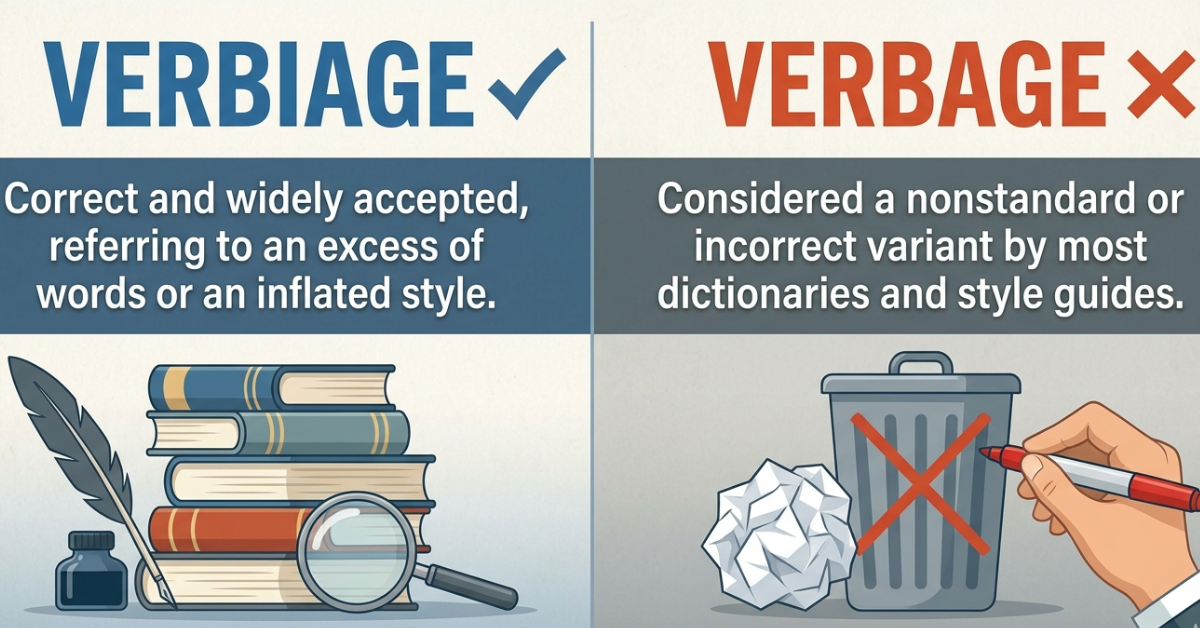
The short answer is simple: “verbiage” is the correct standard word, while “verbage” is generally considered a misspelling. However, there is more to the story than that. Understanding how the term developed and how it is used today can help you avoid grammar mistakes and improve your writing.
In this guide, you will learn the meaning of each form, the correct pronunciation, examples in sentences, and when to use the proper spelling confidently.
What Does “Verbiage” Mean?
The word verbiage refers to language or wording, especially when there are too many unnecessary words. It is often used when writing sounds overly complicated, repetitive, or wordy.
Common Definitions of Verbiage
Depending on the context, the term may mean:
- Excessive wording
- Overly complicated language
- The style or choice of words used in speech or writing
- Unnecessary detail in communication
Examples of Correct Usage
- The contract was full of confusing verbiage.
- Her essay contained too much formal verbiage.
- Please simplify the verbiage in this paragraph.
In modern writing, the word often carries a slightly negative tone because it suggests that the language could be clearer and more concise.
Is “Verbage” a Real Word?
This is where confusion begins. Many people use verbage because it sounds natural when spoken aloud. However, most dictionaries and grammar experts treat it as a nonstandard spelling.
Why People Say “Verbage”
There are several reasons why this variation appears so often:
- It sounds similar to “garbage” or “coverage.”
- The pronunciation of verbiage can make the extra “i” easy to miss.
- Some people assume shorter spellings are acceptable alternatives.
Even though you may occasionally see verbage online or in informal communication, it is not considered proper standard English in professional writing.
Verbiage vs Verbage: The Main Difference
Here is the simplest way to remember the distinction.
| Word | Status | Meaning |
| Verbiage | Correct standard spelling | Excessive or unnecessary wording |
| Verbage | Nonstandard or misspelled form | Usually intended to mean verbiage |
If you are writing essays, business emails, academic papers, or professional content, always choose verbiage.
How to Pronounce Verbiage Correctly
The standard pronunciation is:
vur-bee-ij
Because the middle sound is soft in conversation, many people mistakenly spell it without the “i.” That pronunciation confusion is one of the biggest reasons the incorrect form became popular.
The Origin of the Word
The term verbiage comes from the French word verbier, which relates to wording and expression. It entered English in the early 18th century and originally described excessive language.
Over time, it became commonly associated with:
- Wordiness
- Redundant writing
- Complicated communication
Today, editors and writing teachers often use the word when encouraging concise writing.
When to Use Verbiage in Writing
You can use the term in both formal and informal settings. It works especially well when discussing communication, writing quality, or editing.
Professional Examples
- Legal verbiage can sometimes confuse readers.
- The report contained unnecessary technical verbiage.
- Good editing removes excess verbiage.
Casual Examples
- Stop using fancy verbiage and explain it simply.
- His text messages are full of dramatic verbiage.
Why Clear Writing Matters
One reason people discuss this word so often is because modern communication values clarity. Readers prefer writing that is direct and easy to understand.
Too much complicated wording can:
- Reduce readability
- Confuse the audience
- Make writing sound unnatural
- Lower engagement
Strong writing is usually concise rather than overloaded with unnecessary phrases.
Common Mistakes Related to the Word
Many grammar mistakes happen because people rely on pronunciation instead of checking spelling.
Frequent Errors
- Writing verbage in academic papers
- Assuming both forms are interchangeable
- Using the term incorrectly to mean “vocabulary”
Remember, verbiage does not simply mean “words.” It usually suggests excessive wording or language style.
Tips to Remember the Correct Spelling
If you struggle to remember which form is correct, these tricks can help.
Easy Memory Tricks
- Verbiage contains the word “verb.”
- The correct spelling always includes the letter “i.”
- Think of it as “verbose language.”
Another helpful tip is to connect it with the word verbose, which also refers to using too many words.
Verbiage in Modern Communication
Interestingly, the meaning of the word has softened in some modern contexts. Some people now use it neutrally to describe wording in general, especially in business or marketing discussions.
For example:
- “We need to update the website verbiage.”
- “The advertisement verbiage should sound friendlier.”
Even in these cases, the correct spelling remains unchanged.
Verbiage vs Similar Terms
Several English words are closely related to this term, but they are not identical.
Verbose
Describes someone who uses too many words.
Jargon
Specialized language used by a particular profession or group.
Wording
The exact language used in a sentence or statement.
Terminology
A set of technical terms related to a field.
Understanding these differences can improve both writing accuracy and vocabulary.
FAQs
Is verbage ever correct?
In standard English, it is generally considered incorrect or nonstandard. Professional writing should use verbiage.
What does verbiage mean?
It usually refers to excessive, unnecessary, or overly complicated wording.
Why do people spell it as verbage?
The pronunciation makes the middle “i” easy to overlook, leading many people to spell it incorrectly.
Can verbiage have a positive meaning?
Sometimes. In marketing or business settings, people occasionally use it neutrally to describe wording or phrasing.
Is verbiage formal or informal?
It can be used in both formal and informal contexts, though it often appears in editing, academic, and professional discussions.
Conclusion
Understanding verbiage vs verbage is actually quite simple once you know the rule. Verbiage is the accepted and correct spelling, while verbage is widely viewed as a misspelling or nonstandard variation.
Using the proper form helps your writing appear more polished, professional, and credible. It also shows attention to detail, which matters in academic work, business communication, and online content.
The next time you encounter the word, remember this simple rule: if you want the standard English spelling, choose verbiage every time.