English spelling mistakes are common, especially when two words sound almost identical. One of the most searched spelling questions online is genious or genius. Many people accidentally add an extra “o” because the pronunciation can be misleading.
The truth is simple: genius is the correct spelling, while “genious” is considered incorrect in standard English. Understanding why this mistake happens can help you avoid it in writing, exams, emails, and professional communication.
In this guide, you will learn the correct usage, meaning, examples, memory tricks, and common grammar mistakes related to this word.
What Does “Genius” Mean?
The word “genius” refers to someone with exceptional intelligence, creativity, or talent. It can also describe a brilliant idea or an extraordinary ability in a particular field.
For example:
- Albert Einstein is often called a genius.
- She had a genius idea for the project.
- The musician showed genius from an early age.
The word comes from Latin and has been part of English vocabulary for centuries.
Why Do People Write “Genious”?
The incorrect spelling usually happens because of pronunciation confusion. Many English words that end with a soft “j” sound contain “-ious,” such as:
- curious
- serious
- obvious
Because of these patterns, people assume the same rule applies here. However, “genius” follows a different spelling structure.
The Correct Spelling Explained
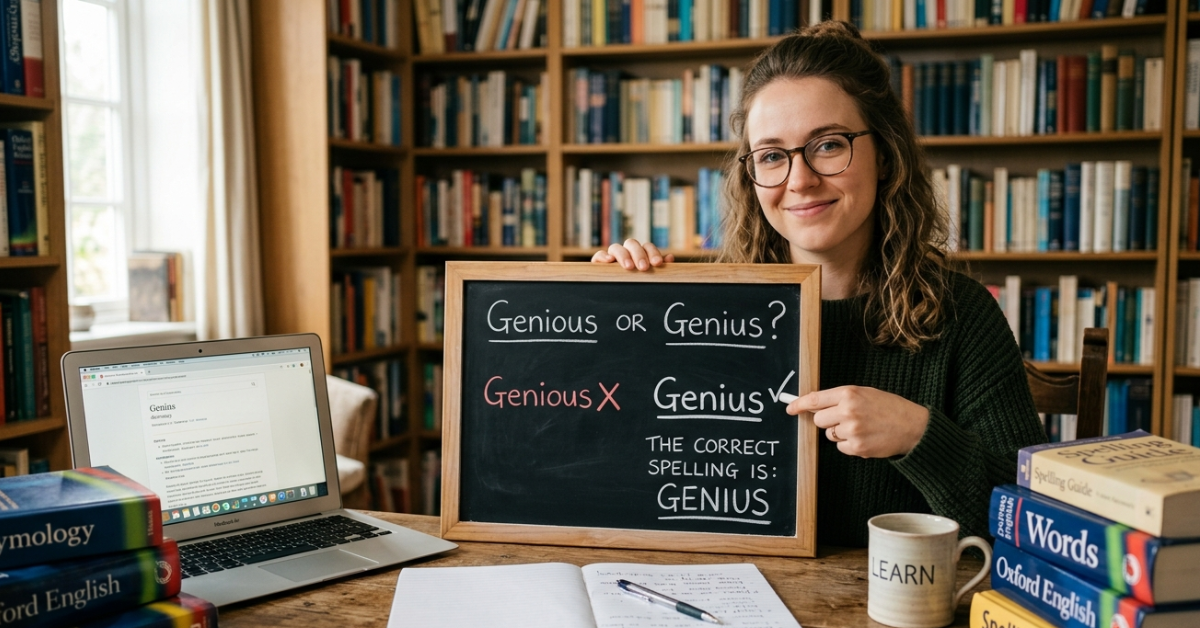
Here is the simple rule:
- Genius = Correct
- Genious = Incorrect
The correct form contains:
- G-E-N-I-U-S
There is no extra “o” after the “i.”
Easy Trick to Remember the Right Spelling
A quick memory trick can make this word easier to remember.
Think of this sentence:
“A genius uses ideas.”
Notice how “ius” appears in both “genius” and “uses.” This can help you remember the ending correctly.
Another simple method is to read it slowly:
Gen + ius
Breaking the word into parts often prevents spelling mistakes.
Examples in Everyday Sentences
Here are some natural examples showing proper usage:
- The young inventor was called a genius by her teachers.
- His solution to the problem was pure genius.
- Many artistic geniuses were misunderstood during their lifetimes.
- The scientist became famous for his genius discoveries.
These examples show how the word can describe both people and ideas.
Common Grammar and Spelling Mistakes
People often confuse similar-looking English words. Here are a few examples related to spelling confusion:
| Incorrect | Correct |
| Genious | Genius |
| Recieve | Receive |
| Definately | Definitely |
| Seperate | Separate |
These mistakes usually happen because English pronunciation does not always match spelling patterns.
Is “Genious” Ever Accepted?
In modern dictionaries and formal writing, “genious” is not accepted as a correct English word.
Spell-check tools, grammar software, academic institutions, and professional editors all recognize “genius” as the standard form.
If you use the incorrect spelling in:
- job applications
- academic assignments
- blog articles
- professional emails
it may appear careless or unpolished.
How to Improve English Spelling Skills
If you frequently mix up spellings, these strategies can help:
1. Read More Often
Regular reading improves word recognition naturally.
2. Use Memory Associations
Connect difficult words with short phrases or visual tricks.
3. Practice Writing
Writing words repeatedly helps build long-term memory.
4. Use Spell-Check Carefully
Grammar tools help, but understanding the rule yourself is even better.
5. Learn Word Origins
Knowing where words come from can make spelling patterns easier to understand.
Why Correct Spelling Matters
Correct spelling affects how others perceive your writing. Even small mistakes can influence:
- academic grades
- professional credibility
- online content quality
- SEO performance
- reader trust
Clear and accurate writing creates a stronger impression and improves communication.
Frequently Asked Questions
Is “genious” a real word?
No. It is considered a misspelling in standard English.
How do you spell genius correctly?
The correct spelling is:
G-E-N-I-U-S
Why do people confuse these spellings?
The confusion happens because many English words end with “-ious,” which influences pronunciation expectations.
Can I use the incorrect spelling informally?
You can, but it is still grammatically incorrect and may look unprofessional.
What is the plural form of genius?
The plural form can be:
- geniuses
- geniī (rare and mostly classical usage)
Is genius used only for intelligent people?
No. It can also describe brilliant ideas, artistic talent, or exceptional creativity.
Conclusion
The confusion between genious or genius is very common, but the correct choice is easy once you understand the rule. “Genius” is the only accepted spelling in modern English, while “genious” is simply a spelling mistake caused by pronunciation patterns.
Remembering a small spelling trick, reading regularly, and practicing written English can help you avoid this error permanently. Correct spelling not only improves communication but also makes your writing appear more polished, professional, and trustworthy.