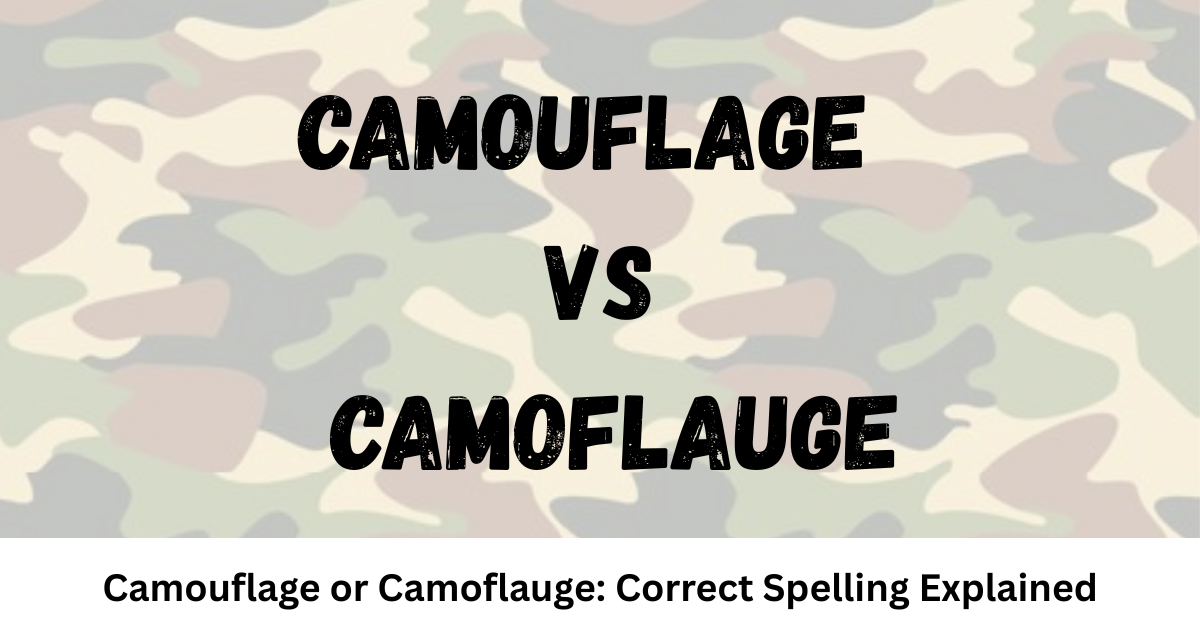
Have you ever typed camouflage or camoflauge and paused, wondering which version is right? You’re not alone. This word is commonly misspelled because its letters don’t sound exactly how they look. Many people swap letters around and end up using the wrong version.
The short answer is simple: camouflage is the correct spelling, while camoflauge is a misspelling. In this guide, you’ll learn why the mistake happens, what the word means, where it came from, and how to remember the proper spelling with confidence.
What Does Camouflage Mean?
Camouflage refers to something designed to blend into its surroundings and avoid detection. It is often linked to military uniforms, animals in nature, hunting gear, and fashion trends.
Examples include:
- A soldier wearing a forest-pattern uniform
- A chameleon changing color to hide
- A tiger’s stripes helping it blend into tall grass
- Clothing designed with green and brown patterns
The word can also be used metaphorically, meaning to hide something or make it less noticeable.
Example:
She used makeup to camouflage the scar.
Is Camoflauge a Real Word?
No, camoflauge is not a standard English word. It is simply a spelling error. People often type it because the correct arrangement of letters can feel confusing.
This happens with words borrowed from other languages, especially when pronunciation and spelling don’t match perfectly.
Why People Misspell Camouflage
There are several reasons this word gets typed incorrectly so often.
1. Unusual Letter Order
The ending -flage may seem more natural to some people than -flage vs -flage confusion, causing letters to be reversed.
2. French Origins
The word came into English from French, so its spelling follows patterns that may seem unfamiliar.
3. Sound vs Spelling
When spoken quickly, many people hear the middle sounds differently and guess the spelling.
How to Spell Camouflage Correctly
Break the word into smaller parts:
camou + flage
Think of it like this:
- camou sounds like “cam-oh”
- flage ends with “lage,” not “lauge”
A quick memory trick:
Camouflage has “lage” like garage.
That simple connection can help you remember it faster.
Origin of the Word Camouflage
The term comes from the French word camoufler, meaning to disguise or conceal. It became widely used during military conflicts when hiding troops, vehicles, and equipment became important.
Over time, the word expanded beyond warfare into fashion, wildlife studies, and everyday language.
Common Uses of the Word Today
In Nature
Animals use protective coloring to stay safe from predators or sneak up on prey.
Examples:
- Leopards
- Owls
- Frogs
- Arctic foxes
In Military Use
Special patterns help soldiers and vehicles blend into forests, deserts, snow, or urban settings.
In Fashion
Camouflage prints became popular in jackets, pants, shoes, and accessories.
In Everyday Speech
People also use it figuratively.
Example:
- He tried to camouflage his nervousness with a smile.
Camouflage vs Similar Words
Sometimes people confuse this term with related words. Here’s the difference:
- Disguise – changing appearance intentionally
- Concealment – keeping something hidden
- Blending – matching surroundings
- Camouflage – combining concealment with visual blending
Easy Tips to Avoid the Misspelling
Use these strategies:
- Save the correct version in your phone dictionary
- Practice typing it three times
- Associate it with military uniforms
- Remember it ends in -lage
- Let spellcheck guide you when unsure
Why Correct Spelling Matters
Using the right spelling improves:
- Professional writing
- Search engine results
- School assignments
- Social media captions
- Product listings and blog content
A small spelling mistake can reduce trust and clarity, especially online.
FAQs
Which is correct: camouflage or camoflauge?
Camouflage is correct. The other version is a misspelling.
Why is camouflage hard to spell?
Because the letter order feels unusual and the pronunciation can be misleading.
Is camouflage only used for military items?
No. It is also used for animals, fashion, art, and figurative language.
How do I remember the spelling?
Think of the ending -lage, similar to the word “garage.”
Can camouflage be a verb?
Yes. Example: They camouflaged the vehicle with branches.
Conclusion
If you’ve been wondering about camouflage or camoflauge, the answer is clear: camouflage is the correct spelling. The confusion is common, but once you understand the letter pattern and origin, it becomes much easier to remember.
Use the proper spelling in writing, searches, and conversation to sound polished and accurate. If language tips like this interest you, explore more commonly confused words and sharpen your vocabulary every day.