English grammar can be tricky, especially when one small apostrophe changes everything. Many people search yesterdays or yesterday’s because both forms look similar, yet only one is correct in most everyday situations. Have you ever paused while writing “yesterday’s news” or wondered whether “yesterdays” is a real word? If so, you’re not alone.
In this guide, we’ll explain is it yesterdays or yesterday’s, break down the grammar behind each version, and share clear examples so you can use the right form confidently.
Is It Yesterdays or Yesterday’s?
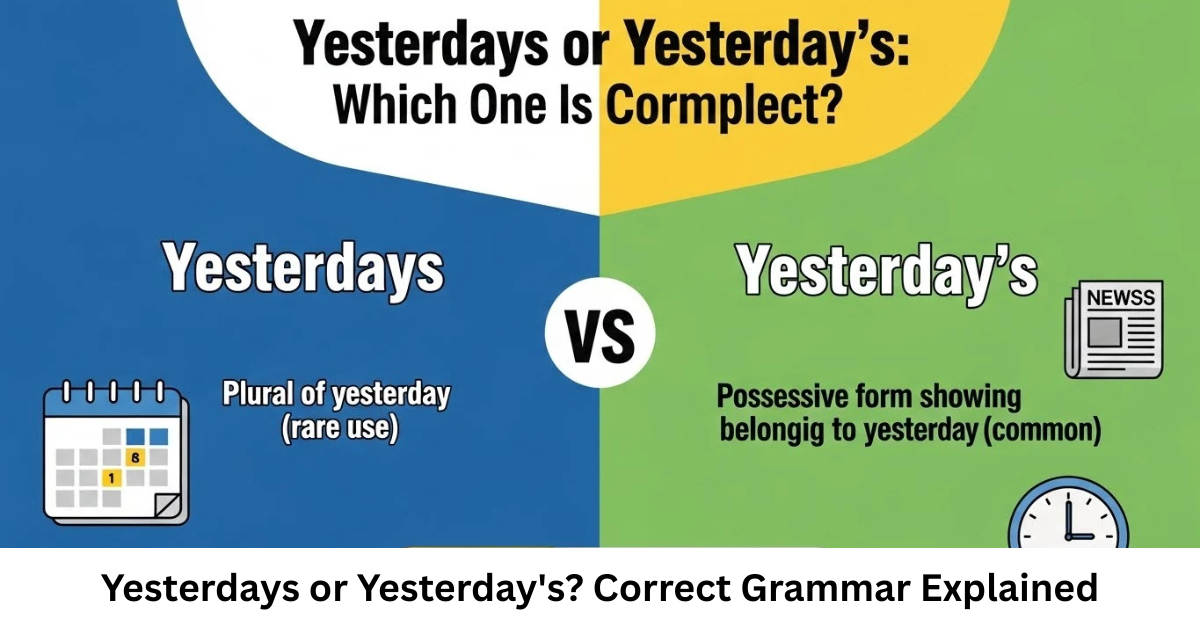
The short answer: Yesterday’s is usually correct.
This form is the possessive version of yesterday, meaning something belongs to, relates to, or happened during the previous day.
Examples:
- Yesterday’s meeting was productive.
- I read yesterday’s newspaper.
- The weather yesterday was perfect.
The apostrophe shows possession or connection.
What Does Yesterday’s Mean?
When you write yesterday’s, you are referring to something linked to the day before today.
Think of it like:
- Today’s schedule
- Tomorrow’s plans
- Yesterday’s results
Common Uses of Yesterday’s
You’ll often see this word paired with:
- news
- events
- meeting
- game
- report
- mistakes
- memories
Example Sentences:
- Yesterday’s game was exciting.
- We discussed problems from yesterday.
- I learned from yesterday’s mistakes.
Is Yesterdays Ever Correct?
Yes, but it is far less common.
Yesterdays is the plural form of yesterday, meaning multiple past days. Writers usually use it in poetic, literary, or reflective contexts.
Examples:
- She often dreams of happier yesterdays.
- The town remembers its glorious yesterdays.
In regular daily writing, this form sounds uncommon.
Yesterday’s vs Yesterdays: Key Difference
| Word | Meaning | Common Use |
|---|---|---|
| Yesterday’s | Possessive form of yesterday | Very common |
| Yesterdays | Plural form of yesterday | Rare, literary |
If you are writing about something from the previous day, yesterday’s is almost always the right choice.
Easy Trick to Remember
Use this simple rule:
Choose Yesterday’s if something belongs to yesterday
- yesterday’s homework
- yesterday’s match
- yesterday’s conversation
Choose Yesterdays if referring to many past days
- forgotten yesterdays
- beautiful yesterdays
Why People Get Confused
Several reasons cause confusion:
- Both words look nearly identical.
- Apostrophes are often misused in English.
- Spellcheck tools may not explain grammar context.
- Spoken English does not show punctuation.
Because of this, many people search is it yesterdays or yesterday’s before writing.
Examples in Real Sentences
Correct Everyday Usage
- I finished yesterday’s assignment.
- Did you watch yesterday’s episode?
- Traffic yesterday was terrible.
Literary or Emotional Usage
- We long for the yesterdays of youth.
- Old songs bring back forgotten yesterdays.
Common Mistakes to Avoid
Wrong: Yesterdays meeting was long.
Correct: Yesterday’s meeting was long.
Wrong: I miss yesterday’s of childhood.
Correct: I miss the yesterdays of childhood.
Always check whether you need a possessive form or a plural meaning.
FAQs
Is yesterday’s grammatically correct?
Yes. It is the possessive form of yesterday and is commonly used.
Is yesterdays a real word?
Yes, but it is the plural form and rarely used outside poetic or reflective writing.
How do I know which one to use?
If referring to something from the previous day, use yesterday’s. If talking about multiple past days, use yesterdays.
Can I use yesterdays in normal writing?
You can, but it may sound unusual unless used creatively.
Why does yesterday’s need an apostrophe?
The apostrophe shows possession or connection to the previous day.
Conclusion
When deciding between yesterdays or yesterday’s, the correct choice in most situations is yesterday’s. It describes something connected to the previous day, such as yesterday’s meeting or yesterday’s news. Meanwhile, yesterdays exists too, but it is mainly used in poetic or nostalgic writing about many past days.
Next time you wonder is it yesterdays or yesterday’s, remember this simple rule: if it belongs to yesterday, use the apostrophe.