Have you ever typed wining or winning and paused to wonder which one is right? You’re not alone. These two words look similar, sound close, and often confuse writers, students, and even fluent English speakers.
The truth is simple: both words are correct—but they mean very different things. Knowing when to use each one can instantly improve your grammar and writing confidence. In this guide, we’ll break it down in the easiest way possible.
Wining or Winning: The Quick Answer
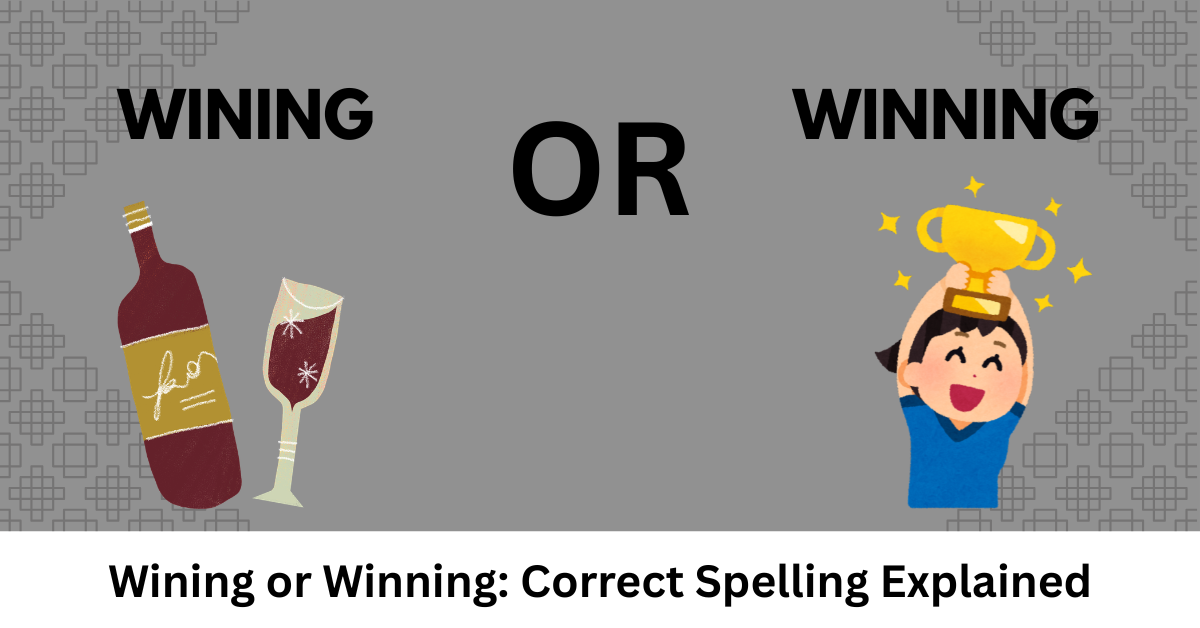
- Winning = Gaining victory, succeeding, coming first.
- Wining = Serving wine, entertaining with wine, or related to wine.
Most of the time, people mean winning when talking about success, sports, games, competitions, or achievement.
Example:
- She is winning the race.
- She is wining the race.
What Does Winning Mean?
Winning is the present participle of the verb win. It refers to success, victory, or gaining something desirable.
Common Uses of Winning:
- Winning a game
- Winning a prize
- Winning a competition
- Winning someone’s trust
- Winning in business
Example Sentences:
- Our team is winning the match.
- He kept working hard and started winning awards.
- She is winning hearts with her kindness.
What Does Wining Mean?
Wining comes from the verb wine, which means to entertain someone with wine or serve wine. It is far less common in daily conversation.
You may also hear the phrase wine and dine, which means treating someone to food and drinks.
Example Sentences:
- The guests were being wined and dined at the event.
- The company spent the evening wining important clients.
Why People Confuse Wining and Winning
The confusion happens because:
- Both words look nearly identical.
- They have similar pronunciation in fast speech.
- Many people rarely use wining, so they assume it is a typo.
- Autocorrect sometimes misses context.
Easy Trick to Remember the Difference
Use this memory tip:
- Winning has two n’s = think of “Number one.”
- Wining has one n = related to wine.
This small trick makes it easier to choose the correct spelling quickly.
Wining or Winning in Everyday English
In modern English, winning is much more common. If you’re talking about:
- Exams
- Games
- Money
- Contests
- Success
- Progress
Then the correct word is almost always winning.
If you’re discussing luxury hospitality, events, or serving wine, then wining may fit.
Grammar Rule Behind Winning
Why does win become winning with double “n”?
When a one-syllable verb ends in consonant-vowel-consonant, the final consonant is often doubled before adding -ing.
Examples:
- Run → Running
- Sit → Sitting
- Win → Winning
That’s why wining does not mean the action form of win.
Common Mistakes to Avoid
Incorrect:
- I am wining the game.
- She keeps wining competitions.
Correct:
- I am winning the game.
- She keeps winning competitions.
Wining or Winning in Social Media Captions
If you want to post about success or motivation, use winning:
- Winning mindset
- Winning season
- Always winning
- Winning energy only
Using wining here would usually be incorrect unless the topic is wine.
FAQs
Is wining a real word?
Yes, wining is a real English word, but it relates to wine or entertaining with wine.
Which is more common: wining or winning?
Winning is far more common in everyday speech and writing.
Is wining the ing form of win?
No. The correct -ing form of win is winning.
Why does winning have double n?
Because grammar rules often double the final consonant before adding -ing to short one-syllable verbs like win.
Can I use wining in sports?
No. In sports, contests, and success contexts, use winning.
Conclusion
When comparing wining or winning, the right choice depends on meaning. If you’re talking about victory, success, prizes, or progress, use winning. If you mean serving wine or entertaining with drinks, use wining.
Since most people mean success, winning is usually the correct word. Keep this difference in mind, and your English will instantly look sharper and more professional.