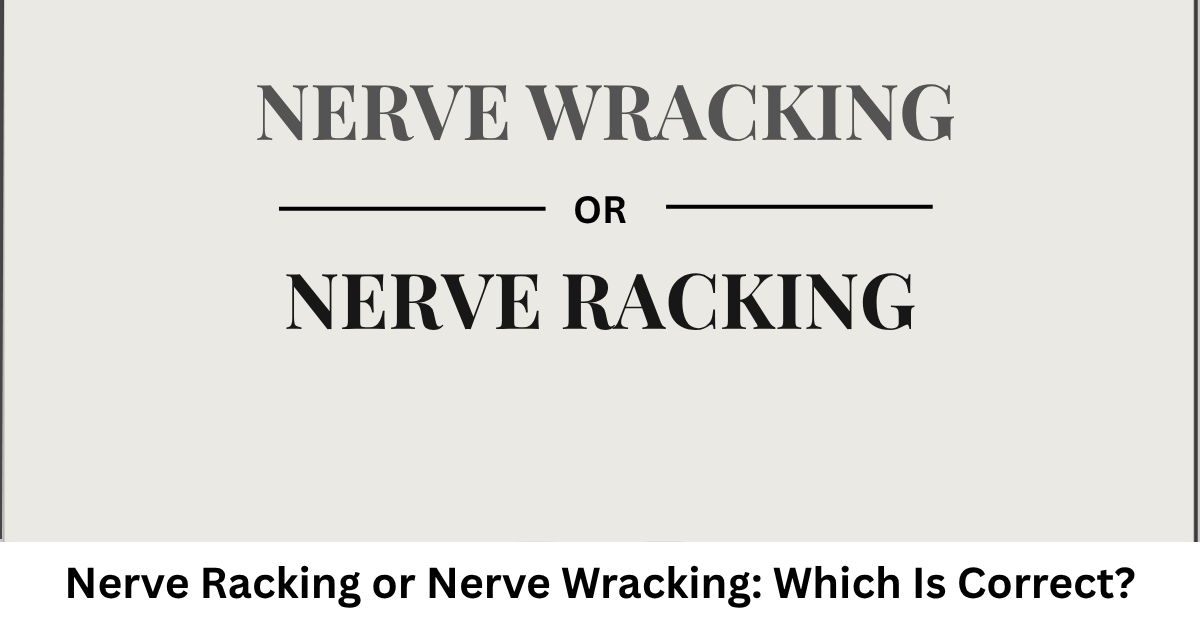
Ever typed a sentence and paused at the phrase nerve racking or nerve wracking? You are not alone. Many writers, students, and professionals hesitate when choosing between these two spellings because both appear online and in everyday use.
The short answer: nerve-racking is the traditional and widely accepted spelling. Nerve-wracking is also commonly used and recognized today, especially in modern informal writing. In this guide, we’ll break down the meaning, origin, grammar, and best usage so you can write with confidence.
What Does the Phrase Mean?
The phrase describes something that causes intense stress, anxiety, or mental tension.
Examples:
- Waiting for exam results can be nerve-racking.
- Driving in heavy traffic may feel nerve-wracking.
- Job interviews are often nerve-racking experiences.
It is usually used when talking about situations that make someone feel emotionally strained.
Nerve Racking or Nerve Wracking: The Correct Spelling
Traditional Standard: Nerve-Racking
Most dictionaries and style guides list nerve-racking as the original and preferred form.
The word rack historically means to torture, strain, or cause suffering. So, something nerve-racking is literally something that strains your nerves.
Modern Variant: Nerve-Wracking
Over time, many people began writing nerve-wracking because the word wrack can mean destruction, damage, or distress.
Today, this spelling is widely understood and accepted in many publications, though some editors still prefer nerve-racking.
Quick Verdict
If you want the safest choice for academic, business, or formal writing:
Use nerve-racking
If you’re writing casually or creatively:
Nerve-wracking is usually acceptable too.
Why People Confuse These Spellings
English has many words that sound the same but have different spellings. Rack and wrack are a classic example.
Reasons for confusion:
- Both are pronounced the same
- Both relate to stress or damage
- Both versions appear online
- Language changes over time
That’s why searches for nerve racking or nerve wracking remain common.
Which Version Do Dictionaries Prefer?
Most major dictionaries include both spellings, but many list nerve-racking first.
In professional contexts, editors often recommend consistency. If you choose one form, stick with it throughout your writing.
Examples in Sentences
Using Nerve-Racking
- The final minutes of the match were nerve-racking.
- Public speaking can be nerve-racking for beginners.
- It was a nerve-racking wait at the hospital.
Using Nerve-Wracking
- The roller coaster ride was nerve-wracking.
- Moving to a new city felt nerve-wracking.
- Negotiations became nerve-wracking near the deadline.
Best Choice for Formal Writing
If you’re submitting essays, reports, resumes, or professional emails, choose nerve-racking. It is more traditional and less likely to be questioned.
Use it in:
- Academic papers
- Business communication
- News articles
- Professional blogs
- Exams and assignments
Common Grammar Tip
The phrase is often written with a hyphen:
nerve-racking
nerve-wracking
Without the hyphen, some readers may still understand it, but the hyphenated form looks cleaner and more standard.
Similar Expressions
If you want alternatives, try:
- Stressful
- Tense
- Anxiety-inducing
- High-pressure
- Emotionally exhausting
- Intense
These can help avoid repetition in your writing.
FAQs
Is nerve wracking wrong?
Not exactly. It is a recognized modern variant, but nerve-racking is usually preferred in formal writing.
Why is it called nerve-racking?
Because the older meaning of rack refers to causing strain or torment, which fits the idea of stressed nerves.
Which spelling should I use in an essay?
Use nerve-racking for the safest and most widely accepted option.
Are both spellings in dictionaries?
Yes, many dictionaries recognize both versions today.
Is there a difference in meaning?
No major difference. Both mean something stressful or anxiety-inducing.
Conclusion
When deciding between nerve racking or nerve wracking, remember this: both are understood, but nerve-racking remains the standard choice in formal English. Nerve-wracking is common in modern usage and acceptable in casual contexts.
If you want to avoid correction or confusion, stick with nerve-racking. Small language choices like this can make your writing look sharper and more polished.