Have you ever typed a word with confidence, only to see that red spell-check line appear? If you’ve wondered about immaculate or emaculate, you’re not alone. Many people mix up these spellings because they sound similar when spoken quickly.
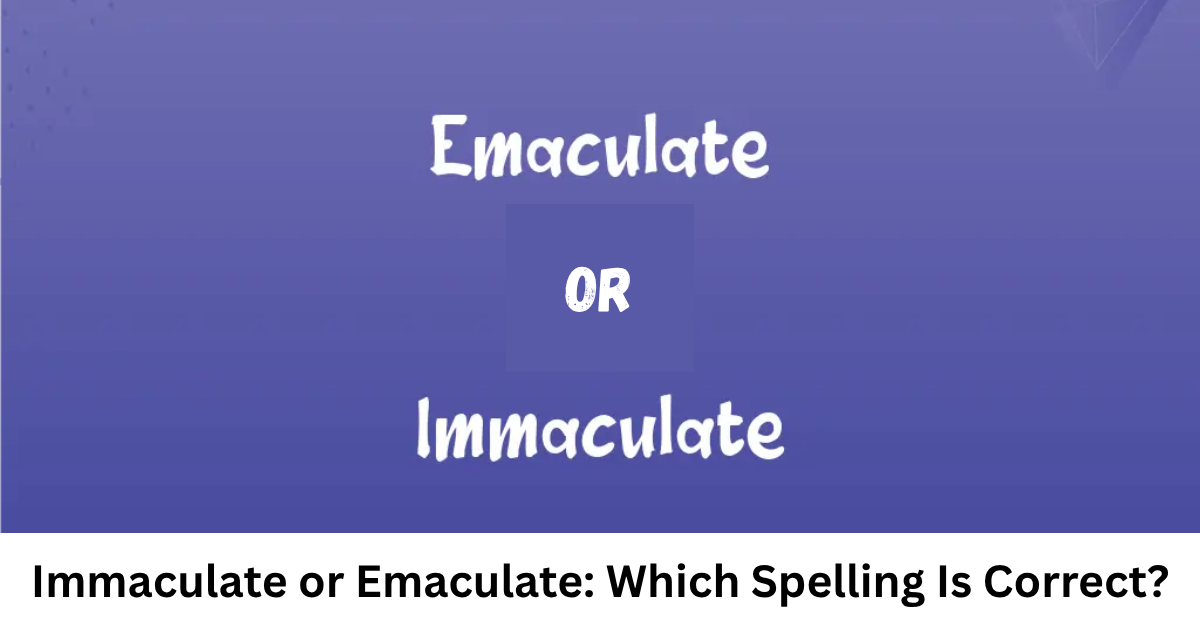
The simple answer is this: immaculate is the correct spelling, while emaculate is a misspelling. In this article, we’ll break down the meaning, pronunciation, common mistakes, and how to remember the right version easily.
What Does Immaculate Mean?
The word immaculate is an adjective used to describe something perfectly clean, flawless, or free from mistakes. It often refers to cleanliness, neatness, or exceptional condition.
Common Meanings of Immaculate:
- Spotlessly clean
- Perfectly organized
- Without errors
- Pure or flawless
Example Sentences:
- Her kitchen was absolutely immaculate.
- He arrived in an immaculate white suit.
- The presentation was immaculate and well-prepared.
Is Emaculate a Real Word?
No, emaculate is not recognized as a standard English word. It is usually a spelling error made when someone intends to write immaculate.
Because the pronunciation can sometimes sound soft at the beginning, people mistakenly replace “im” with “em.” This is a common phonetic spelling mistake.
Why Do People Confuse Immaculate or Emaculate?
Spelling confusion happens more often than people think. Here are the main reasons:
1. Similar Sounding Pronunciation
When spoken casually, the first syllable of immaculate may sound unclear, leading some people to write it incorrectly.
2. Fast Typing
People typing quickly often substitute vowels or letters without noticing.
3. Lack of Familiarity
If someone has heard the word more than they’ve seen it written, they may guess the spelling incorrectly.
How to Remember the Correct Spelling
A quick trick to remember immaculate is to break it into parts:
Im + maculate
Think of it as a word that starts with IM, not EM. Another helpful tip is to associate it with “impressive cleanliness.”
Pronunciation Guide
Immaculate is commonly pronounced as:
ih-MAK-yuh-lit
Hearing the word correctly and reading it regularly can help lock in the right spelling.
When to Use Immaculate in Writing
Use immaculate when describing something that is exceptionally clean, tidy, perfect, or polished.
Examples in Different Contexts:
Home and Cleaning
- The hotel room looked immaculate.
Fashion
- She wore an immaculate dress to the event.
Work Quality
- His report was immaculate, with no grammar mistakes.
Common Misspellings Similar to Emaculate
Many English words are misspelled due to pronunciation. Here are similar examples:
- Definately → Definitely
- Recieve → Receive
- Emaculate → Immaculate
- Seperate → Separate
Learning common spelling traps improves writing confidence.
Immaculate in Popular Usage
This word is often used in:
- Interior design descriptions
- Real estate listings
- Fashion reviews
- Professional writing
- Compliments about cleanliness or precision
For example: “The apartment had an immaculate finish.”
Quick Comparison Table
| Word | Correct? | Meaning |
|---|---|---|
| Immaculate | Yes | Perfectly clean or flawless |
| Emaculate | No | Misspelling |
FAQs
Is it immaculate or emaculate?
The correct spelling is immaculate. Emaculate is incorrect.
What does immaculate mean?
It means perfectly clean, neat, flawless, or without mistakes.
Why do people spell immaculate wrong?
Usually because of pronunciation confusion or typing too quickly.
Can I use emaculate in formal writing?
No. It is considered a spelling error and should be replaced with immaculate.
Is immaculate a positive word?
Yes, it is often used as a compliment for cleanliness, appearance, or quality.
Conclusion
If you’ve been unsure about immaculate or emaculate, now you know the answer clearly. Immaculate is the only correct spelling and is used to describe something spotless, perfect, or highly polished. Emaculate is simply a common mistake.
The next time you write the word, choose immaculate with confidence. Small spelling corrections like this can make your writing look sharper, smarter, and more professional.