Have you ever paused while writing and wondered whether it is occasion or ocasion? You’re not alone. This is one of the most common spelling confusions in English writing.
The correct word is “occasion”, but many people mistakenly write it as “ocasion.” In this article, we’ll break down the difference, meaning, usage, and easy ways to remember the correct spelling so you never make the mistake again.
Understanding occasion or ocasion is important for clear and professional writing, especially in emails, essays, and SEO content.
What Does “Occasion” Mean?
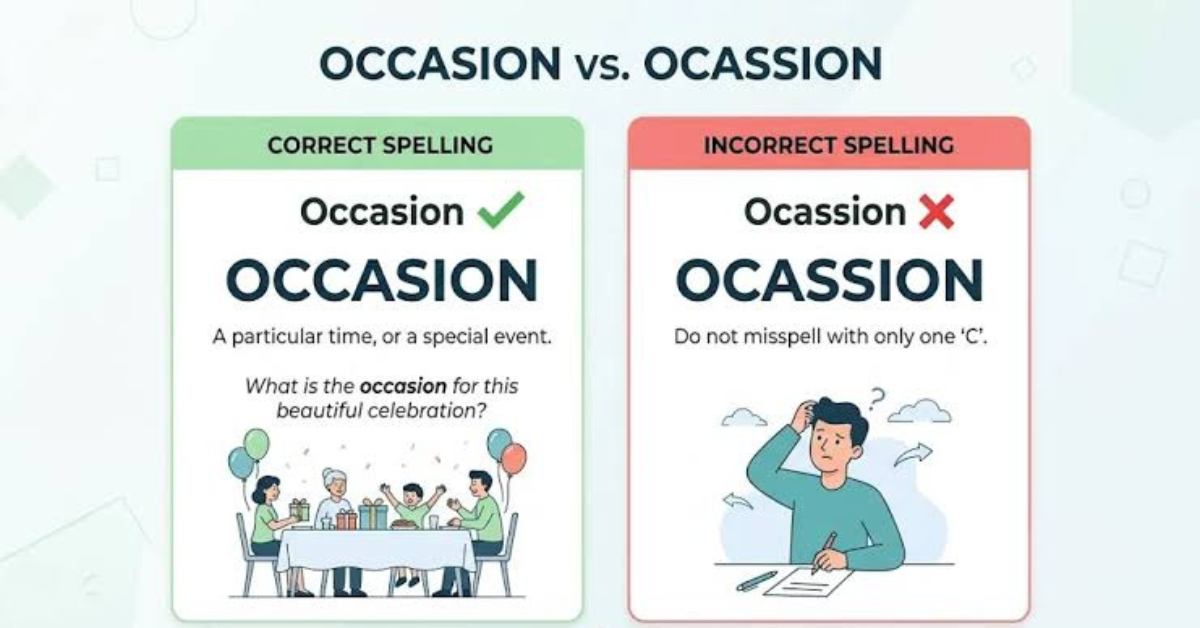
The word occasion refers to a special event, moment, or time when something happens.
It can be used in different contexts such as:
- A celebration or event (birthday, wedding, etc.)
- A particular moment in time
- A reason for doing something
Examples:
- It was a happy occasion for the whole family.
- On one occasion, she helped a stranger in need.
Many learners confuse occasion or ocasion, but only “occasion” is correct in standard English.
Occasion or Ocasion: Which Spelling is Correct?
Let’s clear the confusion once and for all.
The correct spelling is: occasion
The incorrect spelling is: ocasion
The mistake usually happens because:
- English pronunciation can be misleading
- People drop one of the repeated letters “c”
- Typing errors or lack of familiarity with the word
So whenever you see ocasion or occasion, always remember that only occasion is accepted in formal writing.
Why Do People Misspell “Occasion”?
There are a few common reasons why people write ocasion or occasion incorrectly:
1. Double Letter Confusion
The word has double letters “cc” and “s,” which makes it tricky.
2. Phonetic Writing
People often write words as they sound, leading to spelling mistakes.
3. Lack of Practice
Less reading and writing exposure increases spelling errors.
4. Fast Typing Habits
Auto-correct doesn’t always catch every mistake, especially in informal writing.
Easy Ways to Remember the Correct Spelling
If you often get confused between these words, these tips will help.
1. Break It Down
Think of it like:
oc-ca-sion
2. Remember the Double “C” Rule
An important occasion always has double importance — and double “c.”
3. Link It With Common Words
Words like “attention” or “addition” also use double letters, just like occasion.
4. Practice Writing
The more you use it correctly, the more natural it becomes.
Common Uses of the Word “Occasion”
The word occasion is versatile and used in different ways:
1. Special Events
- Graduation is a proud occasion.
2. Formal Situations
- He dressed formally for the occasion.
3. Rare Events
- On rare occasions, mistakes happen.
Understanding the correct form of occasion or ocasion ensures your writing sounds professional and polished.
Common Mistakes to Avoid
When using occasion, avoid these errors:
- Writing “ocassion”
- Writing “ocasion”
- Confusing it with similar-sounding words
- Overusing it in the same paragraph
Always double-check your spelling, especially in important documents.
FAQs about Occasion or Ocasion
1. What is the correct spelling: ocasion or occasion?
The correct spelling is occasion. “Ocasion” is incorrect.
2. Why do people write ocasion or occasion incorrectly?
Because of pronunciation confusion and missing double letters in spelling.
3. Is “ocasion” ever acceptable?
No, “ocasion” is not a correct English word.
4. What does occasion mean in simple words?
It means a special event or a particular moment in time.
5. How can I remember the spelling easily?
Break it into syllables: oc-ca-sion, and remember the double “c.”
Conclusion
To sum it up, the confusion between ocasion or occasion is very common, but the correct spelling is always occasion. Whether you’re writing professionally or casually, using the right spelling improves your credibility and communication.
By practicing and remembering simple tricks, you can easily avoid this mistake in the future. So next time you write, confidently choose occasion—and leave “ocasion” behind for good.