When life takes an unexpected turn, knowing how to explain a situation clearly matters more than ever. That’s where understanding family emergency examples becomes helpful. Whether you need time off from work, school, or need to send a quick message, having the right words ready can reduce stress in already difficult moments.
In this guide, we’ll explore real-life family emergency examples, how to communicate them professionally, and ready-to-use message samples for different situations. We’ll also break down what qualifies as a family emergency and how to handle it respectfully in both academic and workplace settings.
What Is a Family Emergency?
A family emergency refers to an urgent, unexpected situation involving a close family member that requires immediate attention or presence. These situations are usually serious and time-sensitive.
Common examples include:
- Sudden illness or hospitalization of a family member
- Accident involving a parent, sibling, or child
- Death in the family
- Mental health crisis of a close relative
- Emergency caregiving responsibilities
- Natural disasters affecting your household
These situations often require quick communication, especially when requesting leave from work or school.
Real-Life Family Emergency Examples
Understanding family emergency examples helps you communicate clearly without oversharing personal details.
Here are some realistic situations:
- Your mother is admitted to the hospital unexpectedly
- Your sibling has been in a road accident
- You need to care for an elderly grandparent suddenly falling ill
- A close family member has passed away
- Your child needs urgent medical attention
- A crisis at home requires your immediate presence
These examples are commonly accepted in workplaces and educational institutions.
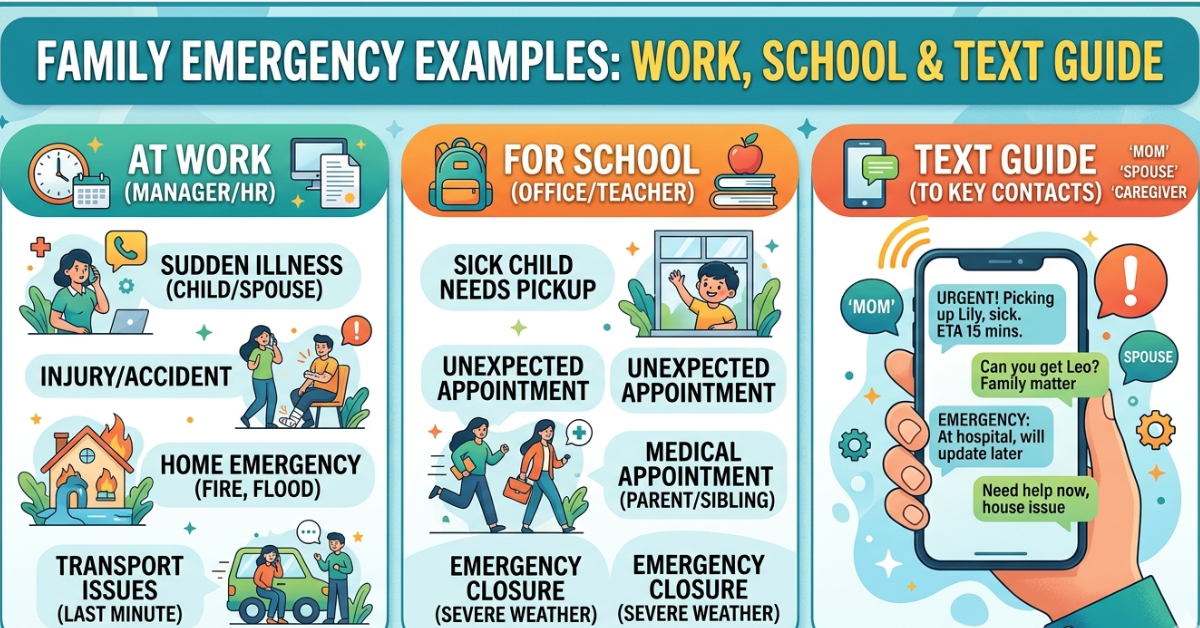
Family Emergency Examples for Work
When it comes to jobs, professionalism matters—even in urgent situations. Employers typically understand emergencies if communicated properly.
Here are some family emergency examples for work:
- “I need to take emergency leave due to a family medical situation.”
- “There has been a sudden hospitalization in my immediate family.”
- “I need to handle an urgent family matter and won’t be able to attend work today.”
- “A close family member is in critical condition, and I must be present.”
Tips for calling out at work:
- Keep your message short and clear
- Avoid unnecessary personal details
- Inform as early as possible
- Mention expected return time if known
These are also useful calling out for family emergency examples that maintain professionalism.
Family Emergency Examples for School
Students also face situations where they must miss classes or exams. Schools usually accept genuine emergencies when properly communicated.
Some examples for school include:
- “I cannot attend school due to a family medical emergency.”
- “A close relative has been hospitalized, and I need to stay home.”
- “There is an urgent situation at home requiring my presence.”
- “I request leave due to a sudden family emergency.”
Teachers usually appreciate honesty and timely notice.
Family Emergency Examples Text Messages
- “Hi, I’m dealing with a family emergency and won’t be able to attend today.”
- “I need urgent leave due to a family situation. I will update you soon.”
- “A family emergency has come up, and I need to step away immediately.”
- “Sorry for the short notice, but I have a family emergency to handle.”
Keep your tone respectful, short, and professional.
How to Communicate a Family Emergency Properly
Knowing what to say is just one part. How you say it also matters.
Do:
- Be honest but brief
- Inform your supervisor/teacher as soon as possible
- Use polite and clear language
- Offer updates when possible
Don’t:
- Over-explain personal details
- Use fake emergencies (it damages trust)
- Delay communication unnecessarily
Why Clear Communication Matters
FAQs About Family Emergency Examples
1. What qualifies as a family emergency?
Any urgent situation involving a close family member, such as illness, accident, or death.
2. Can I use family emergency as a reason for leave?
Yes, most workplaces and schools accept it if it’s genuine and communicated properly.
3. Do I need proof for a family emergency?
Sometimes yes, especially in formal workplaces, but not always required.
4. How do I text a family emergency to my boss?
Keep it short, polite, and direct. Mention you need urgent leave due to a family situation.
5. What are good calling out for family emergency examples?
Simple messages like “I have a family emergency and cannot attend work today” are commonly used.
Conclusion
From family emergency examples for work to family emergency examples for school, the key is simple communication without unnecessary detail. Having ready-to-use family emergency examples text can make difficult moments a little easier to manage.
If you often struggle with what to say in urgent situations, keeping a few templates in mind can save time and stress when it matters most.