Have you ever wondered whether to say unattentive or inattentive when describing someone who is not paying attention? This is a common confusion in English grammar, especially for learners and writers. The correct word is often debated, but understanding its usage can instantly improve your communication skills.
The focus keyword unattentive or inattentive appears frequently in search queries because people want clarity on which term is correct, how it is used, and whether both are acceptable. In this article, you’ll learn the meaning, correct usage, examples, and common mistakes so you never get confused again.
Unattentive or Inattentive: Which One Is Correct?
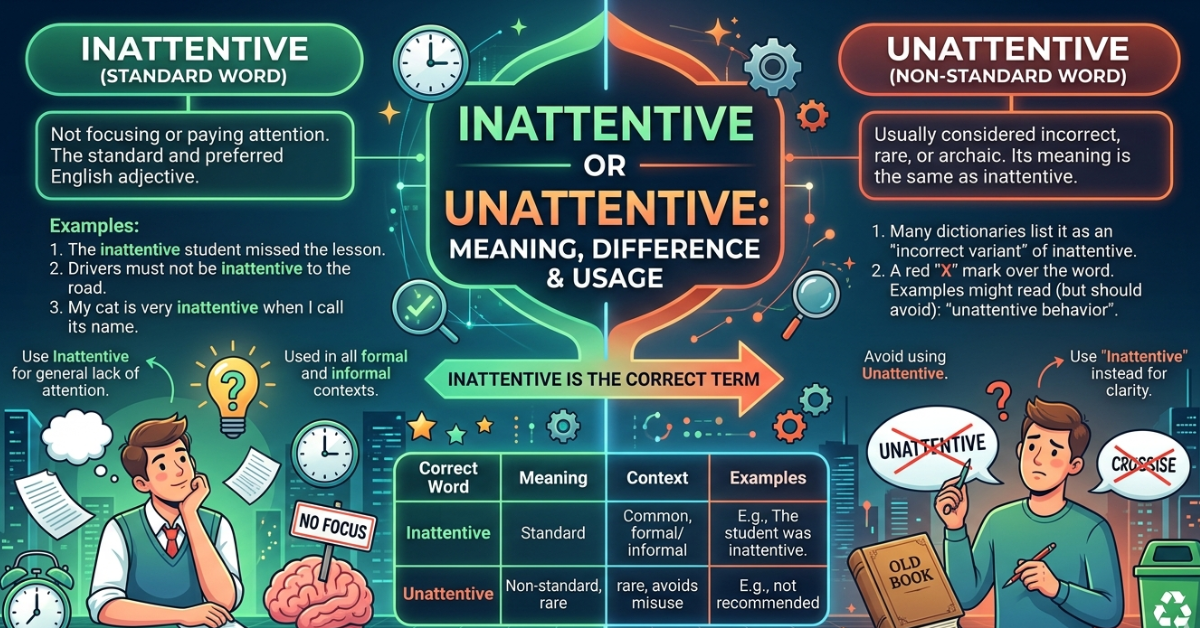
When comparing unattentive or inattentive, the widely accepted and grammatically correct word is “inattentive.”
The word inattentive is used in standard English to describe someone who is not paying attention, distracted, or mentally absent from what is happening.
On the other hand, unattentive exists but is rarely used and considered non-standard in modern English. Most dictionaries and style guides recommend avoiding it in formal writing.
So, in most cases, inattentive is the word you should choose.
Meaning of Inattentive in Simple Words
The word inattentive means:
- Not paying attention
- Easily distracted
- Lacking focus
- Ignoring details
For example, a student who daydreams during class can be described as inattentive.
When people search unattentive or inattentive, they are usually trying to understand this exact meaning and the correct grammatical form.
Common Usage of Inattentive in Sentences
Here are some easy examples to help you understand how the word is used:
- The teacher noticed that the student was inattentive during the lecture.
- Drivers become inattentive when they use mobile phones.
- She gave an inattentive response because she was lost in thought.
- Being inattentive in meetings can lead to misunderstandings.
These examples show how inattentive is used in real-life situations.
Why People Get Confused Between Unattentive or Inattentive
Many learners get confused because English has similar prefixes like un- and in- that both mean “not.” However, not all words follow both patterns.
In this case, unattentive or inattentive creates confusion because:
- “Unattentive” sounds logical but is rarely accepted
- “Inattentive” is historically and grammatically correct
- English often prefers established Latin-based forms like “inattentive”
So even though both may seem similar, only one is standard.
Synonyms of Inattentive
To improve your vocabulary, here are some common synonyms:
- Distracted
- Unfocused
- Careless
- Absent-minded
- Negligent
- Daydreaming
These words can be used depending on context instead of repeatedly using inattentive.
Effects of Being Inattentive
Being inattentive can affect different areas of life:
- Poor academic performance
- Mistakes at work
- Miscommunication in relationships
- Reduced productivity
This is why improving focus and attention is important in daily life.
How to Improve Attention and Focus
If someone is often inattentive, here are simple tips to improve focus:
- Reduce distractions (phone, noise, etc.)
- Take short breaks during study or work
- Practice mindfulness or deep breathing
- Set clear goals for tasks
- Stay organized with notes and reminders
These habits can help reduce inattentiveness over time.
FAQs About Unattentive or Inattentive
1. Is “unattentive” a correct word?
It exists in rare usage, but it is not commonly accepted in formal English. The correct term is inattentive.
2. What does inattentive mean?
It means not paying attention, being distracted, or lacking focus.
3. Can I use inattentive in academic writing?
Yes, inattentive is the correct and preferred word in academic and professional writing.
4. Why do people say unattentive or inattentive?
Because both “un-” and “in-” mean “not,” learners assume both forms are correct, but only one is standard.
5. What is a synonym for inattentive?
Common synonyms include distracted, careless, and absent-minded.
Conclusion
Understanding the difference between unattentive or inattentive helps improve your grammar and writing clarity. While both may seem similar, inattentive is the correct and widely accepted form in English.
Using the right word not only improves communication but also makes your writing sound more professional and polished. If you often struggle with similar word choices, practicing examples and reading more can help you master English usage over time.