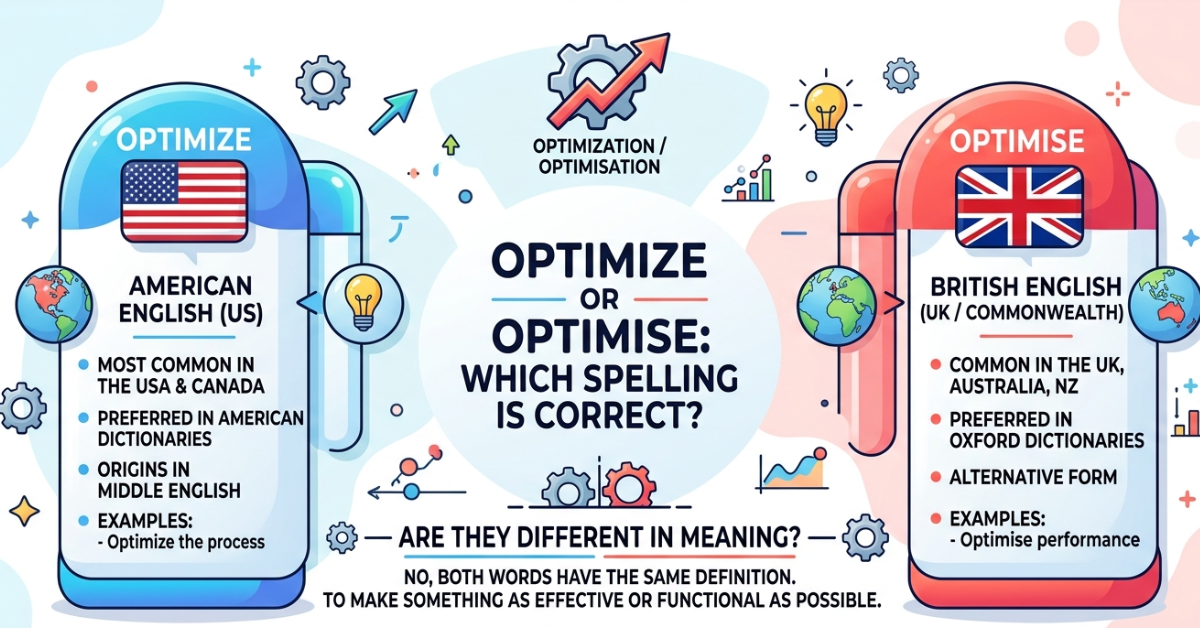
English is full of spelling variations, and one pair that often confuses writers is optimize or optimise. If you have ever wondered whether one is correct and the other is wrong, you are not alone. The truth is that both spellings are correct, but the preferred version depends on the type of English you use.
This guide explains the difference in a simple and practical way. You will learn where each spelling comes from, when to use it, and how to stay consistent in professional writing.
The Main Difference Between the Two Spellings
The difference is mainly regional.
- Optimize is the preferred spelling in American English.
- Optimise is commonly used in British English and other regions influenced by it.
Both words mean the same thing: to make something as effective, useful, or functional as possible.
For example:
- Companies try to optimize website speed for better performance.
- Businesses in the UK may write optimise instead in official documents.
The meaning never changes. Only the spelling does.
Why Do These Spelling Variations Exist?
English developed differently across regions over time. American English often favors spellings ending in “-ize,” while British English sometimes prefers “-ise.”
This pattern appears in many other words too:
| American English | British English |
| Organize | Organise |
| Realize | Realise |
| Recognize | Recognise |
Interestingly, the “-ize” ending actually comes from Greek roots and is historically older. Even so, British English accepts both forms in many cases.
Which Version Is More Common Today?
Globally, the “-ize” spelling is becoming more widespread, especially online. Many international companies, software platforms, and style guides prefer it because of its strong presence in digital content.
However, British publications and schools still commonly use the “-ise” form.
Common Usage by Region
American English
Writers almost always use:
- Optimize
- Organize
- Realize
British English
You may see either version, though “-ise” remains popular in:
- Newspapers
- Academic writing
- Government communication
International Business
Many global brands choose “-ize” for consistency across markets.
Should You Use One Over the Other?
The best choice depends on your audience.
Use American Spelling If:
- You write for a US audience
- Your website targets American readers
- Your company follows US style guides
Use British Spelling If:
- Your audience is mainly in the UK
- You follow British educational standards
- Your publication uses British English conventions
The most important thing is consistency. Switching between both spellings in the same article can make writing look unprofessional.
How Search Engines Treat These Spellings
Search engines understand both versions. Google recognizes them as spelling variations rather than separate meanings.
That means:
- Both can rank in search results
- Readers searching either spelling can still find your content
- Consistent language matters more than forcing both versions everywhere
Writers often worry about SEO, but natural readability matters far more than repeating keywords excessively.
Common Mistakes Writers Make
Here are a few issues people frequently run into:
Mixing Regional Styles
Using American grammar with British spelling can confuse readers.
Example:
- “The company optimized its marketing strategy.”
- “The organisation decided to optimise the campaign.”
Choose one style and stick with it.
Assuming One Version Is Wrong
Many people incorrectly believe only one spelling is correct. In reality, both are accepted depending on the region.
Overusing Keywords
Repeating the same phrase too often can hurt readability and make content sound unnatural. Good writing should flow smoothly.
Tips for Choosing the Right Style
If you are unsure which version to use, follow these practical tips:
- Identify your audience first.
- Check the spelling style used by your school, company, or client.
- Stay consistent throughout your writing.
- Use grammar tools set to the correct language region.
- Follow your publication’s style guide.
These small steps help maintain professionalism and clarity.
Examples in Everyday Writing
Here are some natural examples showing how each spelling appears in context.
American Style
- Businesses optimize workflows to save time.
- Developers optimize apps for faster loading.
British Style
- Companies optimise resources to reduce waste.
- Writers optimise content for online readers.
Again, the meaning remains identical.
Is One More Professional Than the Other?
No. Neither spelling is more intelligent, modern, or grammatically correct.
Professionalism depends on:
- Consistency
- Clarity
- Correct grammar
- Audience awareness
A British company using “optimise” is just as correct as an American company using “optimize.”
The Role of Style Guides
Different style guides recommend different spellings.
American Style Guides
These usually prefer:
- Optimize
- Organize
- Recognize
British Style Guides
Some prefer “-ise,” while others allow both forms.
For example:
- Oxford English Dictionary accepts “-ize”
- Many UK newspapers still favor “-ise”
This is why you may notice variation even within British publications.
FAQs
Is optimize an American spelling?
Yes. “Optimize” is primarily associated with American English.
Is optimise wrong?
No. It is a correct British English spelling.
Which version should I use for SEO?
Use the spelling that matches your target audience and remain consistent throughout the content.
Do search engines understand both spellings?
Yes. Modern search engines recognize them as equivalent variations.
Can I use both spellings in one article?
It is better not to. Consistency improves readability and professionalism.
Which spelling is more common worldwide?
The “-ize” ending is increasingly common internationally, especially in digital and corporate writing.
Conclusion
Understanding the difference between these two spellings is simpler than it seems. The choice mainly comes down to regional English preferences rather than grammar rules. American English generally favors “-ize,” while British English often uses “-ise.”
No matter which version you choose, consistency is what truly matters. Clear writing, proper structure, and audience awareness will always make a stronger impression than worrying over a single letter.
If you regularly write online content, reports, or academic work, choosing one language style and sticking to it can improve both readability and credibility.