English has many confusing word pairs, and unkempt vs unkept is one of them. At first glance, both words seem similar because they begin with “un-” and describe something negative or untidy. However, they are not interchangeable.
One word usually describes a messy appearance, while the other relates to something not maintained or not fulfilled. Understanding the difference can instantly improve your writing and help you avoid common grammar mistakes.
In this guide, you will learn the meanings, grammar rules, examples, and the easiest way to remember when to use each term correctly.
What Does “Unkempt” Mean?
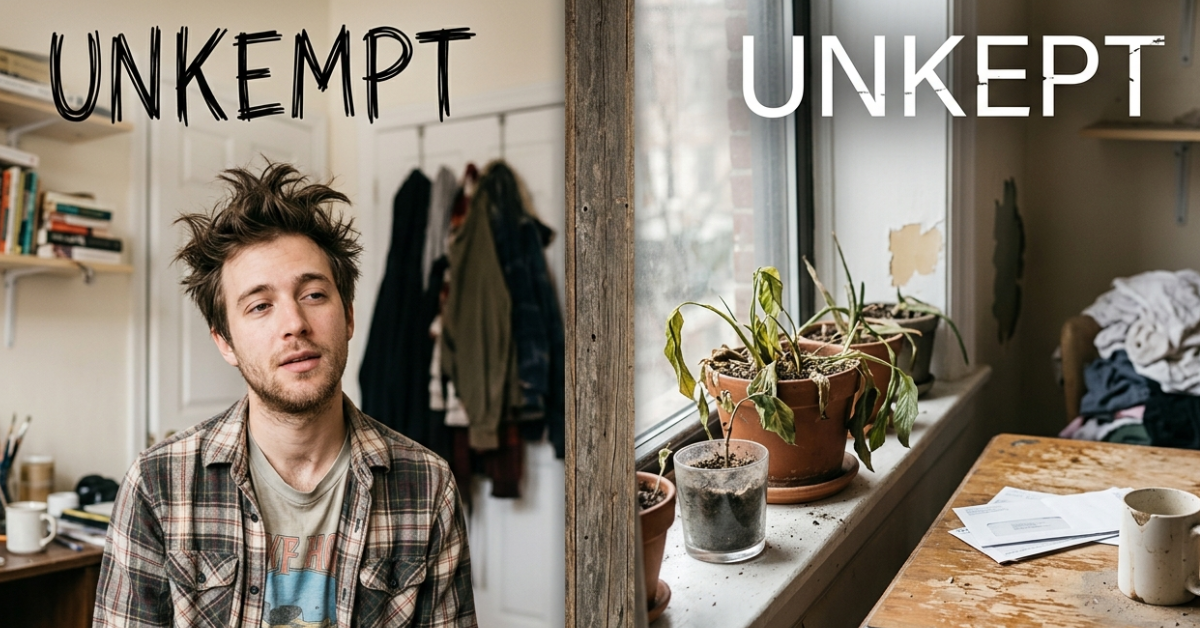
“Unkempt” is an adjective used to describe someone or something that looks messy, untidy, or poorly maintained in appearance.
It is most commonly used for:
- Hair
- Clothing
- Beards
- Gardens
- General appearance
Examples of “Unkempt”
- His hair looked unkempt after the long journey.
- The abandoned yard appeared wild and unkempt.
- She arrived wearing wrinkled clothes and an untidy jacket.
The word often suggests neglect in appearance rather than complete abandonment.
Common Synonyms
- Messy
- Disheveled
- Untidy
- Scruffy
- Sloppy
What Does “Unkept” Mean?
“Unkept” is also an adjective, but its meaning is different. It refers to something that has not been maintained, preserved, or fulfilled.
It can describe:
- Promises
- Buildings
- Rules
- Agreements
- Property
Examples of “Unkept”
- The old house remained unkept for years.
- He apologized for his unkept promise.
- The park looked damaged because it was poorly maintained.
Although the word exists, it is less common in everyday English than “unkempt.”
The Main Difference Between the Two
The easiest way to separate these words is to focus on what they describe.
| Word | Main Meaning | Common Usage |
|---|---|---|
| Unkempt | Messy in appearance | Hair, clothes, appearance |
| Unkept | Not maintained or not fulfilled | Promises, property, duties |
A quick memory trick:
- Unkempt = untidy look
- Unkept = not kept properly
Why People Confuse These Words
The confusion happens because both words sound similar and share the same negative prefix “un-.”
Another reason is that both can relate to neglect in some way. For example:
- A garden may appear messy.
- A property may also be poorly maintained.
In casual conversation, people sometimes use the wrong term without realizing it.
Which Word Is More Common?
In modern English, “unkempt” is far more common.
You will frequently see it in:
- Books
- News articles
- Fashion writing
- Character descriptions
“Unkept,” on the other hand, appears less often and may sound awkward in some situations.
For example:
- “An unkempt beard” sounds natural.
- “An unkept beard” sounds unusual.
Grammar and Usage Tips
Use “Unkempt” for Appearance
Choose this word when talking about visual untidiness.
Correct examples:
- unkempt hair
- unkempt room
- unkempt appearance
Use “Unkept” for Maintenance or Responsibility
Choose this word when discussing something not maintained or not honored.
Correct examples:
- unkept promise
- unkept property
- unkept agreement
Common Mistakes to Avoid
Here are some mistakes English learners often make.
Incorrect:
- He had unkept hair.
Better:
- He had unkempt hair.
Incorrect:
- The landlord left the building unkempt.
Better:
- The landlord left the building unkept.
Easy Trick to Remember the Difference
A simple memory method can help:
Think of “kempt” as appearance.
If someone is “well-kempt,” they look neat. So the opposite describes a messy look.
Think of “kept” as maintained.
If something is “kept,” it is cared for or preserved. The opposite means neglected or not fulfilled.
Examples in Everyday Sentences
Here are more examples to make the meanings clearer.
Appearance Examples
- The traveler looked tired and untidy after the flight.
- His beard became messy during the winter.
- The actor played a character with wild hair and wrinkled clothes.
Maintenance Examples
- The empty warehouse remained neglected for decades.
- Their agreement stayed unresolved for months.
- The abandoned garden was poorly maintained.
Is One Word More Formal Than the Other?
Yes. “Unkempt” sounds more natural and polished in modern writing.
Writers often prefer it because it is widely recognized and easy to understand. “Unkept” is still grammatically correct, but it appears less frequently in professional content.
When Should You Avoid “Unkept”?
Sometimes another word sounds more natural.
Instead of saying:
- unkept lawn
You could say:
- neglected lawn
- poorly maintained lawn
This usually reads more smoothly in formal writing.
FAQs
Is “unkept” a real word?
Yes, it is a real English word. It means something was not maintained, preserved, or fulfilled.
Can I use both words for hair?
Not usually. Hair is typically described as messy in appearance, so “unkempt” is the correct choice.
Which word is more common in English?
“Unkempt” is far more common in everyday speech and writing.
Is “unkempt” negative?
It can sound slightly negative because it suggests disorder or lack of care.
What is the opposite of “unkempt”?
Common opposites include:
- Neat
- Well-groomed
- Tidy
- Polished
Conclusion
Understanding unkempt vs unkept becomes much easier once you focus on the context. One word describes a messy appearance, while the other refers to something neglected or not maintained.
If you are talking about hair, clothing, or personal appearance, “unkempt” is usually the right choice. If you mean a promise, duty, or property that was not maintained, “unkept” fits better.
Mastering small word differences like these can make your writing clearer, more professional, and more natural.