Have you ever paused while typing and wondered whether it should be naive or nieve? You are not alone. This is one of those commonly confused words that catches even fluent writers off guard.
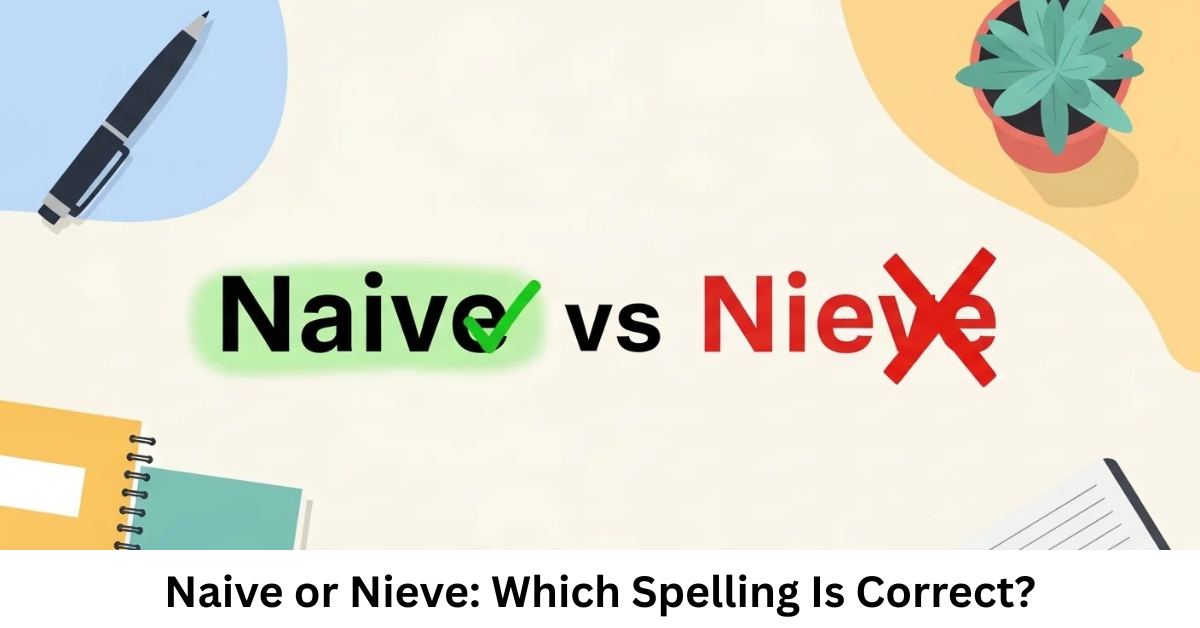
The short answer is simple: naive is the correct spelling, while nieve is a common misspelling. In this guide, you’ll learn why people mix them up, what the word means, and how to remember the right version every time.
What Does Naive Mean?
The word naive describes someone who is innocent, trusting, or lacking experience in certain situations. It can also refer to a simple or natural perspective.
For example:
- She was naive enough to believe every promise.
- His naive optimism was refreshing.
- They had a naive understanding of business risks.
The term is not always negative. Sometimes it suggests honesty, sincerity, or a fresh point of view.
Is Nieve a Real Word?
In standard English writing, nieve is considered an incorrect spelling when you mean naive. It usually appears because of typing errors or confusion about vowel order.
English has many tricky spellings, so mistakes like this are common. However, in professional, academic, or formal writing, using the wrong version can weaken credibility.
Why People Confuse Naive and Nieve
There are a few reasons this mix-up happens:
1. Pronunciation Confusion
Many people pronounce the word as “ny-eev” or “nah-eev,” which can make spelling less obvious.
2. Vowel Order Mistakes
Words with multiple vowels often cause problems. Writers may accidentally switch the letters.
3. Fast Typing Habits
Autocorrect doesn’t always catch every misspelling, especially if the incorrect word resembles another valid term.
How to Remember the Correct Spelling
A simple trick is this:
Naive has “ai” like “brain.” Use your brain to spell it right.
Other memory tips:
- Think of naive = natural innocence
- Write it a few times until it feels familiar
- Save it in your personal spelling notes
Naive in Sentences
Seeing a word in context helps memory. Here are examples:
- He was too naive to recognize the scam.
- Her naive charm made people trust her instantly.
- It would be naive to ignore market competition.
- Their early plan was hopeful but somewhat naive.
Common Spelling Errors Similar to This
If you struggle with this word, you may also confuse:
- Receive / Recieve
- Believe / Beleive
- Weird / Wierd
- Friend / Freind
These errors usually happen because English spelling rules are inconsistent.
When to Use Naive in Writing
Use this word when describing:
- Innocence or lack of experience
- Trusting behavior
- Simplistic thinking
- Honest and fresh viewpoints
Examples in different contexts:
In Business
“It would be naive to assume profits grow automatically.”
In Relationships
“She was naive about his intentions.”
In Positive Context
“His naive curiosity led to creative ideas.”
Quick Grammar Tip
The word can appear in different forms:
- Naive (adjective)
- Naively (adverb)
- Naivety / Naiveté (noun)
Example:
Her naivety made her vulnerable.
FAQs
Is naive or nieve correct?
Naive is correct. Nieve is a misspelling in English.
Why do people spell naive wrong?
Mostly because of pronunciation confusion and switching vowel order.
Is naive a negative word?
Not always. It can mean inexperienced, but it may also suggest innocence or sincerity.
How do you pronounce naive?
Usually as ny-EEV or nah-EEV, depending on accent.
Can I use naive in formal writing?
Yes, it is a standard English word commonly used in academic and professional writing.
Conclusion
If you’ve ever wondered about naive or nieve, remember this: naive is the correct spelling, and nieve is the mistake to avoid. Learning common spelling traps like this improves your writing confidence and professionalism.
The next time you type the word, pause for one second and choose the correct version confidently. Small spelling wins make a big difference.