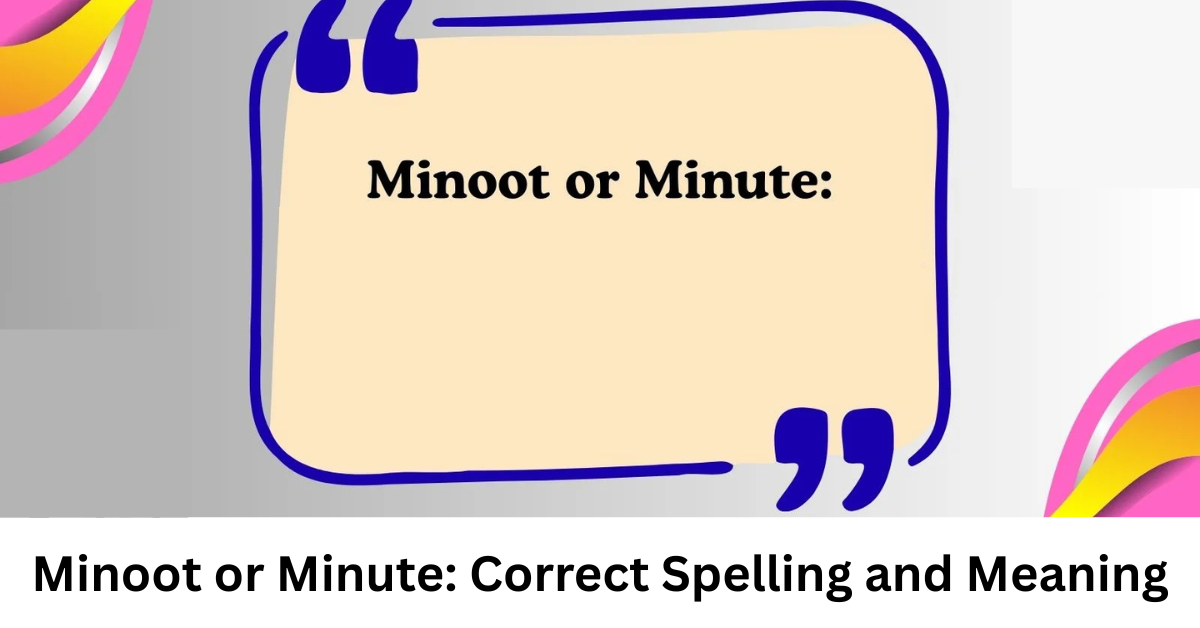
Have you ever seen Minoot or Minute and paused for a second, wondering which one is right? You are not alone. This is a common spelling confusion, especially because the word sounds a little different from how it looks.
The correct spelling is minute. It can refer to a unit of time or something very small. In this article, we will clear up the confusion, explain the meaning, show how to use it correctly, and answer the most common questions people ask about it.
What Does “Minute” Mean?
The word minute has more than one meaning, and that is part of why people get confused.
1. A unit of time
A minute is 60 seconds.
Example:
- The meeting starts in ten minutes.
2. Something very small
When pronounced differently, minute can also mean tiny or slight.
Example:
- There is a minute difference between the two designs.
That double meaning is one reason the word appears tricky at first glance.
Why Do People Write “Minoot”?
The spelling minoot is not standard English. It is usually just a phonetic guess based on how some people hear the word.
Here is why the confusion happens:
- The word is spelled with letters that do not match the most obvious sound.
- English pronunciation is not always predictable.
- Learners often write words the way they sound.
So when someone searches for Minoot or Minute, they are usually trying to confirm the correct form. The correct word is minute, not minoot.
How to Pronounce “Minute”
The pronunciation depends on the meaning.
For time
It is pronounced like MIN-it.
Example:
- “Wait a minute.”
For tiny or small
It is also often pronounced MIN-it, especially in everyday speech.
Example:
- “There was a minute crack in the glass.”
In both cases, the spelling stays the same: minute.
Common Mistakes People Make
Here are the most common errors related to this word:
- Writing minoot instead of minute
- Confusing minute with minutes
- Mispronouncing the word when reading aloud
- Mixing up the time meaning with the “small” meaning
Quick tip
If you are talking about time or size, use minute every time. The spelling does not change.
How to Use “Minute” Correctly in Sentences
Here are a few simple examples:
- I will be there in a minute.
- She waited a minute before answering.
- The flaw was so minute that no one noticed it.
- The movie starts in five minutes.
- He made a minute adjustment to the plan.
Notice that the spelling is always minute, even when the meaning changes.
Easy Way to Remember It
A simple memory trick can help:
- Minute = correct
- Minoot = incorrect
You can also remember that minute is connected to standard English spelling, even if its pronunciation feels unusual at first.
Related Words and Search Terms
People who search for Minoot or Minute often also look for:
- correct spelling of minute
- minute meaning
- minute pronunciation
- how to pronounce minute
- minute in English grammar
- common English spelling mistakes
These related terms can help you understand the word more fully and avoid errors in writing.
Why Correct Spelling Matters
Using the right spelling is important in school, work, and daily communication. A small spelling mistake can make writing look less polished, even when the message is clear.
Correct spelling helps you:
- sound more confident
- avoid confusion
- improve writing quality
- communicate clearly
That is especially useful in essays, captions, messages, and professional writing.
FAQ
Is “minoot” a correct spelling?
No, minoot is not the correct standard spelling. The correct word is minute.
What does “minute” mean?
It can mean 60 seconds or something very small.
How do you pronounce “minute”?
It is usually pronounced MIN-it in everyday English.
Why is “minute” confusing?
It looks different from how it sounds, and it has more than one meaning.
Can “minute” be used in formal writing?
Yes, absolutely. It is a common and correct English word in both formal and informal writing.
Conclusion
When it comes to Minoot or Minute, the correct spelling is minute. It is a useful English word with two main meanings: a unit of time and something very small. Once you remember the spelling and pronunciation, it becomes easy to use correctly in everyday writing.
If you are learning English or improving your writing, this is a small detail that makes a big difference. Keep practicing with similar spelling confusions, and your confidence will grow with every word you learn.