If you’ve ever wondered how to say happy Easter, you’re not alone. Easter is celebrated worldwide, and each language adds its own beautiful touch to this joyful greeting. Whether you’re messaging a friend abroad, learning new phrases, or just curious about global traditions, knowing Easter greetings can make your communication more meaningful.
In this guide, we’ll break down how to say this in several popular languages, along with pronunciation tips and cultural context so you can use them confidently and naturally.
Understanding Easter Greetings Around the World
Easter is celebrated in many countries, especially across Europe and the Americas, and each culture has its own way of expressing good wishes. While English speakers say “Happy Easter,” other languages use phrases rooted in religious tradition or local customs.
Common variations often translate to:
- “Joyful Easter”
- “Blessed Easter”
- “Christ is risen” (in many Orthodox traditions)
How to say Happy Easter in Spanish
In Spanish, the phrase is:
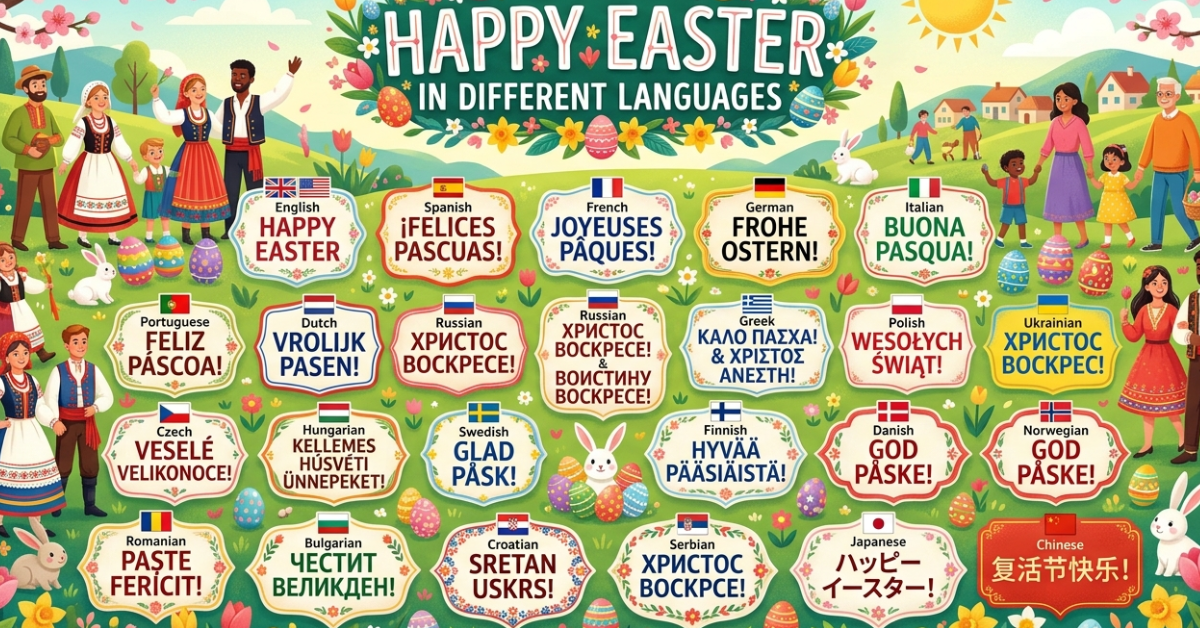
“Feliz Pascua”
- Pronunciation: Feh-leez Pahs-kwah
- Usage tip: You may also hear “Felices Pascuas” during the Easter season.
This is commonly used in Spain and Latin American countries to wish someone a joyful Easter celebration.
How to say Happy Easter in Greek
In Greek, Easter is the most important religious celebration, and the greeting is:
“Καλό Πάσχα” (Kaló Páscha)
- Pronunciation: Kah-lo Pas-kha
- Meaning: “Good Easter”
A common response you might hear is “Αληθώς Ανέστη” (Alithós Anésti), meaning “Truly He is risen.”
How to say Happy Easter in German
In German, you say:
“Frohe Ostern”
- Pronunciation: Froh-uh Oh-stern
- Meaning: “Happy Easter”
This is widely used in Germany, Austria, and parts of Switzerland during the Easter season.
How to say Happy Easter in Serbian
In Serbian, the greeting is:
“Hristos vaskrse” (Христос васкрсе)
- Pronunciation: Hris-tos vas-kr-se
- Meaning: “Christ is risen”
The traditional response is:
“Vaistinu vaskrse” meaning “Indeed He is risen.”
How to say Happy Easter in Polish
In Polish, you can say:
“Wesołych Świąt Wielkanocnych”
- Pronunciation: Veh-soh-lich Shvyont Vyel-ka-nochn-ich
- Meaning: “Happy Easter Holidays”
A shorter version often used is:
“Wesołego Alleluja” (Happy Alleluia)
Quick Summary of Easter Greetings
Here’s a simple recap:
- Spanish: Feliz Pascua
- Greek: Kaló Páscha
- German: Frohe Ostern
- Serbian: Hristos vaskrse
- Polish: Wesołych Świąt Wielkanocnych
Tips for Saying Happy Easter Naturally
If you’re learning how to say this in different languages, keep these tips in mind:
- Practice pronunciation slowly before speaking.
- Match tone with culture (some greetings are religious, others casual).
- Use greetings in context, like messages or cards.
- Don’t stress perfection—effort is appreciated more than accuracy.
FAQs
1. What is the most common way to say Happy Easter in Europe?
Most European countries use variations like “Frohe Ostern,” “Feliz Pascua,” or religious greetings like “Christ is risen.”
2. Is “Happy Easter” used everywhere?
No, some cultures prefer religious phrases instead of direct translations of “Happy Easter.”
3. How do you say Happy Easter in Spanish formally?
You can say “Felices Pascuas” for a more formal or plural-friendly greeting.
4. Why are Easter greetings different in each language?
They reflect cultural, religious, and historical traditions unique to each country.
5. Is it okay to mix languages when greeting someone?
Yes, especially in casual conversations—it often feels friendly and personal.
Conclusion
Learning how to say happy Easter in different languages is a simple yet meaningful way to connect with people around the world. From “Feliz Pascua” in Spanish to “Frohe Ostern” in German, each phrase carries its own cultural warmth and tradition.
If you enjoyed this guide, try practicing a few greetings and sharing them with friends—you might just brighten someone’s Easter celebration in a whole new way.