
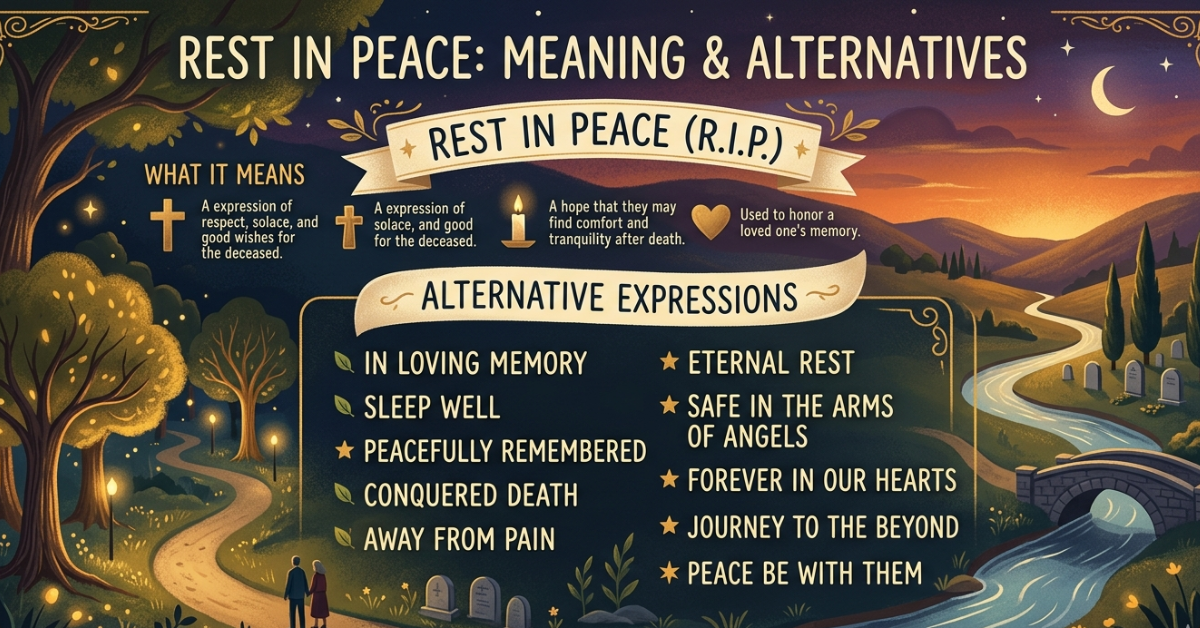
When we hear the phrase rest in peace, it often carries deep emotional weight. It’s a simple expression, yet it holds comfort, respect, and sympathy for someone who has passed away. But many people today search for a rest in peace other term to make their messages more personal, meaningful, or culturally appropriate.
In this article, we’ll explore the most respectful and commonly used alternatives to “rest in peace,” what they mean, and how you can use them in real-life messages, social media posts, or condolences.
What Does “Rest in Peace” Really Mean?
Before exploring a rest in peace other term, it’s important to understand the original phrase.
“Rest in peace” (often abbreviated as RIP) is a traditional expression used to wish eternal rest and peace for someone who has passed away. It comes from the Latin phrase Requiescat in pace.
People use it to show:
- Respect for the deceased
- Sympathy for grieving families
- Hope that the soul finds peace after death
Over time, many cultural and emotional variations have developed.
Rest in Peace Other Term: Common Alternatives
If you are looking for a rest in peace other term, here are some widely used and meaningful alternatives:
1. May Their Soul Rest in Eternal Peace
A more spiritual and heartfelt version often used in religious contexts.
2. Gone But Not Forgotten
This phrase emphasizes memory and emotional connection rather than spiritual rest.
3. In Loving Memory
Commonly used in memorial cards, posts, and tributes.
4. Forever in Our Hearts
A gentle way to express lasting emotional presence.
5. May Their Soul Rest Easy
A softer, comforting expression used in sympathy messages.
6. Eternal Rest Grant Unto Them
A more formal and religious phrase often used in prayers.
7. Sleep in Peace
A poetic variation that sounds gentle and peaceful.
8. Rest in Power
Often used to honor someone’s impact, legacy, or social influence.
When to Use Alternatives to Rest in Peace
Choosing the right rest in peace other term depends on context. Here’s how to decide:
- Religious messages: “Eternal rest grant unto them”
- Social media tributes: “Gone but not forgotten” or “Forever in our hearts”
- Personal condolences: “May their soul rest in peace” or “Sleep in peace”
- Honoring achievements or legacy: “Rest in power”
Each phrase carries slightly different emotional depth, so choosing carefully adds sincerity.
Why People Search for Rest in Peace Other Term
The phrase “RIP” is widely used, but sometimes it can feel too generic or repetitive. That’s why many people look for a rest in peace other term that feels:
- More personal and emotional
- Culturally appropriate
- Less formal or more poetic
- Suitable for modern social media communication
Language evolves, and so does the way we express grief and remembrance.
Cultural and Emotional Sensitivity
When using any rest in peace other term, it’s important to be respectful. Different cultures and religions have unique traditions around death and mourning.
For example:
- Some prefer prayers over phrases
- Others value memory-based expressions
- Some avoid direct references to death altogether
Being mindful ensures your message feels comforting rather than generic.
FAQs About Rest in Peace Other Term
1. What is another word for rest in peace?
Common alternatives include “rest in eternal peace,” “gone but not forgotten,” and “forever in our hearts.”
2. Is it okay to say RIP instead of full phrases?
Yes, RIP is widely accepted, especially in informal contexts like social media.
3. What is a respectful alternative for condolences?
“In loving memory” and “may their soul rest easy” are respectful and commonly used.
4. Can I use rest in peace alternatives in messages?
Absolutely. Using a rest in peace other term can make your message more personal and meaningful.
5. What is the most formal version of rest in peace?
“Eternal rest grant unto them” is considered one of the most formal expressions.
Conclusion
Finding the right way to express sympathy can be difficult, especially when emotions are involved. That’s why understanding a rest in peace other term can help you communicate with more depth, respect, and sincerity.
Whether you choose “forever in our hearts,” “gone but not forgotten,” or a more spiritual phrase, the key is to speak from the heart. In the end, it’s not just about words—it’s about honoring a life with compassion and meaning.