In emails, messages, and everyday conversations, a very common phrase you’ll notice is “hope you are doing well.” It’s a polite and friendly way to start communication and show care for the other person.
The phrase may seem simple, but it plays an important role in tone setting—especially in professional and formal writing. In this guide, we’ll break down its meaning, how to respond naturally, and better alternatives you can use in different situations.
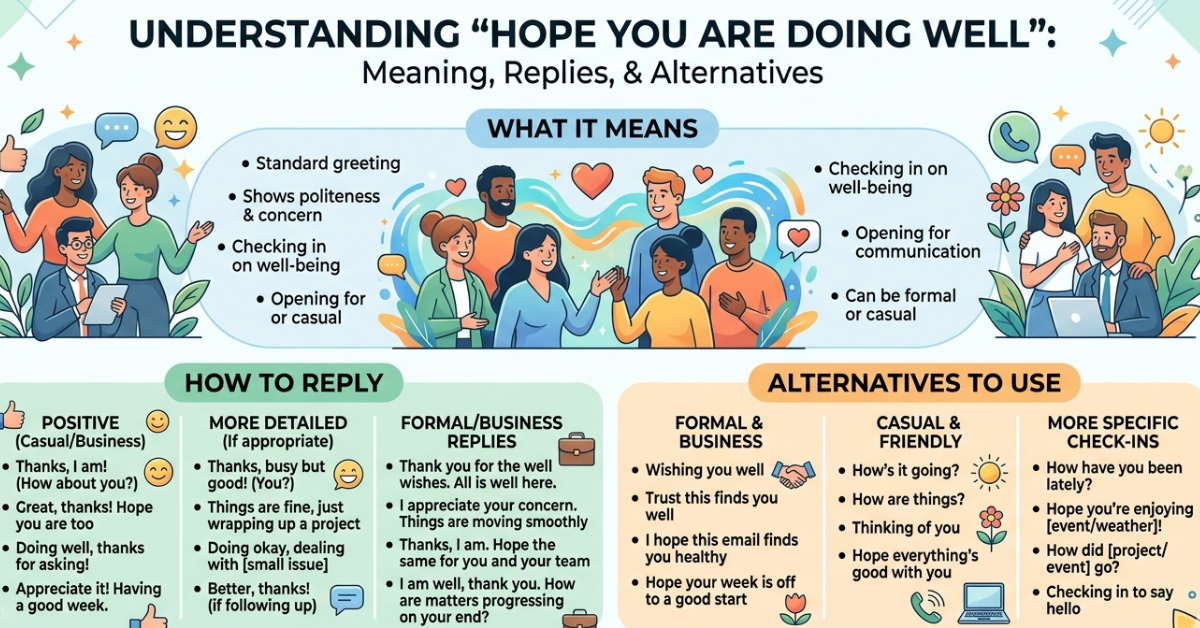
What Does “Hope You Are Doing Well” Mean?
This phrase is basically a warm greeting. It means the sender is wishing you good health, happiness, or a positive state of life.
It is often used to:
- Start an email politely
- Reconnect with someone
- Add a friendly tone before a request
Think of it as a softer version of “hello,” designed to make communication feel more personal and respectful.
Why People Use This Greeting
People include this phrase in messages because it helps:
- Build a friendly connection
- Reduce direct or harsh tone in messages
- Show politeness in professional communication
- Create emotional warmth in written text
In workplaces, it is especially useful when writing to clients, teachers, or colleagues.
How to Respond Naturally
A common question people ask is how to reply to this type of greeting. Your response should match the tone of the message.
Simple Responses
- “I’m doing well, thank you. Hope you are too.”
- “All good here, thanks for checking in.”
Professional Responses
- “Thank you for your message. I hope you are doing well too.”
- “I appreciate your kind note. I am well, thank you.”
Casual Responses
- “Doing great! Hope everything is good with you as well.”
- “All good here hope you’re doing well too.”
Alternatives You Can Use
Instead of repeating the same line, you can use different greetings depending on context.
Formal Alternatives
- I hope this message finds you well
- I trust you are doing well
- Wishing you a productive day ahead
Informal Alternatives
- Hope all is good with you
- How have you been?
- Just checking in on you
These variations keep your communication fresh and natural.
“Hope You Are Doing Well” in Spanish
If you’re speaking with Spanish speakers, you can use:
- “Espero que estés bien” (informal)
- “Espero que se encuentre bien” (formal)
Both phrases are commonly used in emails and conversations.
Example Messages
Here are some real-life examples you can use:
Email Example
“Hope you are doing well. I wanted to follow up regarding our previous discussion.”
Friendly Message
“Hey! It’s been a while—hope everything is good with you.”
Professional Message
“I hope this message finds you well. I am writing to update you on the project status.”
When You Should Use It
This greeting works best when:
- Starting formal emails
- Reconnecting after time apart
- Writing polite follow-ups
- Communicating with clients or professionals
Avoid overusing it in very casual chats, where a simple “hi” may feel more natural.
Common Mistakes
- Using it too often in every message
- Making it sound repetitive or robotic
- Overloading emails with the same greeting style
The key is balance—use it when it adds value, not just out of habit.
FAQs
1. What does this phrase mean?
It is a polite way to ask about someone’s well-being at the start of a message.
2. How should I reply?
You can simply say, “I’m doing well, thank you. Hope you are too.”
3. Is it formal or informal?
It works in both settings depending on context.
4. Can I replace it in emails?
Yes, alternatives like “I hope this message finds you well” work great.
5. Why do people use it so often?
Because it helps make messages sound polite, warm, and professional.
Conclusion
The phrase “hope you are doing well” is a simple but powerful way to begin communication politely. Whether you use it in emails, messages, or conversations, it helps set a positive tone and build connection.
Instead of repeating it too often, try mixing in natural alternatives to keep your writing fresh and engaging. This small change can make your communication sound more confident and human-like.