If you have seen “STSU” in a text message, TikTok comment, Snapchat chat, or online conversation, you are probably wondering what it actually means. Internet slang changes quickly, and new abbreviations appear almost every day. That is why many people search for the stsu meaning in text to avoid confusion during online conversations.
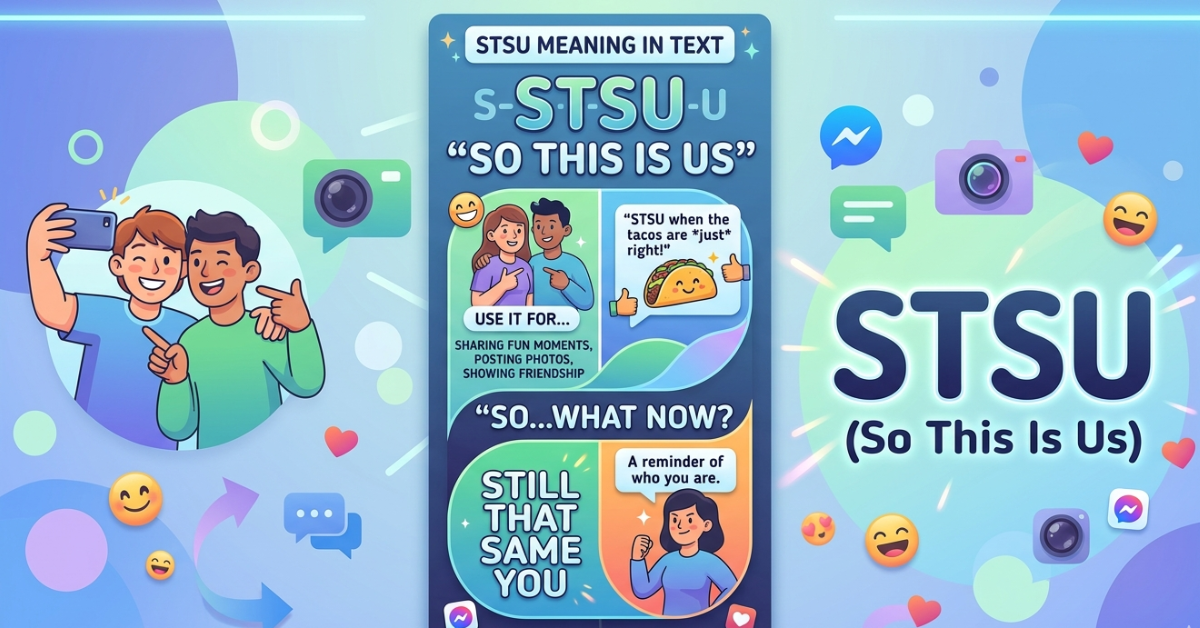
In simple terms, STSU is usually a slang abbreviation used in texting and social media. Depending on the context, it can have different meanings, but the most common interpretation is linked to telling someone to “shut up” in a playful, dramatic, or joking way.
This article explains the meaning of STSU, how people use it, examples in conversations, alternative interpretations, and when you should or should not use it.
What Does STSU Mean in Text?
The abbreviation “STSU” most commonly stands for:
“Stop Talking, Shut Up”
or sometimes simply:
“Shut The Something Up”
People mainly use it in casual digital conversations. It often appears during funny reactions, teasing, gossip, or moments of surprise.
Unlike serious insults, STSU is usually used jokingly among friends online. Tone and context matter a lot when interpreting it.
Example:
- Friend 1: “I just met my celebrity crush today.”
- Friend 2: “STSU NO WAY!”
In this example, the person is not being rude. They are expressing shock and excitement.
Why People Use STSU Online
Internet slang is popular because it saves time and makes conversations feel more casual. STSU fits perfectly into fast-paced texting culture.
People use abbreviations like this to:
- React quickly
- Sound funny or dramatic
- Express disbelief
- Match social media trends
- Keep chats short and informal
Apps like Snapchat, TikTok, Instagram, and Discord have made short slang terms even more common.
STSU Meaning on Social Media
The meaning can slightly change depending on the platform and the tone of the conversation.
TikTok
On TikTok, STSU is often used in comments when someone shares shocking news, gossip, or exciting updates.
Example:
- “You met him in real life? STSU!”
Snapchat
On Snapchat, it is commonly used between close friends in playful conversations.
People may use it in reels, memes, or comment sections to react dramatically.
Discord or Gaming Chats
Gamers sometimes use STSU jokingly during intense or funny moments.
Is STSU Rude?
This depends entirely on the context.
It Can Be Friendly
Among close friends, STSU is often playful and harmless.
Example:
- “STSU you actually won the giveaway?!”
It Can Sound Offensive
If used aggressively or with strangers, it may come across as rude or disrespectful.
Example:
- “STSU nobody asked.”
That version sounds much harsher.
Best Rule
Only use it with people who understand your humor and texting style.
Different Interpretations of STSU
Although “Stop Talking, Shut Up” is the most common meaning, internet slang can vary between communities.
Some users may interpret STSU differently depending on:
- Age group
- Online platform
- Region
- Friend circles
- Gaming communities
Because slang evolves quickly, meanings may shift over time.
Common Internet Slang Similar to STSU
If you understand STSU, you may also recognize other texting abbreviations.
| Slang | Meaning |
| LOL | Laughing Out Loud |
| OMG | Oh My God |
| BRB | Be Right Back |
| TBH | To Be Honest |
| IDK | I Don’t Know |
| FR | For Real |
| NGL | Not Gonna Lie |
These terms help make online communication faster and more expressive.
How to Respond When Someone Says STSU
If someone sends STSU to you, first look at the tone of the conversation.
Friendly Responses
- “I’m serious!”
- “I know right!”
- “Haha it really happened.”
- “You’re so dramatic.”
If It Feels Rude
You can calmly reply:
- “No need to be rude.”
- “Alright then.”
- “What’s wrong?”
Understanding tone is important in digital communication because text messages lack facial expressions and voice cues.
Should You Use STSU?
You can use it casually with friends if:
- Everyone understands the joke
- The conversation is lighthearted
- You are comfortable with internet slang
Avoid using it:
- In professional chats
- With teachers or coworkers
- In formal conversations
- With people who may misunderstand it
Digital slang is best kept informal.
How Slang Like STSU Becomes Popular
Online slang spreads quickly because of:
- Viral TikTok trends
- Meme culture
- Influencers and streamers
- Gaming communities
- Group chats and social apps
Once a phrase becomes trendy, thousands of users begin repeating it in comments and conversations.
That is why abbreviations often appear suddenly and become widely recognized within weeks.
Signs That STSU Is Being Used Jokingly
You can usually tell the tone through:
- Emojis
- Capital letters
- Laughing reactions
- Extra punctuation
- Context of the conversation
Example:
- “STSU”
This clearly sounds playful rather than angry.
The Evolution of Texting Abbreviations
Texting shortcuts have existed for decades, but modern social media has accelerated their popularity.
In the past, people mainly used:
- LOL
- BTW
- ROFL
Now, newer slang appears constantly because online culture changes rapidly.
STSU is part of this newer wave of expressive internet language.
FAQs About STSU Meaning in Text
What is the full form of STSU?
The most common full form is “Stop Talking, Shut Up.”
Is STSU offensive?
It can sound rude depending on tone and context, but friends often use it jokingly.
Where is STSU commonly used?
It is mostly seen on TikTok, Snapchat, Instagram, Discord, and texting apps.
Can STSU have different meanings?
Yes. Internet slang sometimes changes between online communities.
Should I use STSU in professional messages?
No. It is informal slang and not suitable for workplace or formal communication.
Why do people use abbreviations like STSU?
People use slang abbreviations to type faster and make conversations feel more casual and expressive.
Conclusion
Understanding the stsu meaning in text helps you keep up with modern online conversations and internet culture. In most cases, STSU is a playful slang expression used among friends to react dramatically, jokingly, or with surprise.
Like many texting abbreviations, its meaning depends heavily on context and tone. While it can sound funny in casual chats, it may seem rude in serious conversations. The safest approach is to use it only with people who understand your humor and communication style.
As internet slang continues evolving, staying familiar with these expressions makes online conversations much easier to understand.