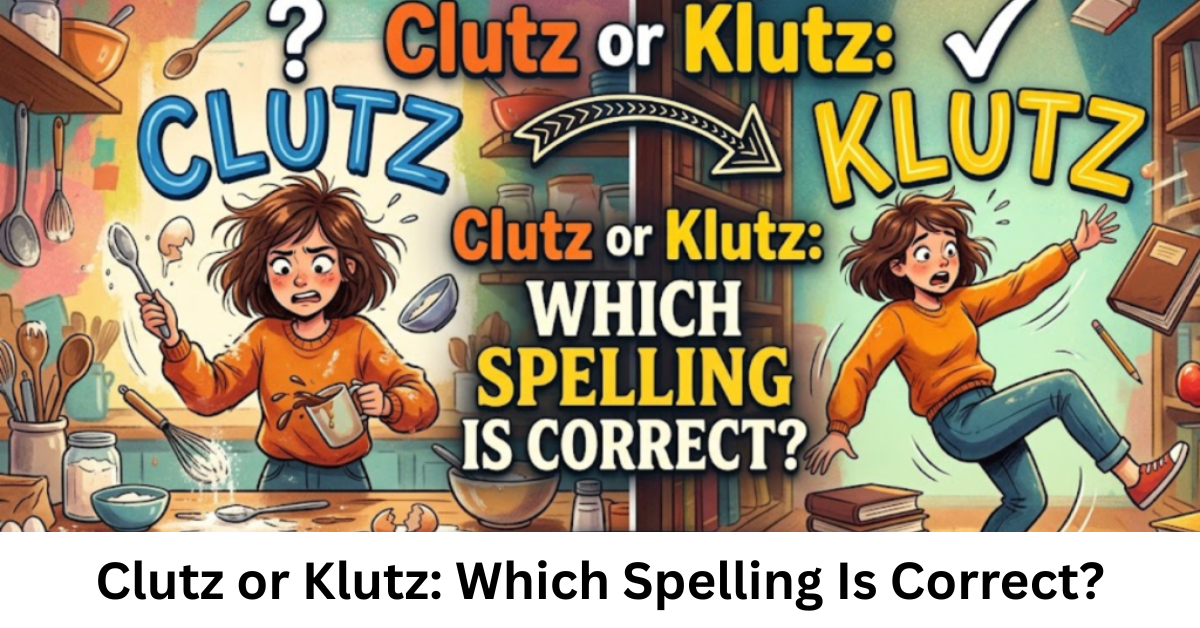
Ever typed clutz and wondered if it should actually be klutz? You’re not alone. The debate around clutz or klutz is more common than you might think, especially for writers, students, and social media creators who want their language to look polished and correct.
In this article, we’ll break down the correct spelling, explore its origins, and show you how to use it naturally in everyday writing. By the end, you’ll never hesitate again when choosing between the two.
Clutz or Klutz: Which One Is Correct?
Let’s clear it up right away:
“Klutz” is the correct spelling.
“Clutz” is a common misspelling.
The word klutz refers to someone who is clumsy or prone to accidents. While clutz might look more natural in English due to the “cl” sound, it’s not considered standard or correct in formal writing.
What Does “Klutz” Mean?
A klutz is someone who often drops things, trips, or makes awkward physical mistakes.
Simple examples:
- I spilled coffee again—I’m such a klutz.
- He’s a klutz when it comes to dancing.
Related meanings (LSI keywords):
- Clumsy person
- Accident-prone individual
- Awkward behavior
- Lack of coordination
The word is usually used in a lighthearted or humorous way rather than as a harsh insult.
Why Do People Write “Clutz”?
This confusion comes down to how English spelling works.
Here’s why:
- The “kl” combination is uncommon in English
- People naturally replace it with “cl”, which feels more familiar
- Pronunciation doesn’t clearly signal the “k” sound at the start
So even though people say both versions the same way, only one is correct in writing.
The Origin of “Klutz”
The word klutz comes from Yiddish, a language historically spoken by Ashkenazi Jews.
Etymology breakdown:
- Derived from “klots”, meaning block or lump
- Originally described someone awkward or physically uncoordinated
- Entered English in the early 20th century, especially in American slang
This explains why the spelling starts with “k” instead of the more typical English “c”.
How to Use “Klutz” Correctly
Using klutz is simple once you understand the context.
Correct usage tips:
- Use it in informal conversations
- Works well in humorous or self-deprecating tone
- Avoid in formal or academic writing
Examples in sentences:
- I’m a total klutz in the kitchen.
- She laughed after tripping—classic klutz moment.
- Don’t worry, everyone feels like a klutz sometimes.
Common Mistakes to Avoid
When thinking about clutz or klutz, here are some mistakes people often make:
Incorrect:
- Writing clutz in essays or captions
- Assuming both spellings are acceptable
- Using it in highly formal contexts
Correct:
- Stick with klutz in all standard writing
- Use it casually and appropriately
- Double-check spelling in captions and posts
Clutz or Klutz in Social Media & Writing
If you’re creating Instagram captions, blogs, or scripts, correct spelling matters more than ever.
Using klutz instead of clutz:
- Makes your content look more professional
- Builds credibility with your audience
- Helps avoid unnecessary corrections or confusion
Even small details like this can impact how people perceive your content.
FAQs
1. Is “clutz” ever correct?
No, clutz is considered a misspelling. The correct form is always klutz.
2. Why is “klutz” spelled with a “k”?
Because it comes from Yiddish, where the original word used a “k” sound at the beginning.
3. Can I use “klutz” in formal writing?
It’s best to avoid it in formal or academic contexts. Use words like clumsy instead.
4. Is “klutz” offensive?
Not usually. It’s generally playful, but tone and context matter.
5. How do I remember the correct spelling?
Think: “Keep the K in klutz” — a simple trick that works every time.
Conclusion
When it comes to clutz or klutz, the answer is clear: klutz is the correct and accepted spelling. While clutz might feel more natural, it’s not standard and should be avoided, especially in polished writing.
Understanding the origin, meaning, and proper usage helps you communicate more confidently—and avoid small mistakes that can make a big difference.
Now that you know the right choice, try using klutz naturally in your captions, writing, or conversations. Small language upgrades like this can quietly elevate your overall communication style.