When it comes to home electrical systems, one of the most confusing decisions homeowners face is understanding sub panel vs panel upgrade. If your home is experiencing frequent breaker trips, limited power capacity, or you’re planning renovations, this topic becomes even more important.
The main focus of this guide is to clearly explain sub panel vs panel upgrade, so you can confidently decide what your home actually needs. We’ll break down how each system works, when to choose them, and what costs you might expect.
What Is an Electrical Panel?
An electrical panel (also called a breaker box) is the central hub that distributes electricity throughout your home. It takes power from the utility line and sends it to different circuits like lights, appliances, and outlets.
Key functions of a main panel:
- Distributes electricity across the home
- Protects circuits with breakers
- Prevents overloads and electrical fires
- Controls overall electrical capacity
Most modern homes use 100 to 200 amp panels, depending on their power needs.
What Is a Subpanel?
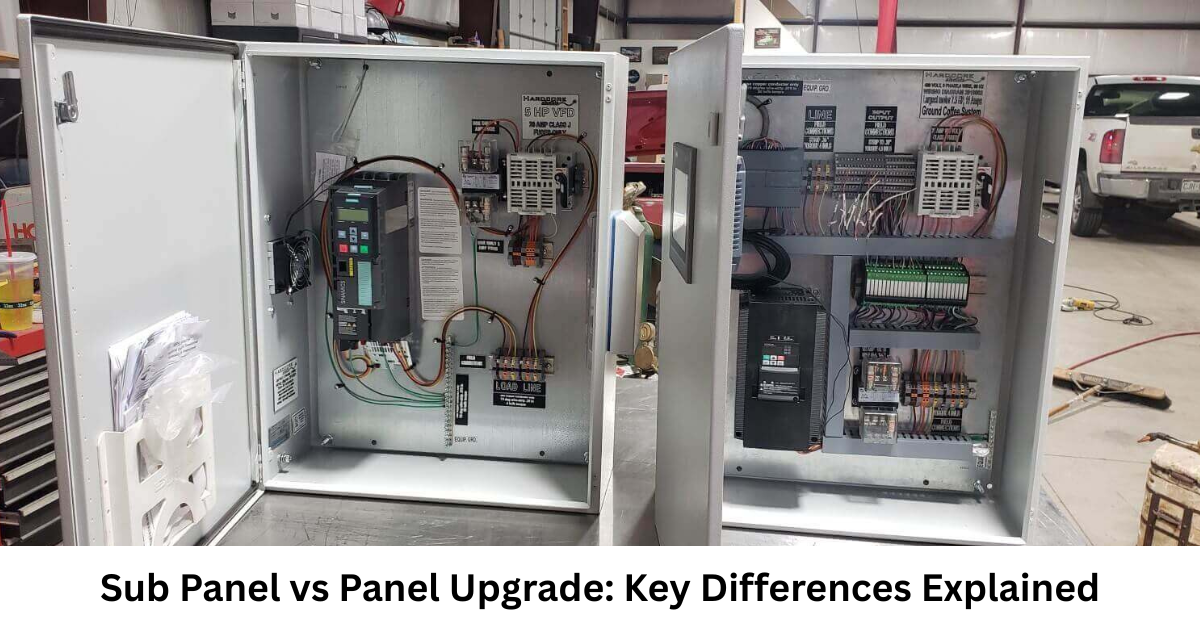
A subpanel is a smaller electrical panel connected to the main panel. Think of it as an extension that helps distribute electricity to a specific area like:
- Garage
- Basement
- Workshop
- Home addition
Unlike the main panel, a subpanel does not increase total electrical capacity—it simply helps organize and distribute power more efficiently.
Sub Panel vs Panel Upgrade: The Core Difference
Understanding sub panel vs panel upgrade comes down to one key idea: capacity vs distribution.
Panel Upgrade
A panel upgrade replaces your existing main electrical panel with a larger one. This increases your home’s total electrical capacity.
Sub Panel Installation
A subpanel adds a secondary panel connected to the main one, improving distribution without increasing total capacity.
Quick Comparison:
- Panel upgrade: Increases total power capacity
- Subpanel: Expands distribution to specific areas
- Panel upgrade: Requires utility coordination in many cases
- Subpanel: Uses existing capacity
If your home is struggling with power demand, this distinction is crucial.
When Should You Choose a Panel Upgrade?
A panel upgrade is usually the right choice if:
- Your breakers trip frequently
- You are adding major appliances (HVAC, EV charger)
- Your home has an outdated 60–100 amp system
- You plan a full home renovation
- You need more total electrical capacity
In short, if your entire system is overloaded, a panel upgrade is the solution.
When Is a Subpanel the Better Option?
A subpanel is ideal when:
- You are adding a new room or extension
- You want better circuit organization
- You need power in a separate structure (garage/workshop)
- Your main panel still has enough capacity
Instead of upgrading everything, a subpanel gives you flexibility and structure.
Cost Considerations
The cost difference between sub panel vs panel upgrade can be significant.
Panel Upgrade Costs:
- Higher cost due to labor and permits
- May require utility company involvement
- Includes replacement of main breaker panel
Subpanel Costs:
- Lower installation cost
- Less labor-intensive
- Depends on distance from main panel
Generally, subpanels are more budget-friendly unless your entire system needs an upgrade.
Installation Process Overview
Panel Upgrade Process:
- Electrical load assessment
- Utility coordination (if needed)
- Old panel removal
- New panel installation
- System testing and inspection
Subpanel Installation Process:
- Load capacity check
- Wiring from main panel
- Subpanel mounting
- Circuit distribution setup
- Safety testing
Both processes should always be handled by a licensed electrician.
Common Mistakes Homeowners Make
- Choosing a subpanel when a full upgrade is needed
- Ignoring signs of overloaded circuits
- Delaying upgrades until electrical failure occurs
- Attempting DIY electrical panel work
Electrical systems are not an area to compromise on safety.
FAQs About Sub Panel vs Panel Upgrade
1. What is the main difference between sub panel vs panel upgrade?
A panel upgrade increases total electrical capacity, while a subpanel only distributes existing power more efficiently.
2. Can a subpanel increase my home’s power?
No, a subpanel does not increase capacity. It only divides and organizes power.
3. How do I know if I need a panel upgrade?
If your breakers trip often or you’re adding high-power appliances, you likely need a panel upgrade.
4. Is a subpanel cheaper than a panel upgrade?
Yes, a subpanel is generally more affordable because it doesn’t replace the main system.
5. Can I install both a subpanel and a panel upgrade?
Yes, in larger homes or renovations, both may be used together for efficiency and capacity.
Conclusion
Choosing between sub panel vs panel upgrade depends entirely on your home’s electrical needs. If your issue is limited power capacity, a panel upgrade is the right solution. If you simply need better organization or power distribution, a subpanel is often enough.
Understanding the difference helps you avoid unnecessary costs and ensures your home stays safe and efficient. When in doubt, always consult a licensed electrician before making a decision.