Have you ever seen the phrase trama vs trauma and wondered whether both words are correct? You’re not alone. Many people type “trama” when they actually mean “trauma,” especially in quick searches, texting, or casual writing. Because the words look similar, confusion is common.
The truth is simple: trauma is a widely recognized English word with medical and emotional meanings, while trama is usually a misspelling or belongs to another language context. In this guide, we’ll break down the difference clearly so you can use the right word with confidence.
What Does Trauma Mean?
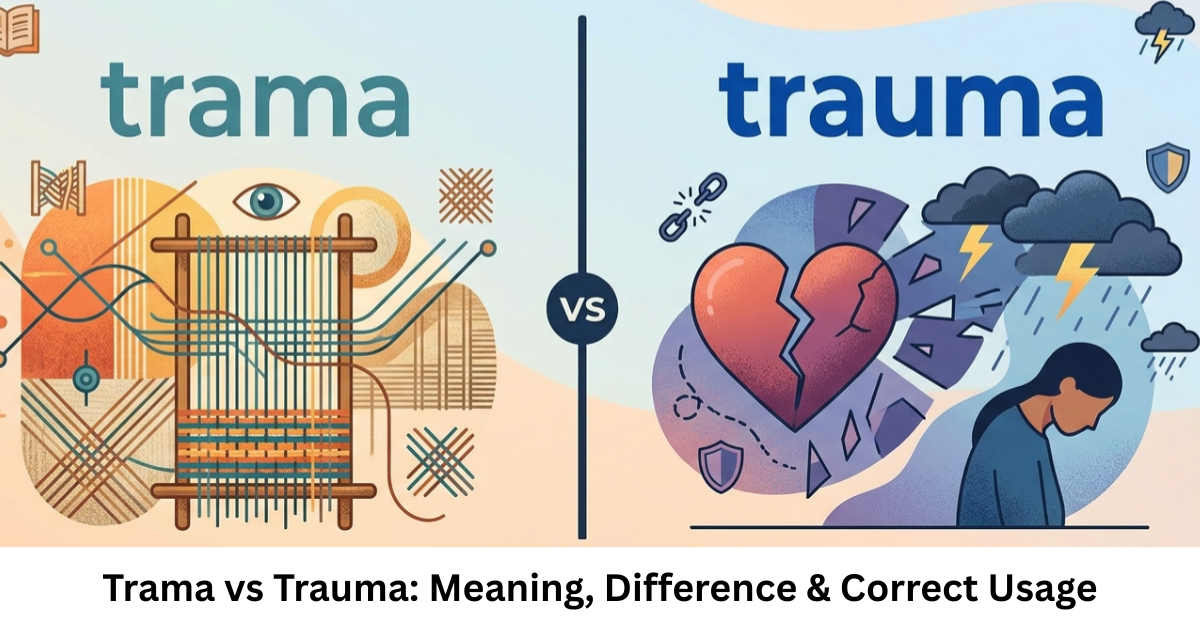
Trauma is an English word used to describe serious physical injury or emotional distress caused by a deeply upsetting experience.
It can refer to:
Physical Trauma
Damage to the body caused by accidents, falls, violence, or surgery.
Examples:
- Head trauma after a car accident
- Blunt force trauma
- Chest trauma requiring emergency care
Emotional or Psychological Trauma
Mental and emotional pain caused by distressing events.
Examples:
- Childhood trauma
- Trauma after abuse
- Emotional trauma from loss
Today, trauma is also commonly discussed in psychology, therapy, and mental health awareness.
What Does Trama Mean?
In most English searches, trama is usually a typo for trauma.
However, in some languages such as Spanish or Italian, trama has different meanings. It may refer to:
- Plot of a story
- Threading or weave in fabric
- Structure of a narrative
So if you are writing in English and discussing injury or emotional pain, trama is not the correct word.
Trama vs Trauma: Quick Comparison
| Word | Language Use | Meaning | Correct in English Mental Health Context? |
|---|---|---|---|
| Trama | Often typo / other languages | Story plot, weave, structure | No |
| Trauma | English | Injury or emotional distress | Yes |
Why Do People Search Trama vs Trauma?
There are several reasons this confusion happens:
1. Typing Error
The letters are close together and easy to mistype.
2. Pronunciation Differences
Some accents or quick speech can make the words sound similar.
3. Multilingual Influence
Speakers of Spanish, Italian, or similar languages may recognize “trama.”
4. Fast Search Habits
People often type quickly into search engines without checking spelling.
How to Remember the Correct Word
A simple trick:
Trauma = True pain or injury
The “u” in trauma can remind you of “hurt you.”
This memory cue helps many people remember the correct spelling.
Examples of Correct Usage
Use trauma in these sentences:
- She is healing from emotional trauma.
- The patient suffered severe trauma after the crash.
- Childhood trauma can affect adult relationships.
- Trauma therapy helped him recover.
Avoid using “trama” unless writing in another language or referring to literary plot in that language.
Trauma in Modern Mental Health Discussions
The word trauma is now more common than ever because people openly discuss:
- PTSD
- Anxiety after stressful events
- Healing journeys
- Therapy and counseling
- Childhood experiences
This increased awareness has helped many people understand that trauma is not only physical—it can also be emotional and psychological.
Common Mistakes to Avoid
Incorrect:
- I have trama from the accident.
- She is dealing with childhood trama.
Correct:
- I have trauma from the accident.
- She is dealing with childhood trauma.
When “Trama” May Be Correct
There are limited cases where “trama” is valid:
In Spanish
“Trama” often means the plot of a movie or novel.
Example:
La trama de la película fue excelente.
(The plot of the movie was excellent.)
In Textile Contexts
It can refer to fabric weaving or threads in some languages.
FAQs
Is trama a real word?
Yes, in some languages it is. But in English, it is usually a misspelling of trauma.
Which is correct: trama or trauma?
If you mean injury, distress, or psychological pain, trauma is correct.
Why do people type trama instead of trauma?
Usually because of typing mistakes, pronunciation confusion, or multilingual habits.
Can trauma be emotional?
Yes. Trauma can be physical, emotional, or psychological.
Is childhood trauma serious?
Yes. It can affect confidence, relationships, stress response, and mental health later in life.
Conclusion
Understanding trama vs trauma is easier than it seems. In English, trauma is the correct word for physical injury or emotional suffering. Trama is typically a spelling mistake or a valid word in another language with a different meaning.
If you often confuse the two, remember this: when discussing pain, healing, mental health, or injury, choose trauma. Small spelling corrections can make your writing clearer and more professional.