
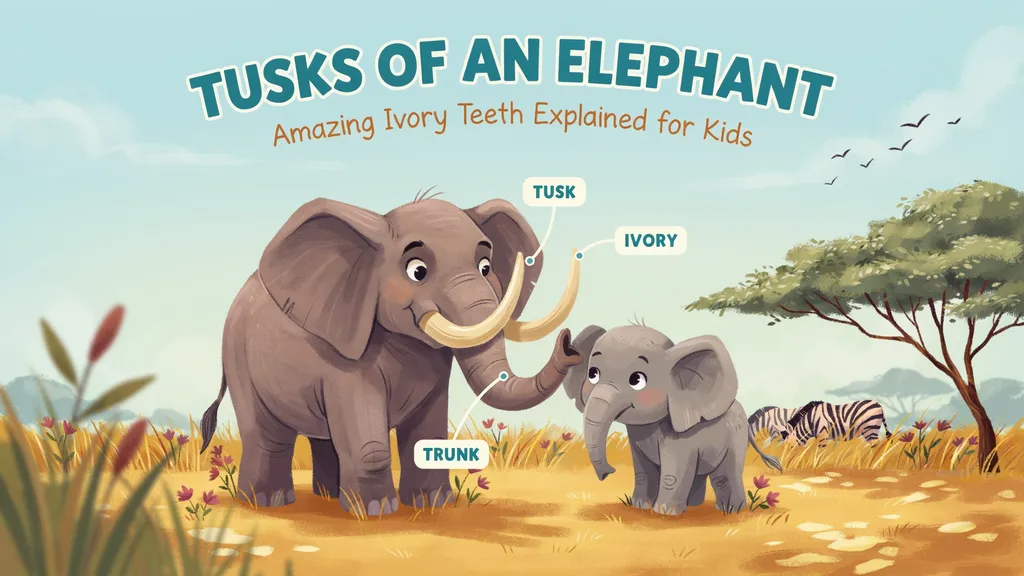
Have you ever looked at a big, wonderful Tusks of Elephant and wondered about those two long, white teeth sticking out of its mouth? Those cool teeth are called the tusks of an elephant! They are not regular teeth like the ones you use to chew your yummy snacks. They are super special and grow bigger as the elephant grows up. Elephants use their long ivory sticks for many important jobs every single day. Just like you use your hands to open doors or carry toys, an elephant uses the tusks of an elephant to help it live in the big wild world. It is amazing to see how much work these big teeth can do! Come with me on a fun journey to learn all about these giant ivory treasures and the gentle giants who wear them.
What Are the Tusks of an Elephant Made Of?
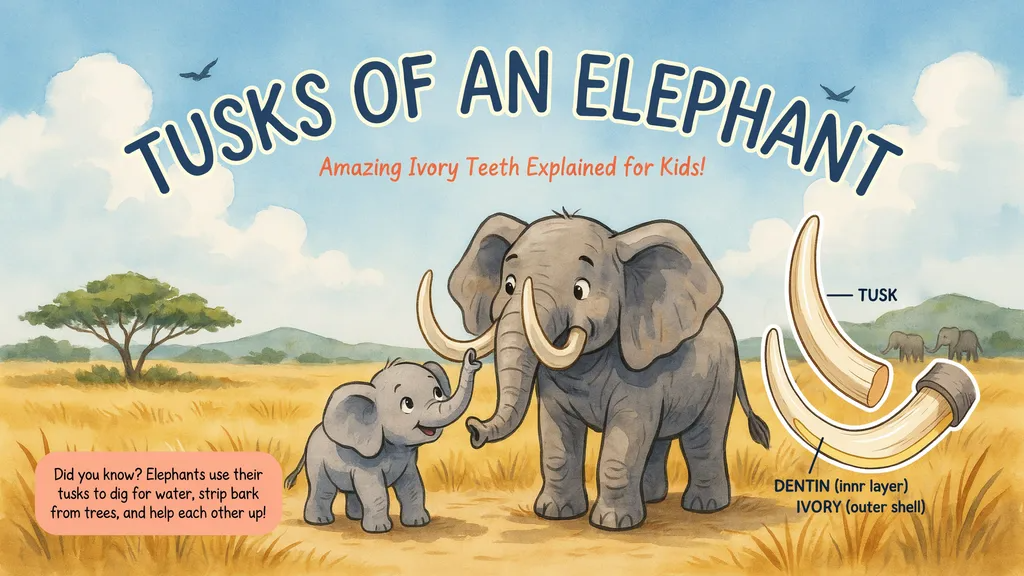
The tusks of an elephant are made of a very strong and shiny material called ivory. You might think ivory is like bone, but it is actually a special kind of tooth material called dentin. These giant teeth start way deep inside the elephant’s head and grow right out through the upper jaw. The outside part of the tusks of an elephant is covered in enamel when the baby elephant is very tiny, but it wears off quickly from digging and chewing. Inside each tusk, there is a soft part with blood and nerves, just like your own teeth! When we look at a big grown-up elephant, we are seeing solid, tough ivory that can stay strong for many years. It is neat to know that a part of their smile is as tough as a rock!
Why Do Elephants Have Tusks?
You might wonder why the tusks of an elephant are even there. They are not just for looking cool! An elephant uses these long ivory tools to dig deep into the dry dirt when looking for cool, fresh water to drink. Sometimes, when the ground is hard, the tusks of an elephant act like shovels to help them find hidden underground streams. They also use them to peel the rough bark off tall trees so they can munch on the soft wood underneath. Without these handy tools, finding food and drink in the wild would be super tricky. Every single scratch or mark on their big teeth tells a story of a busy day in nature.
How Elephants Use Tusks Like Tools
Did you know that elephants are a lot like us when it comes to being left-handed or right-handed? That is right! The tusks of an elephant often show which side the animal likes to use the most. One tusk might look shorter or more worn down because the elephant uses it more often for heavy work. They use them to push over small trees or move heavy logs that block their walking path. The tusks of an elephant help them clear a nice, wide road through the thick green forest. Watching an elephant use its face like a toolbox is one of the coolest sights you will ever see in the wild lands!
Lifting and Moving Heavy Things
Sometimes the wild gets messy with fallen branches and big rocks. When this happens, the tusks of an elephant come to the rescue! They slide their giant ivory teeth under heavy logs and lift them right up into the air. It is like having a pair of strong forklift trucks attached right to their face. The tusks of an elephant make heavy lifting look super easy, even when the logs weigh more than a big car. They use this superpower to clean up their home and help other elephants walk through the trees safely. Nature really gave these animals the ultimate set of heavy-duty helpers!
Protecting the Herd and Fighting
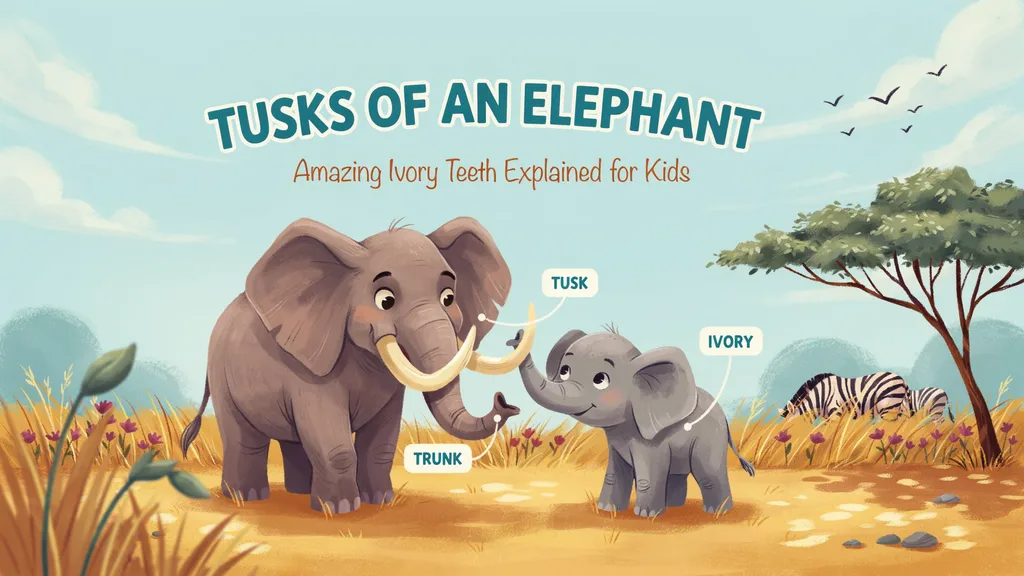
Elephants are mostly very kind and gentle, but sometimes they need to stay safe from danger. The tusks of an elephant work as a great shield to protect their family and friends. If a big meat-eating animal comes too close, the adults will stand in a circle and show their sharp ivory points. Most of the time, just showing the tusks of an elephant is enough to scare the bad guys away without any trouble. They also use them gently to push or guide baby elephants who might be moving a little too slow. It is all about love and protection in the big elephant family!
Male and Female Elephants: Who Has Them?
Not every elephant looks the exact same way. In some kinds of elephants, both the mom and the dad have the tusks of an elephant growing proudly from their mouths. But in other kinds, only the boy elephants grow long ivory teeth, while the girl elephants have tiny ones or none at all. When you look at an African elephant, you will almost always see big, bright tusks of an elephant on both males and females. Asian elephants are a bit different because only some of them have long ivory showing. It is like a fun puzzle where every animal has its own special look!
How Fast Do Tusks Grow?
Good things take time, and so do the giant teeth of these gentle giants! The tusks of an elephant do not just pop out overnight. They keep growing longer and longer every single year of the elephant’s life, just like your fingernails or your hair. A grown-up elephant can grow its ivory by several inches in just twelve months. Because the tusks of an elephant never stop growing, older elephants have the longest and coolest ivory sticks you can imagine. Sometimes they even curve in funny directions as they get super long! It takes a whole lifetime to grow a masterpiece like that.
Caring for Your Giant Teeth
Elephants know their teeth are super important, so they take good care of them! They use mud and water to clean the tusks of an elephant and keep them cool in the hot sun. Rubbing against smooth tree trunks helps polish the ivory until it shines like a bright pearl. When the tusks of an elephant get a little dirty, a quick bath in the river makes everything fresh again. They treat their big facial tools with a lot of love and respect because they need them every day. It is a good reminder for us to brush our own teeth, too!
Why People Love Ivory
People have looked at the ivory from the tusks of an elephant with wonder for thousands of years. It has a smooth, creamy color and feels cool to the touch, which made humans want to carve pretty art out of it. But today, we know that taking the tusks of an elephant hurts the gentle animals and makes them sad. It is much better to take pictures of living elephants and leave the ivory right where it belongs! We can love and protect the tusks of an elephant by keeping the animals safe in their natural homes. Real beauty is seeing a wild elephant walking happily with its natural treasures intact.
Detailed Elephant Facts Table
| Feature | Description |
| Main Material | Tough ivory made of dentin |
| Growth Rate | Grows continuously throughout life |
| Primary Uses | Digging for water, peeling bark, lifting logs |
| Protection | Used as a natural shield against predators |
| Care Habit | Cleaned and cooled with mud and river water |
Conclusion
We have learned so much about the wonderful world of these giant ivory teeth! The tusks of an elephant are truly amazing tools that help these big, friendly animals survive, play, and protect their families in the wild. Next time you see a picture or video of an elephant, take a good look at those long, shiny teeth and remember all the hard work they do. What is your favorite thing that an elephant can do with its trunk and tusks? Share your thoughts with a friend or go read another fun nature story today!