
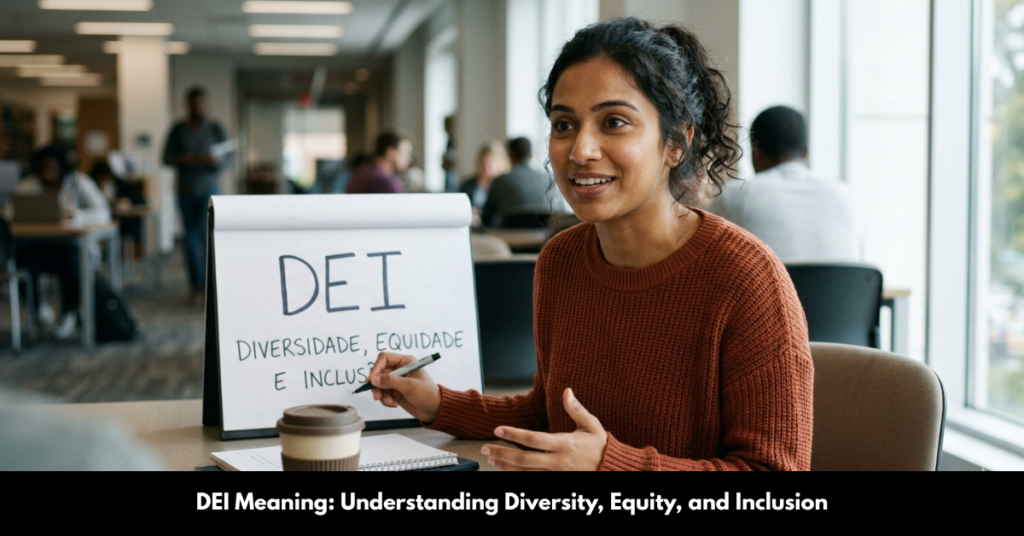

In today’s world, the acronym DEI has become a buzzword in offices, schools, governments, and even online conversations. But what does DEI really mean? At its core, DEI stands for Diversity, Equity, and Inclusion, but its significance goes far beyond the letters. Understanding DEI is essential not only for businesses but also in politics, religion, and social culture.
Whether you’re encountering DEI in a corporate report, a political speech, or a spiritual discussion, grasping its meaning can help you navigate modern conversations with clarity and confidence.
What Is DEI Meaning?
DEI meaning revolves around three interconnected concepts:
- Diversity – Recognizing and celebrating differences in race, gender, age, religion, sexual orientation, and more.
- Equity – Ensuring fair treatment, access, and opportunities for everyone, particularly those historically marginalized.
- Inclusion – Creating environments where diverse individuals feel valued, respected, and empowered to contribute.
DEI is not just corporate jargon; it is a framework for creating fairness and belonging across all sectors of society.
DEI Meaning in Business
In the corporate world, DEI meaning in business reflects strategies to improve workplace culture and employee engagement. Companies prioritize DEI initiatives to:
- Attract and retain diverse talent.
- Encourage innovation through varied perspectives.
- Promote ethical practices and social responsibility.
Many organizations also integrate DEI metrics into performance evaluations and leadership accountability, highlighting its importance in sustainable growth.
DEI Meaning in Politics and Government
DEI meaning in politics often refers to policies aimed at reducing systemic inequalities. Governments may implement DEI programs to:
- Ensure equitable access to education and healthcare.
- Promote representation of minority groups in leadership roles.
- Foster inclusive public services.
In government, DEI is about fairness in policy-making, ensuring that no group is left behind due to historical or social disadvantages.
DEI Meaning in Faith and Latin Terms
The term DEI also appears in religious and historical contexts. Some notable examples include:
- Imago Dei meaning – In Christian theology, this refers to the belief that humans are created in the image of God.
- Opus Dei meaning – A Catholic institution emphasizing work as a path to holiness.
- Missio Dei meaning – Refers to God’s mission in the world.
- Agnus Dei meaning – Latin for “Lamb of God,” often used in liturgy.
- Vox populi, vox Dei meaning – Translates to “the voice of the people is the voice of God.”
Even in religious or classical texts, DEI reflects deeper principles of inclusion, purpose, and moral responsibility.
Modern DEI and Cultural References
Today, DEI has expanded into cultural and social conversations:
- DEI meaning diversity equity inclusion definition – Clear frameworks that guide organizations and communities.
- Woke DEI meaning – Sometimes used in debates around progressive social reforms.
- DEI meaning Tamil slang – In casual language, “dei” can be an informal term like “hey” or “yo.”
- Anti DEI meaning – Refers to criticism or opposition to diversity initiatives, often in political contexts.
Understanding these nuances can help you communicate effectively without misinterpretation.
Implementing DEI: Practical Steps
For businesses and organizations, practical DEI implementation may include:
- Conducting audits of existing policies and culture.
- Training employees and leaders on unconscious bias.
- Establishing clear diversity and inclusion goals.
- Encouraging open dialogue and feedback.
The goal is to move beyond mere representation toward creating genuinely equitable and inclusive environments.
FAQs About DEI Meaning
Q1: What is DEI meaning in simple words?
DEI stands for Diversity, Equity, and Inclusion, emphasizing fairness, representation, and belonging for all.
Q2: What is Imago Dei meaning?
It is a theological concept that humans are created in the image of God, highlighting dignity and moral responsibility.
Q3: What does Opus Dei meaning refer to?
It is a Catholic organization that teaches finding holiness in everyday work.
Q4: What is the difference between DEI in business and politics?
In business, DEI focuses on workplace culture and talent management. In politics, it targets systemic fairness and representation in policy-making.
Q5: What is DEI meaning Tamil slang?
In Tamil slang, “dei” is a casual or friendly way to say “hey” or get someone’s attention.
Conclusion
Understanding DEI meaning is crucial in today’s interconnected world. Whether in business, politics, religion, or everyday culture, DEI promotes fairness, respect, and empowerment for all. By embracing DEI principles, we can foster environments that value diversity, ensure equity, and encourage inclusion.
Start by reflecting on how DEI can shape your workplace, community, or personal interactions—and explore related concepts like Imago Dei, Opus Dei, and Missio Dei to deepen your understanding.