What Does “It Means a Lot to Me” Mean?
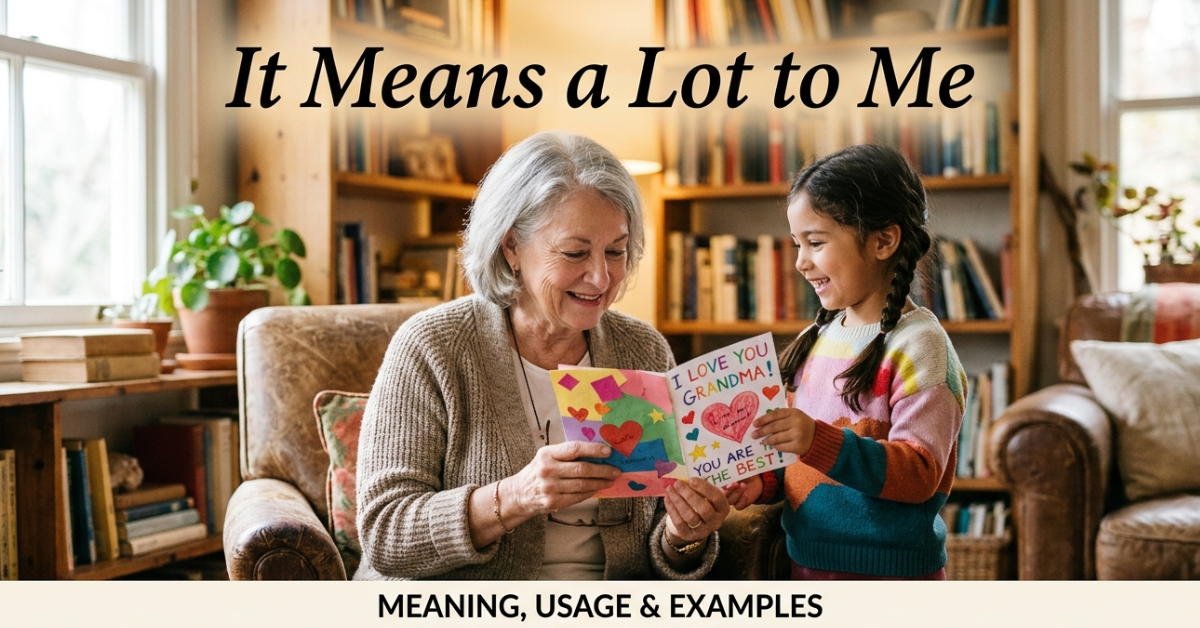
When someone says this, they are expressing that a gesture, action, or statement has strong personal value to them. It often communicates gratitude, emotional connection, or heartfelt appreciation.
Simple Definition
“It means a lot to me” =
“This is very important to me emotionally.”
Why People Use This Phrase
This expression is popular because it sounds genuine and warm without being overly dramatic. It helps people communicate emotions in a simple and natural way.
People commonly use it when:
- Receiving emotional support
- Appreciating kindness
- Thanking someone sincerely
- Expressing sentimental value
- Showing emotional connection
For example:
- “Thank you for being there for me. It really means a lot to me.”
- “Your support during difficult times meant everything.”
Common Situations Where You Can Use It
H2: In Friendships
Friends often use this phrase to express appreciation for support or loyalty.
Examples
- “You listened to me when nobody else did. It means a lot to me.”
- “Your friendship honestly means so much.”
This makes the other person feel valued and appreciated.
H2: In Relationships
In romantic relationships, the phrase can create emotional closeness and sincerity.
Examples
- “The surprise you planned means a lot to me.”
- “I appreciate your effort more than you know.”
It adds warmth and emotional honesty to conversations.
H2: In Family Conversations
Family members may use this phrase during emotional or meaningful moments.
Examples
- “Thank you for supporting my dreams. It means a lot.”
- “Your advice always helps me.”
This shows gratitude without sounding too formal.
H2: At Work or Professionally
Even in professional settings, the phrase can sound respectful and appreciative.
Examples
- “Thank you for the opportunity. It means a lot to me.”
- “Your feedback was very encouraging.”
It helps maintain professionalism while still sounding human.
Emotional Impact of the Phrase
One reason this expression is so powerful is because it creates emotional connection. People naturally want to feel appreciated, and hearing sincere gratitude strengthens relationships.
The phrase can communicate:
- Respect
- Appreciation
- Emotional support
- Trust
- Gratitude
Even a small acknowledgment can leave a lasting emotional impact.
Different Ways to Say “It Means a Lot to Me”
Repeating the same phrase too often can sound repetitive. Here are some natural alternatives you can use.
H2: Similar Expressions
- “I truly appreciate it.”
- “I’m really grateful.”
- “That means so much to me.”
- “I can’t thank you enough.”
- “I really value this.”
- “This made my day.”
- “I appreciate your kindness.”
These alternatives help keep conversations natural and expressive.
How to Respond When Someone Says It
If someone tells you that something “means a lot” to them, responding warmly can strengthen the conversation.
Good Responses
- “I’m happy to hear that.”
- “You deserve it.”
- “I truly meant it.”
- “I’m glad I could help.”
- “That makes me happy.”
Simple responses often feel the most genuine.
Is the Phrase Formal or Informal?
The phrase is generally considered neutral and versatile. It works in both casual and semi-formal situations.
Informal Use
- Friends
- Family
- Text messages
- Social media captions
Semi-Formal Use
- Workplace appreciation
- Thank-you emails
- Academic or professional conversations
However, in highly formal writing, people may choose more professional alternatives like:
- “I sincerely appreciate your assistance.”
- “Your support is greatly valued.”
Common Mistakes to Avoid
Although the phrase is simple, there are still a few mistakes people make.
H3: Overusing It
Using the phrase repeatedly in every conversation can make it lose emotional impact.
H3: Using It Without Sincerity
People can often tell when appreciation sounds forced or insincere. Genuine emotion matters more than dramatic wording.
H3: Incorrect Grammar Variations
Avoid awkward versions like:
- “It mean a lot to me”
- “It means lots to me”
The correct phrase is:
- “It means a lot to me.”
Why This Phrase Feels So Genuine
Language becomes powerful when it feels honest. This phrase works because it’s emotionally direct without sounding overly complicated.
Unlike formal expressions, it feels personal and relatable. It reflects vulnerability, appreciation, and emotional openness in a way most people instantly understand.
That’s why it appears so often in:
- Conversations
- Movies
- Songs
- Social media captions
- Thank-you messages
Examples in Daily Life
Here are a few realistic examples of how people naturally use this phrase.
Everyday Examples
- “Thanks for checking on me yesterday. It means a lot to me.”
- “Your encouragement gave me confidence.”
- “You remembered my birthday. That means so much.”
- “I appreciate your honesty.”
- “Having your support during tough times means everything.”
These examples sound natural, warm, and conversational.
FAQs
What does “it means a lot to me” actually mean?
It means something is emotionally important, valuable, or deeply appreciated by the speaker.
Is “it means a lot to me” grammatically correct?
Yes, the phrase is completely grammatically correct and commonly used in English conversations.
Can I use this phrase professionally?
Yes. It works well in polite professional settings, especially when expressing gratitude or appreciation.
What is another way to say “it means a lot to me”?
You can say:
- “I truly appreciate it”
- “That means so much”
- “I’m grateful”
- “I really value this”
Is this phrase emotional?
Yes, it carries emotional warmth and sincerity, which is why it’s often used in meaningful conversations.
Conclusion
Whether you’re thanking a friend, appreciating support, or responding to kindness, this expression helps communicate genuine emotion naturally. Using it sincerely can strengthen relationships and make people feel truly valued.
If you enjoy learning about common English phrases and meanings, explore similar expressions that improve emotional communication and everyday conversation skills.