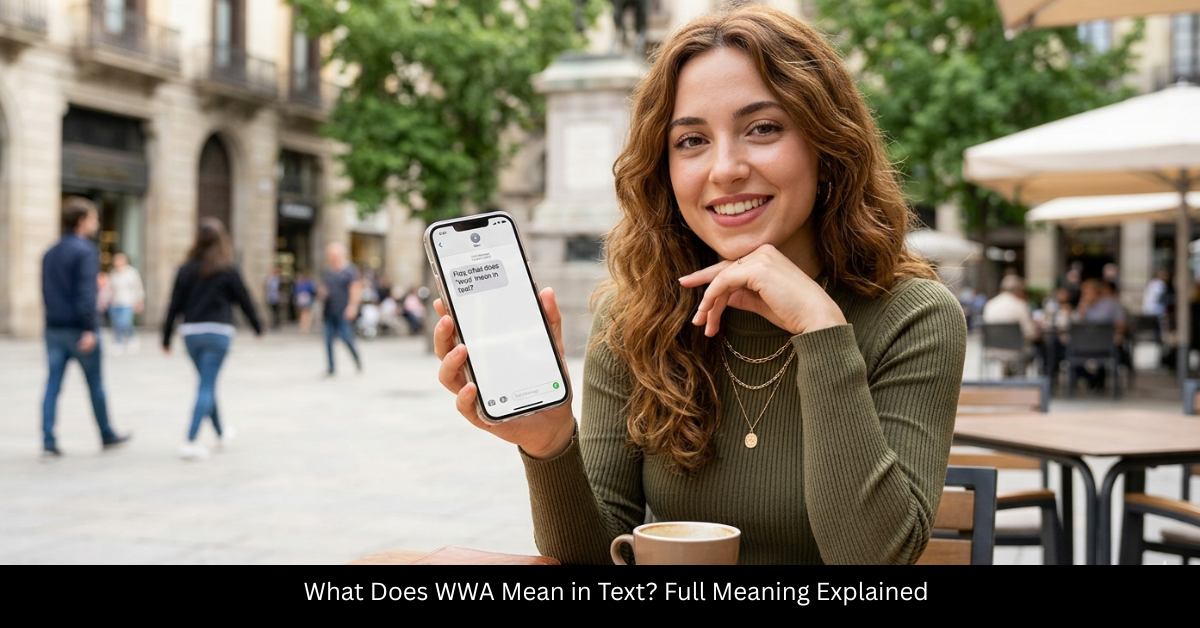
Ever received a message with “WWA” and had no idea what it meant? You’re not alone. In today’s fast-paced digital world, abbreviations and slang evolve constantly, leaving many people confused. If you’re wondering what does WWA mean in text, this guide will break it down clearly and simply.
In this article, you’ll learn the most common meanings of WWA, how it’s used in conversations, and how to interpret it based on context.
What Does WWA Mean in Text?
The abbreviation WWA can have multiple meanings depending on the context of the conversation. Unlike popular acronyms with a single definition, WWA is more flexible and can vary across platforms.
Most Common Meaning of WWA
The most widely used meaning of WWA in texting is:
- WWA = “What Was That About?”
People use it when they want clarification or are confused about something that just happened or was said.
Example:
- Person A: “He just left without saying anything.”
- Person B: “WWA?”
In this case, Person B is asking for more details.
Other Possible Meanings of WWA
Depending on where you see it, WWA might also stand for other phrases. Here are a few less common interpretations:
1. World Wide Alliance
Used in business or organizational contexts.
2. We Were Alone
Sometimes used in storytelling or casual chats.
3. Women’s Wrestling Association
Seen in sports-related discussions.
How to Understand WWA in Context
Because WWA has multiple meanings, context is everything. Here’s how to figure it out quickly:
Look at the Conversation
- If it’s casual texting → likely “What Was That About?”
- If it’s formal or business-related → could mean “World Wide Alliance”
Check the Platform
- Social media & chats → informal meaning
- Forums or professional emails → formal meaning
Consider Tone
- Confused tone → asking for explanation
- Informative tone → referring to an organization
When Should You Use WWA?
Using abbreviations like WWA can make conversations quicker, but they should be used wisely.
Good Situations to Use WWA
- Casual texting with friends
- Informal group chats
- Social media comments
Avoid Using WWA In
- Professional emails
- Academic writing
- Formal communication
Similar Text Abbreviations
If you’re learning texting slang, here are some similar abbreviations you might come across:
- WTH – What The Heck
- WYD – What You Doing
- IDK – I Don’t Know
- BRB – Be Right Back
These are commonly used alongside terms like WWA in everyday chats.
Why Do People Use Abbreviations Like WWA?
Text abbreviations are popular because they:
- Save time while typing
- Make conversations feel more casual
- Reflect modern digital communication trends
However, overusing them can sometimes create confusion—especially with less common acronyms like WWA.
FAQs
What does WWA mean in text messages?
WWA usually means “What Was That About?” and is used to ask for clarification in casual conversations.
Is WWA a common slang term?
No, it’s not as common as abbreviations like LOL or BRB, but it still appears in certain chats.
Can WWA have different meanings?
Yes, WWA can also stand for things like “World Wide Alliance” or “We Were Alone,” depending on context.
Should I use WWA in professional communication?
It’s best to avoid using WWA in formal or professional settings to prevent misunderstandings.
How do I know what WWA means in a conversation?
Look at the context, tone, and platform. In most casual chats, it means “What Was That About?”
Conclusion
Understanding what does WWA mean in text comes down to context. While the most common meaning is “What Was That About?”, it can carry different interpretations depending on where and how it’s used.
If you’re texting friends, feel free to use WWA casually. But in professional situations, it’s better to stick with full phrases to avoid confusion. As texting slang continues to evolve, staying updated helps you communicate more clearly and confidently.